How To Arrange A Single Room House
Living in a single room might seem like a design challenge, but I’ve found it’s actually an incredible opportunity for creativity and intentional living.
I remember my first studio apartment; it felt overwhelming at first, but with a few clever tricks, it transformed into a cozy, functional sanctuary.
This guide shares those lessons, helping you craft a space that feels expansive, inviting, and uniquely yours.
Quick Overview
You’re about to embark on a journey to transform your single room into a harmonious, multi-functional home. We will cover everything from strategic layouts to personalized decor, ensuring every inch serves a purpose and sparks joy.
- Time needed: 1-2 weekends (initial planning and major rearrangement), ongoing for styling
- Difficulty: Beginner
- What you’ll need: Measuring tape, pen and paper, a decluttering mindset, optional: furniture sliders, paint samples
Step-by-Step Instructions
Step 1: Envision Your Dream Space
Before moving a single item, take a moment to imagine your ideal single-room home. Think about how you want to feel when you wake up, work, relax, and entertain.
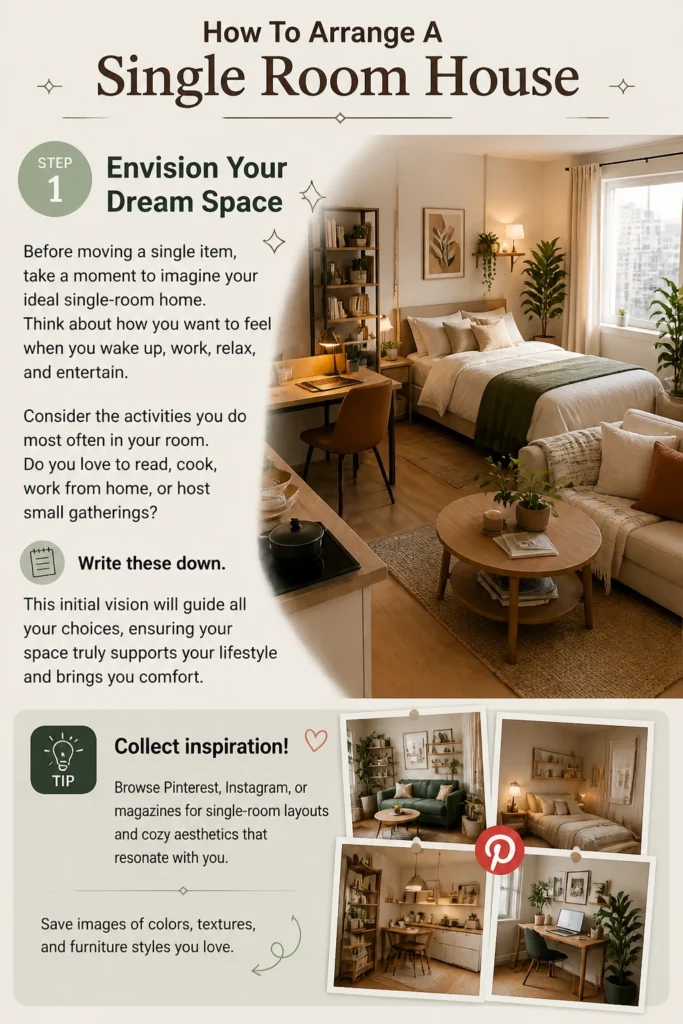
Consider the activities you do most often in your room. Do you love to read, cook, work from home, or host small gatherings? Write these down.
This initial vision will guide all your choices, ensuring your space truly supports your lifestyle and brings you comfort.
Pro Tip: Collect inspiration! Browse Pinterest, Instagram, or magazines for single-room layouts and cozy aesthetics that resonate with you. Save images of colors, textures, and furniture styles you love.
Step 2: Declutter with Intention
This is arguably the most crucial step for any small space. A single room quickly feels cramped with too many possessions.
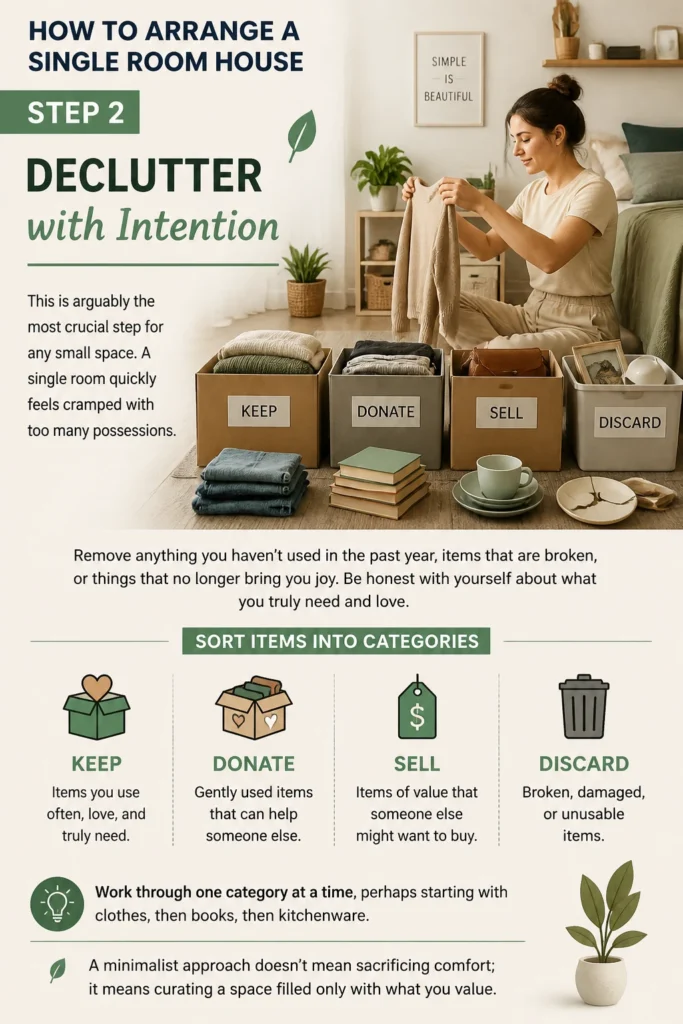
Remove anything you haven’t used in the past year, items that are broken, or things that no longer bring you joy. Be honest with yourself about what you truly need and love.
Sort items into categories: keep, donate, sell, or discard. Work through one category at a time, perhaps starting with clothes, then books, then kitchenware.
A minimalist approach doesn’t mean sacrificing comfort; it means curating a space filled only with what you value.
Step 3: Define Your Zones
Even without walls, you can create distinct areas for different activities. This mental and visual separation makes a single room feel much larger and more organized.
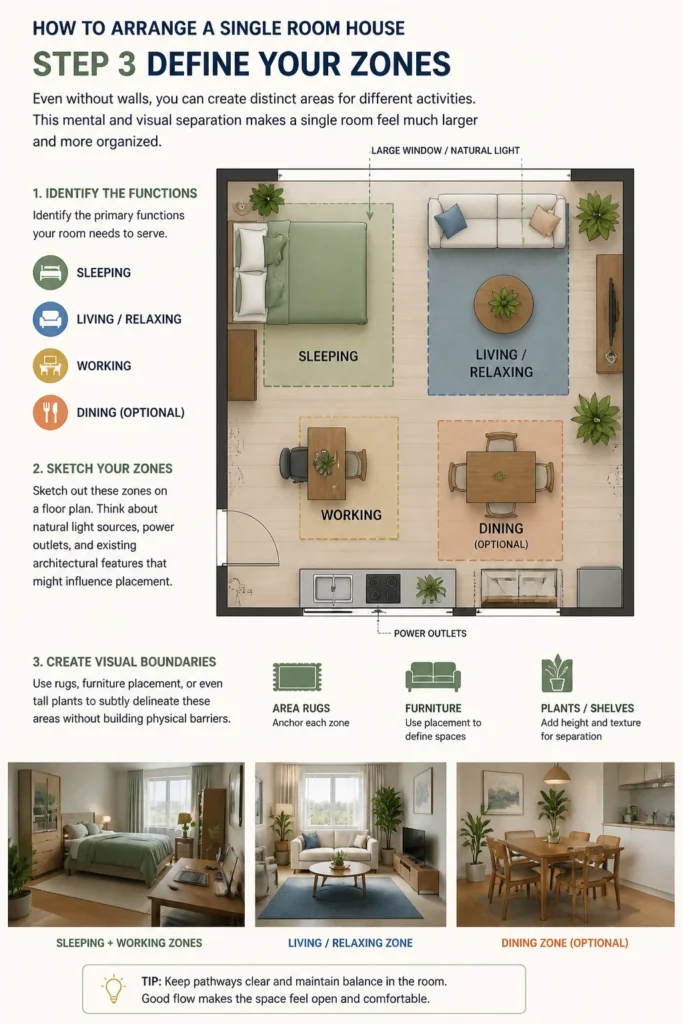
Identify the primary functions your room needs to serve: sleeping, living/relaxing, working, and possibly a small dining area.
Sketch out these zones on a floor plan. Think about natural light sources, power outlets, and existing architectural features that might influence placement.
Use rugs, furniture placement, or even tall plants to subtly delineate these areas without building physical barriers.
Step 4: Master Your Layout with Multi-Functional Furniture
Every piece of furniture in a single room should earn its spot. Prioritize items that serve more than one purpose.
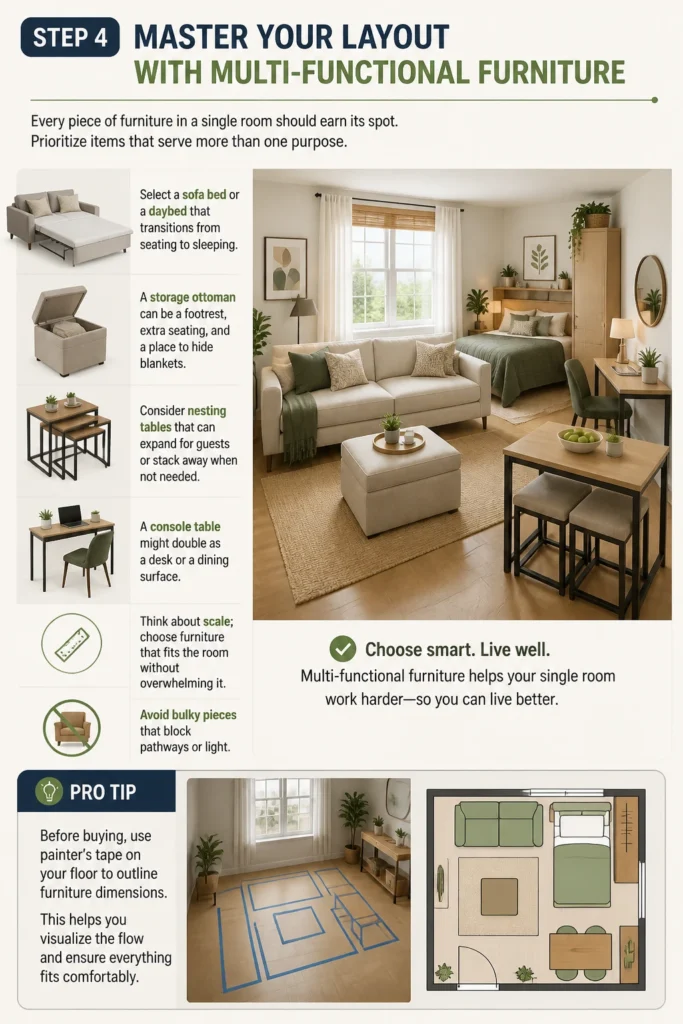
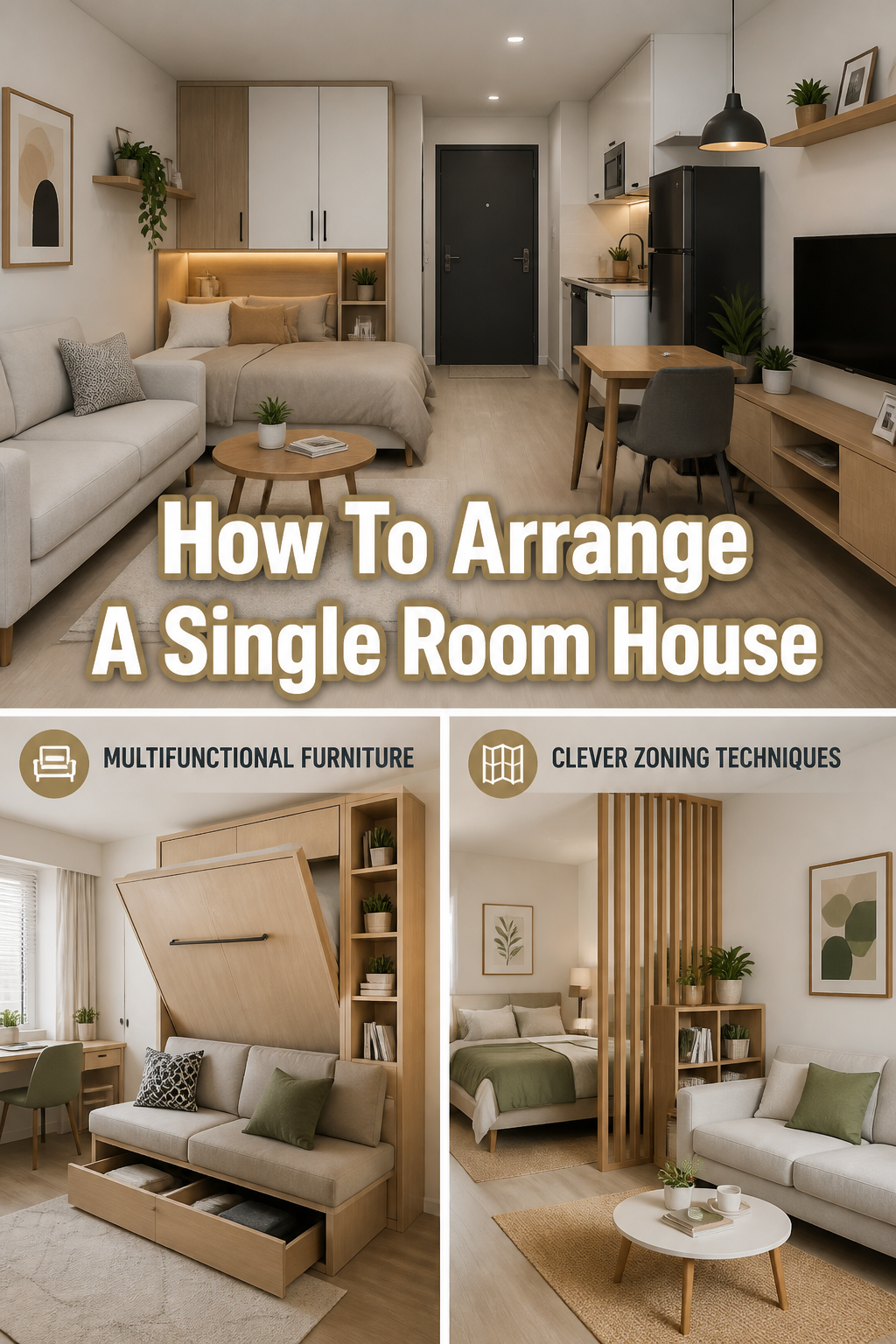
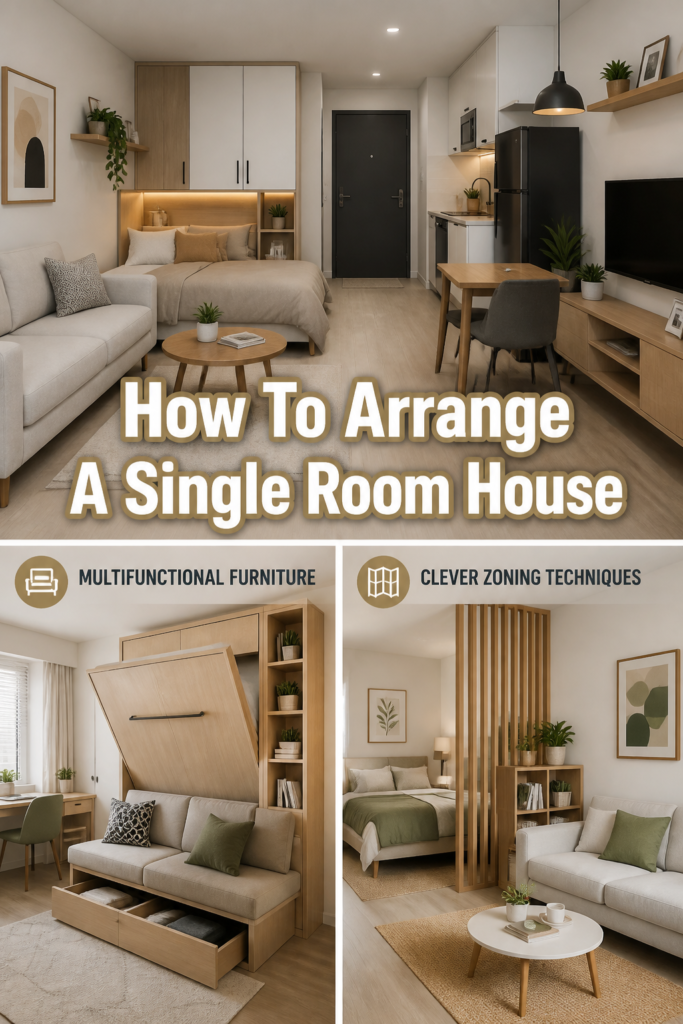
Select a sofa bed or a daybed that transitions from seating to sleeping. A storage ottoman can be a footrest, extra seating, and a place to hide blankets.
Consider nesting tables that can expand for guests or stack away when not needed. A console table might double as a desk or a dining surface.
Think about scale; choose furniture that fits the room without overwhelming it. Avoid bulky pieces that block pathways or light.
Pro Tip: Before buying, use painter’s tape on your floor to outline furniture dimensions. This helps you visualize the flow and ensure everything fits comfortably.
Step 5: Utilize Vertical Space Smartly
When floor space is limited, the walls become prime real estate. Look up and see the untapped potential.
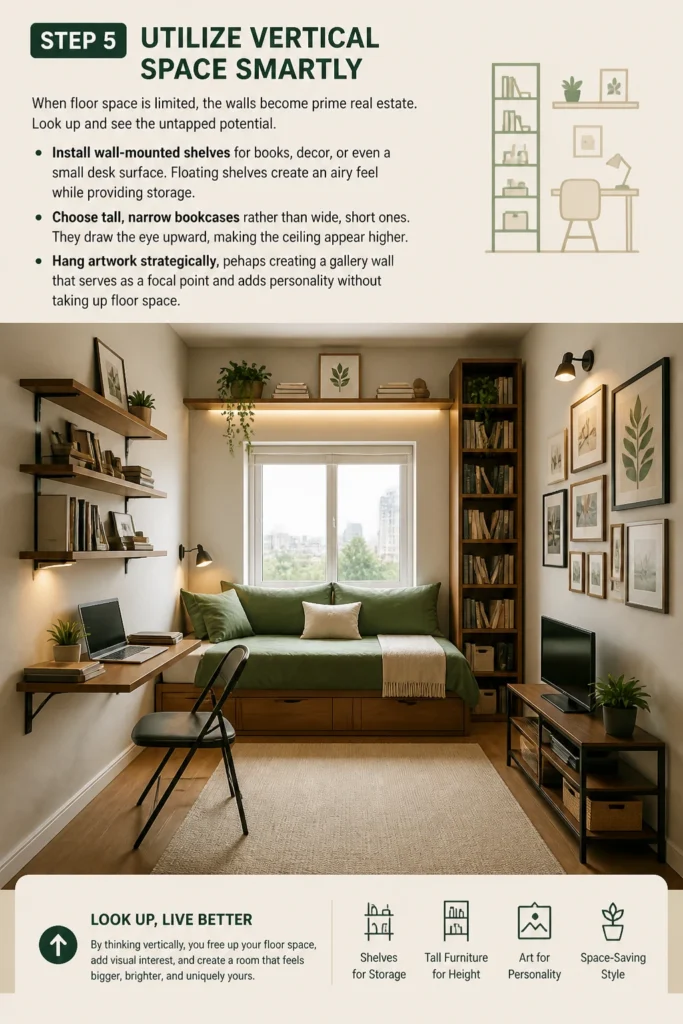
Install wall-mounted shelves for books, decor, or even a small desk surface. Floating shelves create an airy feel while providing storage.
Choose tall, narrow bookcases rather than wide, short ones. They draw the eye upward, making the ceiling appear higher.
Hang artwork strategically, perhaps creating a gallery wall that serves as a focal point and adds personality without taking up floor space.
Step 6: Craft Cohesion with Color and Texture
A thoughtful color palette and varied textures can make a small space feel cohesive and inviting, rather than chaotic.
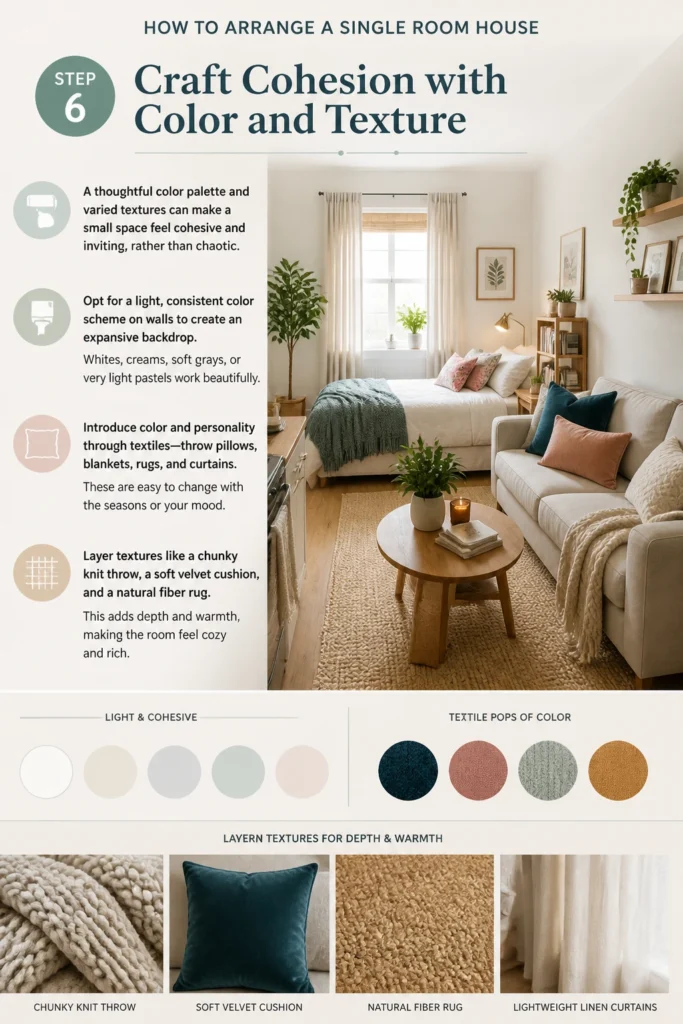
Opt for a light, consistent color scheme on walls to create an expansive backdrop. Whites, creams, soft grays, or very light pastels work beautifully.
Introduce color and personality through textiles: throw pillows, blankets, rugs, and curtains. These are easy to change with the seasons or your mood.
Layer textures like a chunky knit throw, a soft velvet cushion, and a natural fiber rug. This adds depth and warmth, making the room feel cozy and rich.
Step 7: Illuminate with Layers of Light
Lighting is a powerful tool to define zones, set the mood, and make a room feel larger. Don’t rely on a single overhead light.
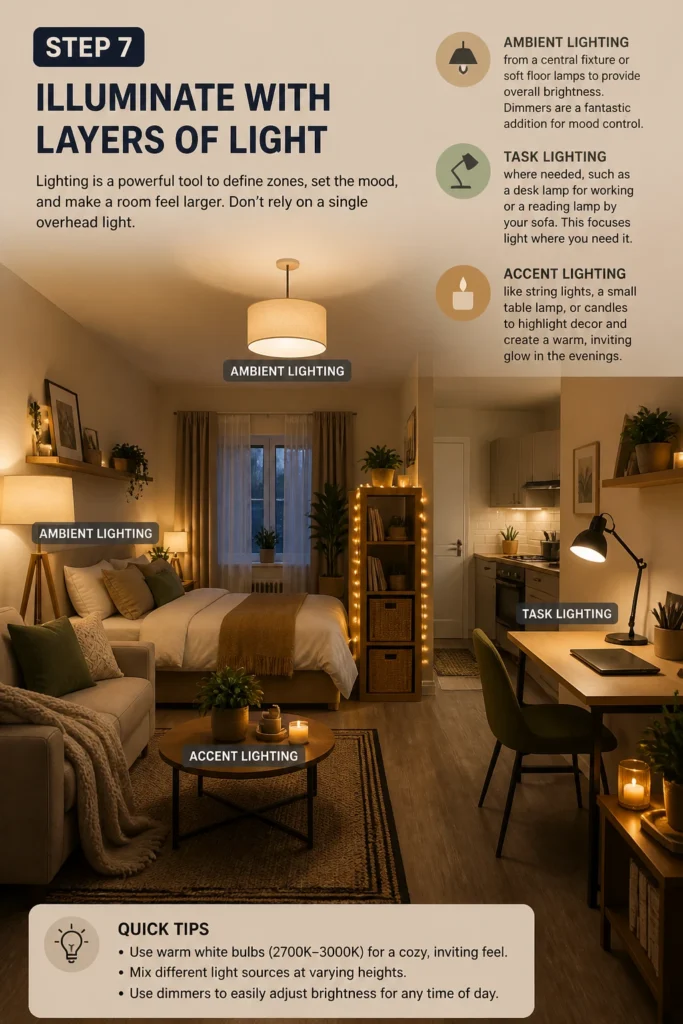
Incorporate ambient lighting from a central fixture or soft floor lamps to provide overall brightness. Dimmers are a fantastic addition for mood control.
Add task lighting where needed, such as a desk lamp for working or a reading lamp by your sofa. This focuses light where you need it.
Include accent lighting like string lights, a small table lamp, or candles to highlight decor and create a warm, inviting glow in the evenings.
Step 8: Personalize with Thoughtful Details
This is where your single room truly becomes a home. Infuse it with elements that reflect your personality and passions.
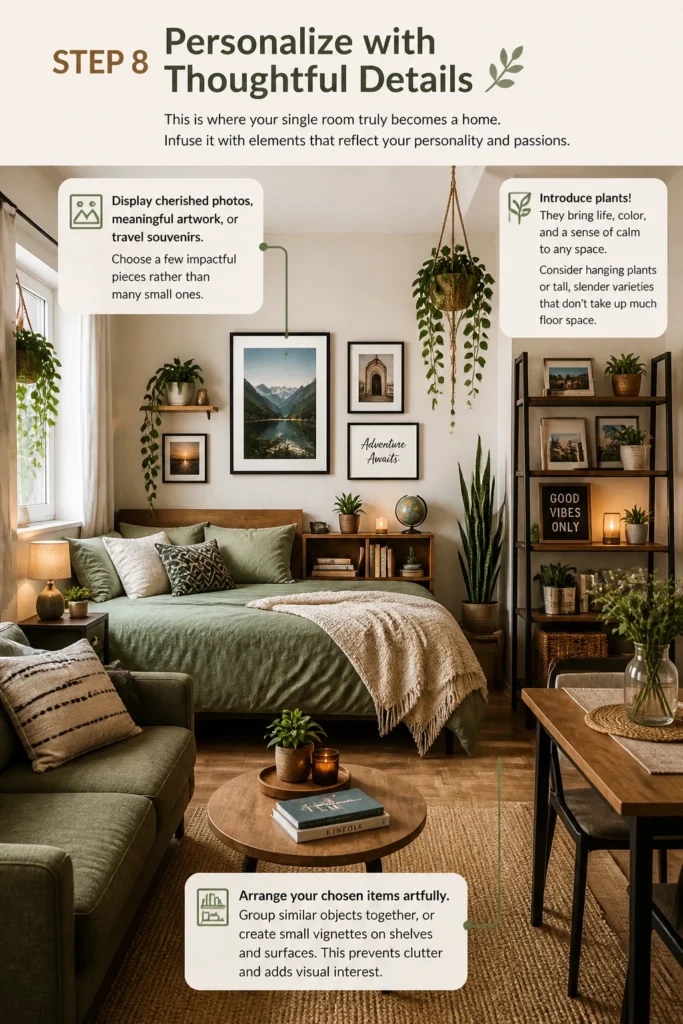
Display cherished photos, meaningful artwork, or travel souvenirs. Choose a few impactful pieces rather than many small ones.
Introduce plants! They bring life, color, and a sense of calm to any space. Consider hanging plants or tall, slender varieties that don’t take up much floor space.
Arrange your chosen items artfully. Group similar objects together, or create small vignettes on shelves and surfaces. This prevents clutter and adds visual interest.
Common Mistakes to Avoid
Over-Furnishing the Space
A common pitfall is trying to fit too many pieces into a single room. This leads to a cramped, unwelcoming atmosphere where movement is restricted.
Instead of cramming, prioritize essential, multi-functional pieces. Every item should have a clear purpose and enough breathing room around it to feel comfortable.
Ignoring the Power of Zones
Without distinct zones, a single room can feel like a chaotic collection of items rather than a cohesive home. This lack of structure can make the space feel smaller and less functional.
Consciously define your sleeping, living, and working areas. Use rugs, subtle room dividers, or furniture arrangement to create these visual boundaries, even if they’re not physical walls.
Poor Lighting Choices
Relying solely on harsh overhead lighting can make a room feel sterile and unwelcoming. It flattens the space and doesn’t allow for mood changes.
Layer your lighting. Combine ambient, task, and accent lights to create depth, warmth, and flexibility. Dimmers are a game-changer for setting the perfect atmosphere.
Neglecting Vertical Storage
Many people focus only on floor space, leaving valuable wall space underutilized. This means missing out on significant storage and display opportunities.
Look up! Install shelves, use tall bookcases, and hang wall art or even a wall-mounted desk. This frees up floor space and adds visual interest, making the room feel larger.
Troubleshooting
My Room Still Feels Too Small and Cluttered
This feeling often stems from having too many items or poor organization. It’s time for another round of decluttering, perhaps even more ruthless than the first.
Revisit your storage solutions. Are you using every available nook? Consider under-bed storage, behind-the-door organizers, or even a storage ottoman. Ensure every item has a designated home.
I Lack Privacy for Different Activities
When all activities happen in one space, privacy can be a concern. This can make it hard to relax or focus.
Think about using physical, yet movable, dividers. A standing screen, a tall bookcase, or even a sheer curtain on a ceiling track can create a visual break without blocking all light.
It Feels More Like a Dorm Room Than a Home
A sterile or temporary feel usually means the room lacks personality and warmth. It needs more of “you” infused into the design.
Add personal touches: photos, artwork, plants, and meaningful decor. Introduce varied textures through textiles like throws, pillows, and rugs. Layer your lighting to create a cozier ambiance.
Key Takeaways
- Decluttering is foundational: A clear space is the first step to a functional and beautiful single room.
- Define distinct zones: Use furniture and decor to create dedicated areas for sleeping, living, and working.
- Embrace multi-functional furniture: Choose pieces that serve more than one purpose to maximize efficiency.
- Utilize vertical space: Wall-mounted shelves, tall bookcases, and artwork expand storage and visual interest.
- Layer lighting strategically: Combine ambient, task, and accent lighting to enhance mood and functionality.
- Personalize with intention: Infuse your space with items that reflect your style and bring you joy, creating a truly unique home.
Frequently Asked Questions
How can I host guests comfortably in a single room?
Multi-functional furniture is key here. A comfortable sofa bed or a daybed with a pull-out trundle is ideal. You can also use large floor cushions for extra seating during the day, which can then be stacked away. Clear pathways and ensure your guest has a designated spot for their belongings, even if it’s just a clear surface or a hook on the door.
What about cooking smells or food odors in a small space?
Ventilation is your best friend. Always use your range hood or open a window when cooking. Consider an air purifier to help circulate and clean the air. Scented candles or diffusers can also help, but good ventilation is the primary solution for preventing lingering odors.
Can I have pets in a single room house?
Absolutely! Many people happily live with pets in single rooms. The key is to ensure your pet’s needs are met within the space. Provide designated spots for their food, water, and bed. Keep their toys organized and consider a litter box enclosure if you have a cat. Regular cleaning and vacuuming will also be important to manage pet hair and dander.
How do I make my sleeping area feel separate from the rest of the room?
Beyond furniture placement, you can use a sheer curtain on a ceiling track to visually enclose the bed area. A tall, open-backed bookcase can also act as a divider while providing storage. Another option is a decorative screen that can be folded away when not in use. These elements create a sense of enclosure without fully walling off the space.
Our Top Recommended Finds
- Storage Ottoman: A versatile piece that offers seating, a footrest, and hidden storage for blankets or magazines.
- Slim, Wall-Mounted Shelving Unit: Maximizes vertical space without adding bulk, perfect for books, plants, or decorative items.
- Room Divider Screen: A simple, portable solution for creating temporary privacy or defining zones, available in many styles and materials.
Embrace Your Cozy Haven
You’ve now gathered the tools and inspiration to transform your single room into a space that truly feels like home. This isn’t just about arranging furniture; it’s about crafting an environment that supports your lifestyle and brings you daily comfort.
Imagine waking up in a space that feels organized, inviting, and perfectly tailored to your needs. This journey is about intentional living and celebrating the potential of every square foot.
Take these steps, trust your vision, and start creating your beautifully arranged, single-room sanctuary today. Your cozy, functional home awaits!