✨ How To Make Your Bed Look Nice
There’s something truly special about walking into a bedroom and seeing a beautifully made bed.
It instantly makes the entire space feel calm, inviting, and wonderfully cozy.
I’ve always found that a well-dressed bed transforms a room, turning it from just a place to sleep into a personal sanctuary. This guide shares my favorite tips to help you create that same sense of peace and beauty in your own home.
Quick Overview
Transforming your bed into a stylish focal point is easier than you might think. This guide will walk you through the simple steps to achieve a magazine-worthy look.
- Time needed: 15-30 minutes
- Difficulty: Beginner
- What you’ll need: Fitted sheet, flat sheet, pillows, duvet/comforter, decorative pillows, throw blanket.
Step-by-Step Instructions
Step 1: Clear Your Canvas
Before you begin the magic, it’s important to start fresh. This means stripping your bed down to the mattress.
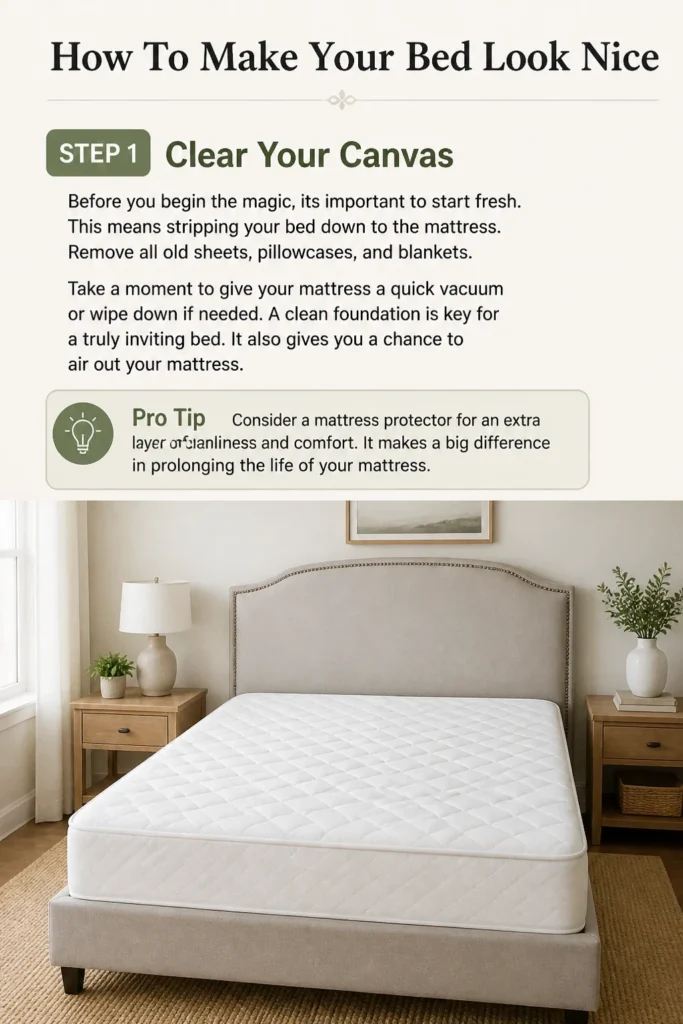
Remove all old sheets, pillowcases, and blankets. Take a moment to give your mattress a quick vacuum or wipe down if needed.
A clean foundation is key for a truly inviting bed. It also gives you a chance to air out your mattress.
Pro Tip: Consider a mattress protector for an extra layer of cleanliness and comfort. It makes a big difference in prolonging the life of your mattress.
Step 2: Anchor with a Fitted Sheet
The fitted sheet is your bed’s foundation. It provides a smooth, taut surface for everything else to rest upon.
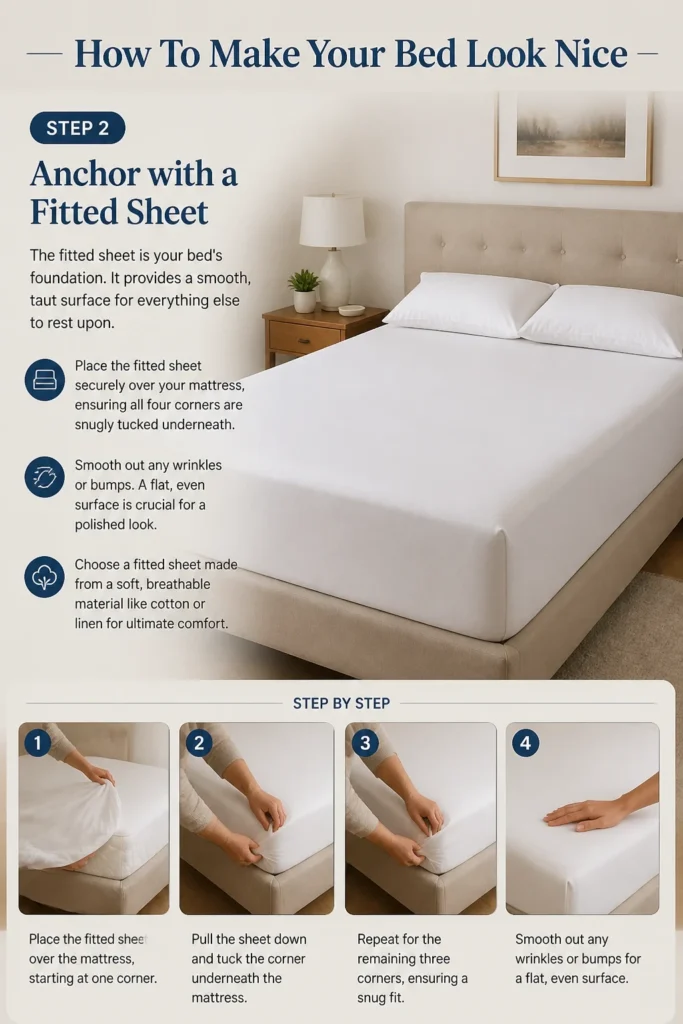
Place the fitted sheet securely over your mattress, ensuring all four corners are snugly tucked underneath.
Smooth out any wrinkles or bumps. A flat, even surface is crucial for a polished look.
Choose a fitted sheet made from a soft, breathable material like cotton or linen for ultimate comfort.
Step 3: Lay the Flat Sheet with Precision
The flat sheet is where many people get tripped up, but it’s simple once you know the trick. Position the flat sheet face-down on your bed, with the top edge aligned with the head of the mattress.
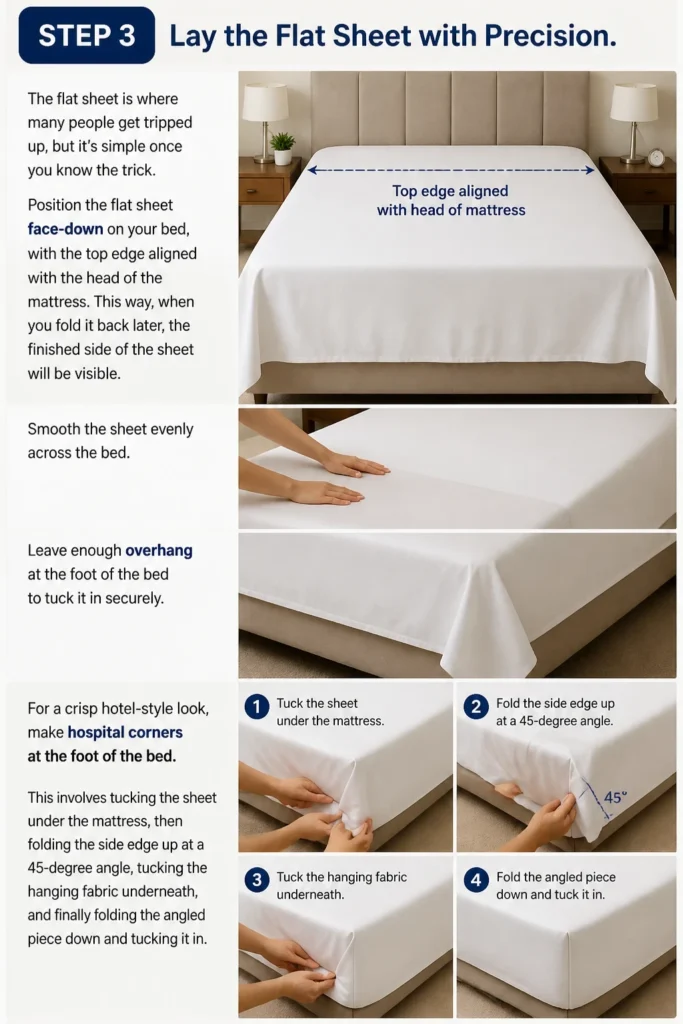
This way, when you fold it back later, the finished side of the sheet will be visible.
Smooth the sheet evenly across the bed. Leave enough overhang at the foot of the bed to tuck it in securely.
For a crisp hotel-style look, make hospital corners at the foot of the bed. This involves tucking the sheet under the mattress, then folding the side edge up at a 45-degree angle, tucking the hanging fabric underneath, and finally folding the angled piece down and tucking it in.
Step 4: Fluff and Arrange Your Sleeping Pillows
Your sleeping pillows are next. These are the pillows you actually rest your head on at night.
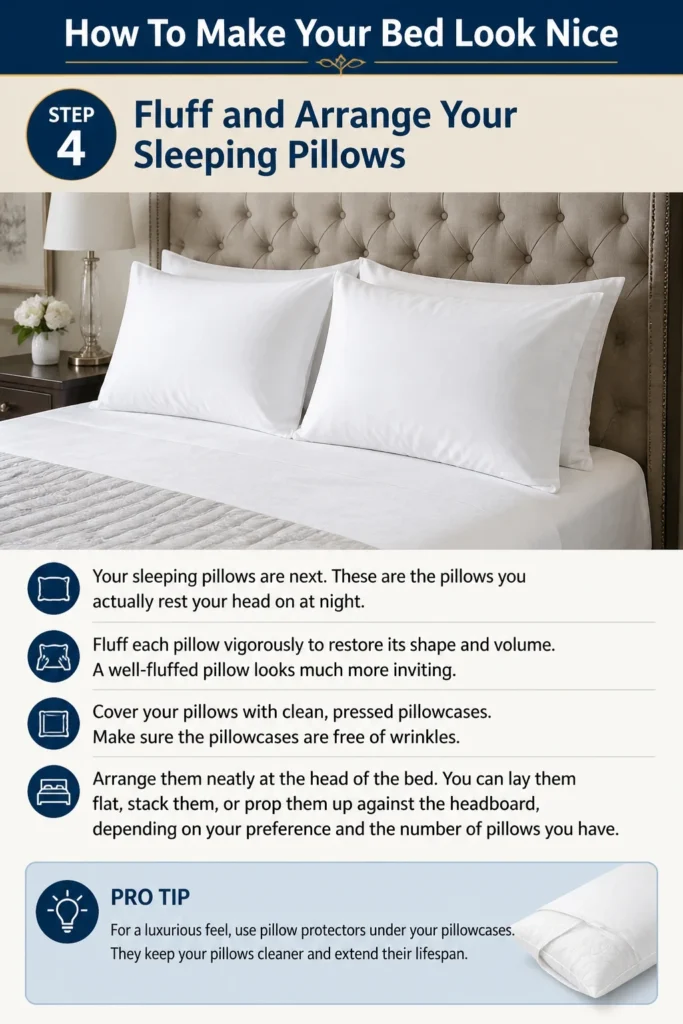
Fluff each pillow vigorously to restore its shape and volume. A well-fluffed pillow looks much more inviting.
Cover your pillows with clean, pressed pillowcases. Make sure the pillowcases are free of wrinkles.
Arrange them neatly at the head of the bed. You can lay them flat, stack them, or prop them up against the headboard, depending on your preference and the number of pillows you have.
Pro Tip: For a luxurious feel, use pillow protectors under your pillowcases. They keep your pillows cleaner and extend their lifespan.
Step 5: Introduce Your Duvet or Comforter
This is where the real warmth and visual weight come in. Your duvet or comforter is the main layer of coziness.
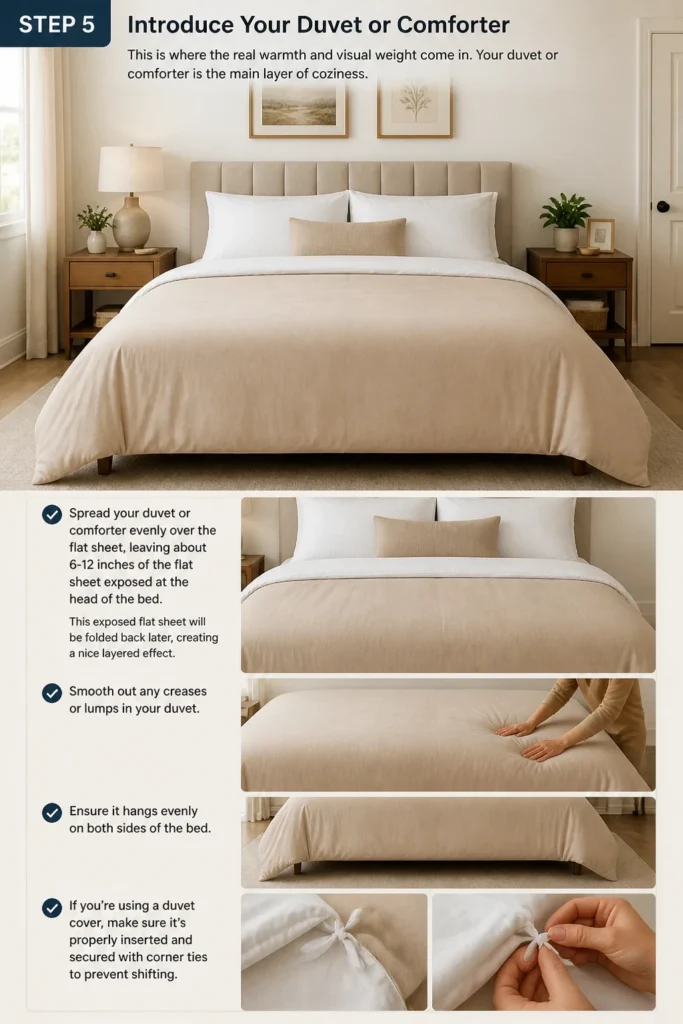
Spread your duvet or comforter evenly over the flat sheet, leaving about 6-12 inches of the flat sheet exposed at the head of the bed.
This exposed flat sheet will be folded back later, creating a nice layered effect.
Smooth out any creases or lumps in your duvet. Ensure it hangs evenly on both sides of the bed.
If you’re using a duvet cover, make sure it’s properly inserted and secured with corner ties to prevent shifting.
Step 6: Fold Back for a Layered Look
Now, let’s create that inviting layered aesthetic. Fold the top edge of the duvet or comforter down, about a third of the way from the head of the bed.
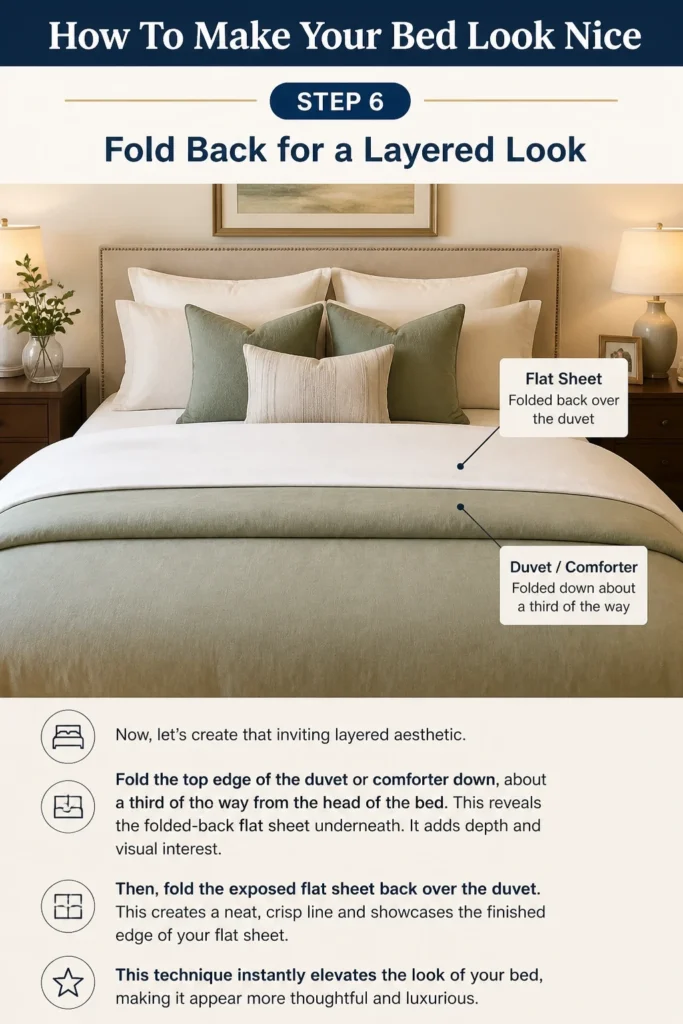
This reveals the folded-back flat sheet underneath. It adds depth and visual interest.
Then, fold the exposed flat sheet back over the duvet. This creates a neat, crisp line and showcases the finished edge of your flat sheet.
This technique instantly elevates the look of your bed, making it appear more thoughtful and luxurious.
Step 7: Add Decorative Pillows and Shams
This is where you inject personality and style. Decorative pillows and shams are the jewelry of your bed.
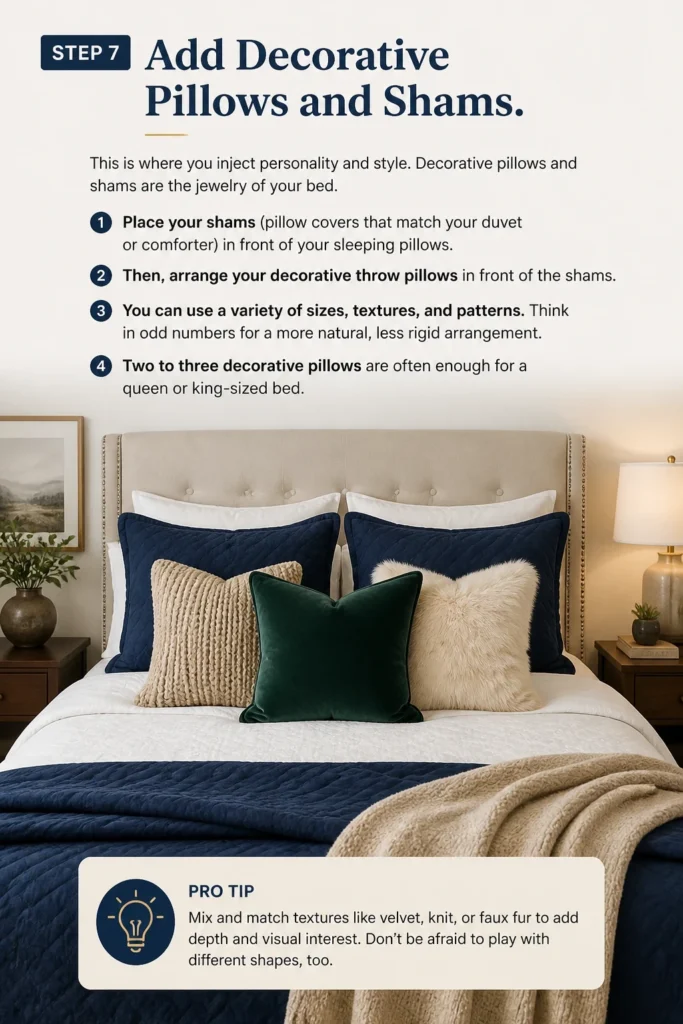
Place your shams (pillow covers that match your duvet or comforter) in front of your sleeping pillows.
Then, arrange your decorative throw pillows in front of the shams. You can use a variety of sizes, textures, and patterns.
Think in odd numbers for a more natural, less rigid arrangement. Two to three decorative pillows are often enough for a queen or king-sized bed.
Pro Tip: Mix and match textures like velvet, knit, or faux fur to add depth and visual interest. Don’t be afraid to play with different shapes, too.
Step 8: Drape a Stylish Throw Blanket
A throw blanket adds a final touch of warmth, texture, and color. It’s the ultimate cozy accessory.
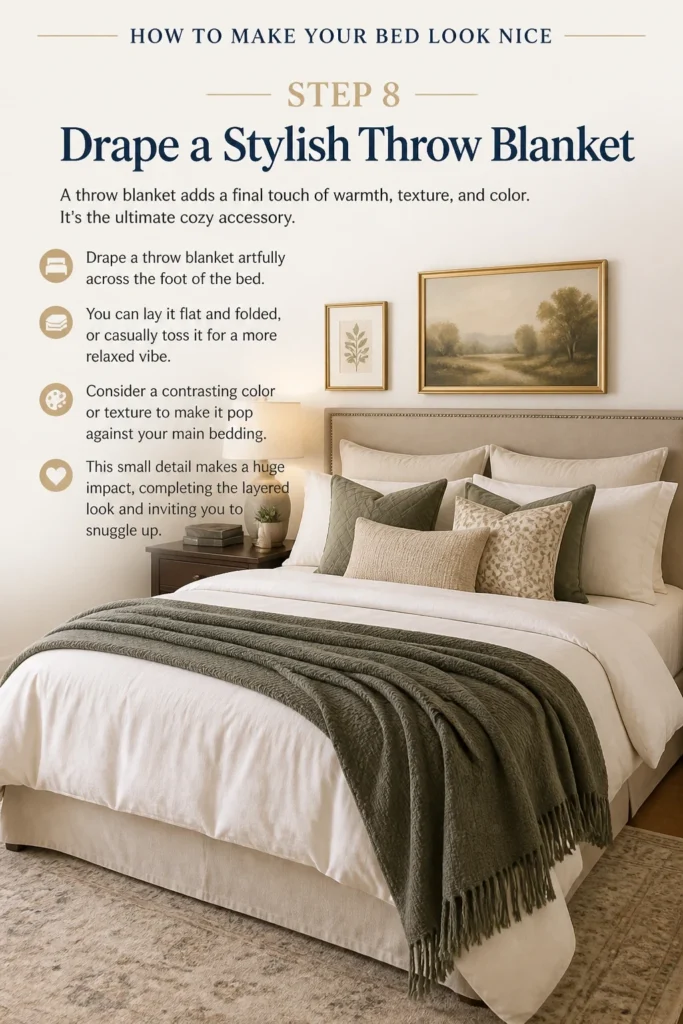
Drape a throw blanket artfully across the foot of the bed. You can lay it flat and folded, or casually toss it for a more relaxed vibe.
Consider a contrasting color or texture to make it pop against your main bedding.
This small detail makes a huge impact, completing the layered look and inviting you to snuggle up.
Step 9: The Finishing Touches and Room Harmony
Your bed now looks fantastic, but let’s ensure it fits beautifully within your entire room.
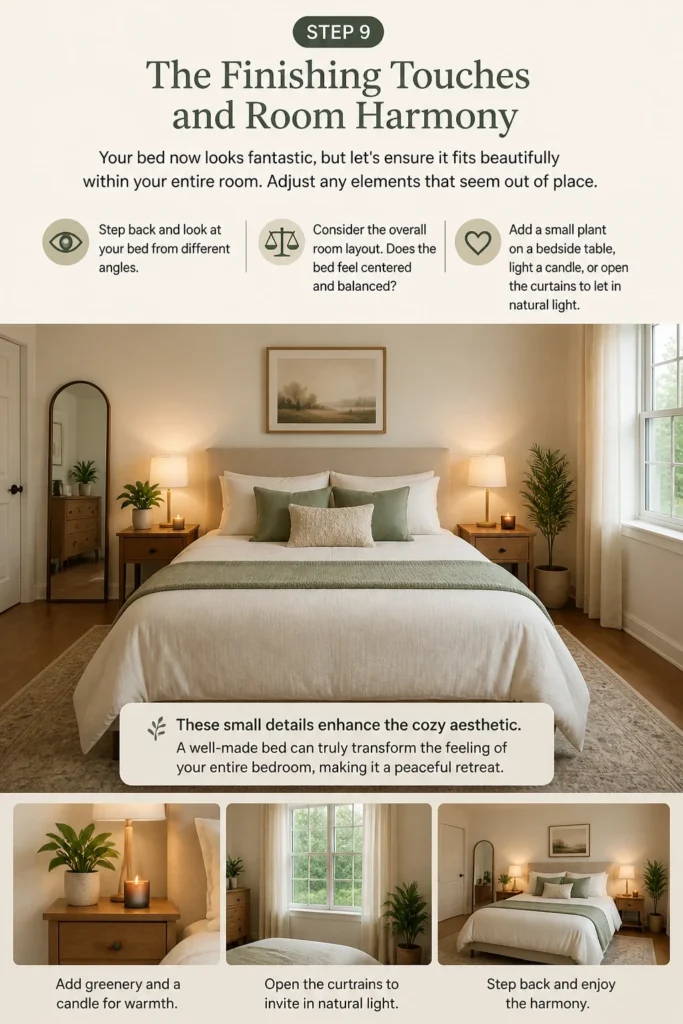
Adjust any elements that seem out of place. Step back and look at your bed from different angles.
Consider the overall room layout. Does the bed feel centered and balanced?
Add a small plant on a bedside table, light a candle, or open the curtains to let in natural light. These small details enhance the cozy aesthetic.
A well-made bed can truly transform the feeling of your entire bedroom, making it a peaceful retreat.
Common Mistakes to Avoid
Overcrowding with Too Many Pillows
While decorative pillows are lovely, too many can make your bed feel less inviting and more like a fortress. It becomes a chore to remove them all at night.
Aim for a balanced number. For a queen or king bed, two shams and two to three decorative pillows are often perfect. Less is often more when it comes to creating a serene space.
Ignoring Scale and Proportion
Using bedding that is too small or too large for your mattress can make your bed look awkward. A duvet that doesn’t fully cover the sides, or a throw blanket that’s minuscule, disrupts the aesthetic.
Always measure your mattress before buying bedding. Ensure your duvet or comforter is appropriately sized, allowing for a nice drape over the sides. Choose throw pillows that complement the size of your bed, not overwhelm it.
Wrinkled Sheets and Bedding
Nothing detracts from a beautiful bed faster than wrinkled sheets and pillowcases. It instantly makes the space look unkempt, no matter how perfectly everything else is arranged.
Take the extra minute to smooth out your sheets as you make the bed. Consider using a fabric wrinkle release spray or a quick iron for pillowcases if you want a truly crisp look. Freshly laundered and smooth bedding elevates the entire presentation.
Mismatched Bedding Without Purpose
While mixing patterns and textures is encouraged, doing so without a cohesive color palette or theme can lead to a chaotic look. A random assortment of colors and designs can feel jarring.
Choose a primary color scheme and stick to it. Introduce accent colors through throw pillows or blankets. Ensure patterns either complement each other or have a unifying element, like a shared color, to create a harmonious and intentional design.
Troubleshooting
My Bed Always Looks Messy, Even After I Make It
If your bed still feels disheveled, check your foundation. Is your fitted sheet taut? Are your flat sheet and duvet smoothed out properly before layering?
Often, the culprit is a loose fitted sheet or a lumpy duvet. Ensure you’re taking the time to smooth each layer carefully. Also, consider investing in a duvet cover with corner ties to keep the insert from shifting.
I Can’t Achieve a Layered Look
Achieving layers requires the right components and a specific order. Start with a flat sheet that’s long enough to fold back over your duvet.
Make sure your duvet or comforter is appropriately sized to extend beyond the mattress edges. Then, add shams and decorative pillows. Finally, a throw blanket draped at the foot of the bed completes the multi-dimensional effect.
My Small Room Feels Overwhelmed by a “Nice” Bed
In smaller rooms, a highly elaborate bed can sometimes feel too much. The key is to simplify without sacrificing style.
Opt for fewer decorative pillows, perhaps just one or two. Choose lighter colors for your main bedding to make the space feel more open. Instead of a bulky throw, select a lightweight blanket. Focus on clean lines and thoughtful placement to create an inviting, yet not overwhelming, aesthetic.
Key Takeaways
- Start with a Clean Foundation: A taut fitted sheet and smoothed layers are essential for a polished look.
- Layering Adds Depth: Folding back your flat sheet and duvet creates visual interest and a luxurious feel.
- Pillows are Key: Fluff sleeping pillows and strategically arrange decorative pillows for comfort and style.
- Texture and Color Matter: Mix materials and introduce accent colors through throws and pillows to add personality.
- Less Can Be More: Avoid overcrowding with too many items, especially in smaller spaces.
- Smoothness is Supreme: Always aim for wrinkle-free bedding for a truly inviting appearance.
Frequently Asked Questions
How often should I wash my bedding?
It’s generally recommended to wash your sheets and pillowcases once a week. Duvet covers can be washed every 2-4 weeks, and duvets or comforters themselves usually only need cleaning a few times a year, or as needed.
What’s the difference between a duvet and a comforter?
A comforter is a single piece of bedding, typically filled with batting or down, and used as a top layer. A duvet is a soft, flat bag filled with down, feathers, or synthetic fibers, designed to be covered with a removable duvet cover. Duvets are often fluffier and allow for easy changes in style.
How many pillows are too many?
The ideal number depends on your bed size and personal style, but generally, for a queen or king bed, two sleeping pillows, two shams, and 1-3 decorative throw pillows create a balanced and inviting look without being overwhelming. Less is often more for a serene feel.
Can I mix patterns and textures in my bedding?
Absolutely! Mixing patterns and textures adds richness and personality to your bed. The trick is to ensure there’s a unifying element, such as a consistent color palette, or to vary the scale of the patterns (e.g., a large floral with a small geometric). Combining textures like smooth cotton with a chunky knit or soft velvet creates wonderful depth.
Our Top Recommended Finds
- Linen Sheet Set: For a relaxed, luxurious feel and excellent breathability, linen sheets are a game-changer. They get softer with every wash.
- Duvet Cover with Corner Ties: This simple feature keeps your duvet insert from shifting and bunching, ensuring a consistently smooth and inviting look.
- Textured Knit Throw Blanket: A cozy, visually appealing throw blanket in a contrasting texture or color adds that perfect final layer of warmth and style.
Creating Your Cozy Retreat
Making your bed look nice is more than just a chore; it’s an act of self-care and a way to enhance your living space.
Imagine stepping into a room that feels calm, inviting, and truly yours. That all starts with a beautifully made bed.
Don’t wait to transform your bedroom into the sanctuary you deserve. Pick one tip from this guide and try it today.
You’ll be amazed at the difference a few mindful steps can make in how your entire room feels.