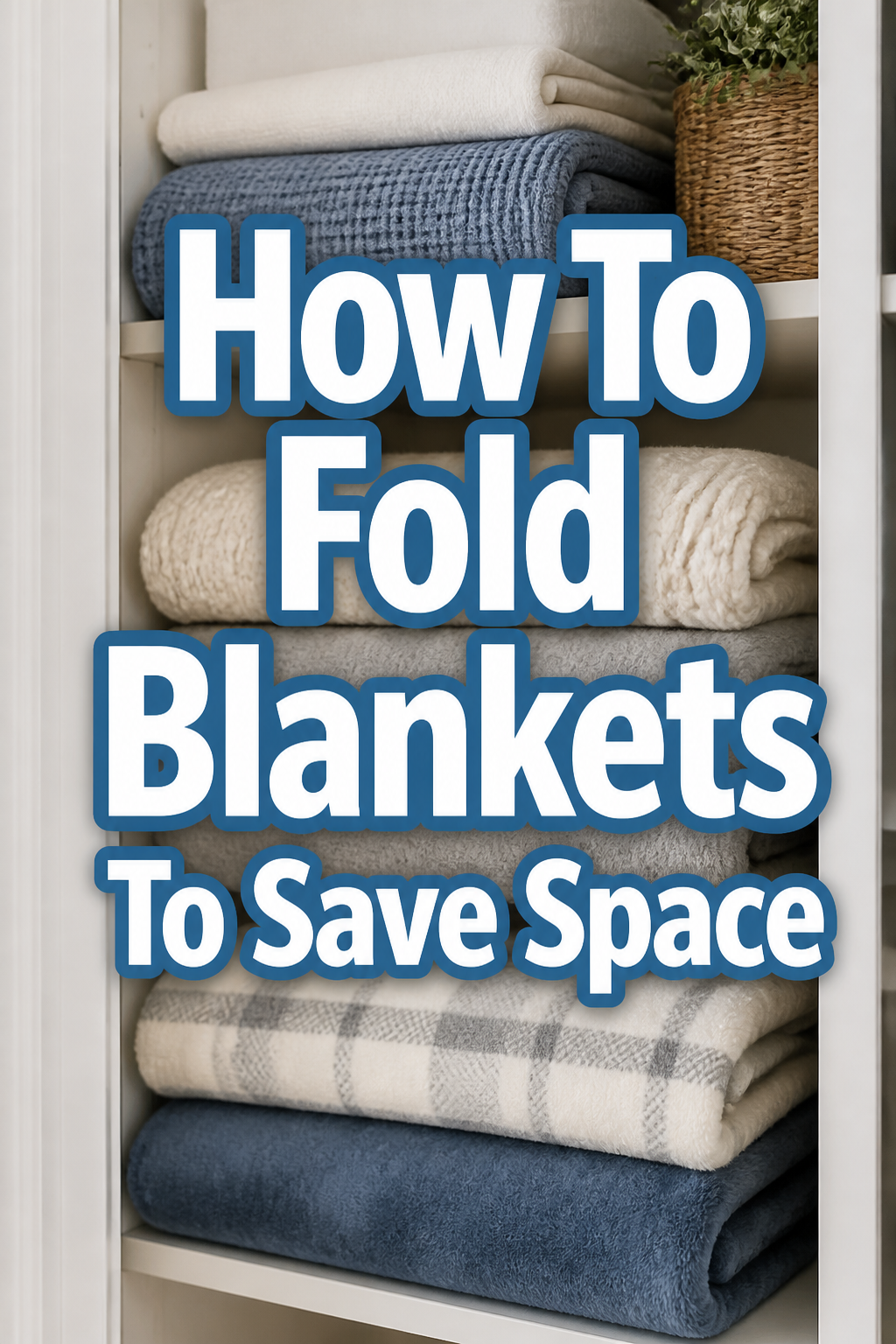
✨ How To Fold Blankets To Save Space
There’s a special kind of calm that comes with a beautifully organized home.
For me, tackling the unruly pile of blankets was a game-changer for reclaiming precious space and creating a serene atmosphere.
This guide shares the tried-and-true methods I’ve perfected over years, transforming cluttered corners into cozy, inviting havens.
Quick Overview
You’re about to master the art of folding blankets, turning bulky textiles into neat, compact bundles.
Imagine effortlessly tucking away your throws, creating more space and a more tranquil living area.
- Time needed: 5-15 minutes per blanket, depending on size and method
- Difficulty: Beginner
- What you’ll need: Your blankets, a clean, flat surface, and a desire for a more organized space
Step-by-Step Instructions
Step 1: Choose Your Blanket and Workspace
Begin by selecting the blanket you wish to fold. Different sizes and materials might influence the exact technique, but the core principles remain consistent.
Find a large, clean, and flat surface to work on. Your bed, a dining table, or even a clean floor space will do beautifully.
- Lay your blanket out completely flat. Ensure there are no major wrinkles or bunched-up areas, as a smooth start leads to a neater finish.
- Smooth out any creases with your hands. This initial smoothing makes the subsequent folds much crisper and more precise.
Pro Tip: Consider the blanket’s material. Thicker, plush blankets might need slightly looser folds to prevent excessive bulk, while thinner throws can be folded more tightly.
Step 2: The Initial Horizontal Fold (The Long Way)
This first fold establishes the length of your folded blanket, which is crucial for how it will sit in your storage space.
Aim for a fold that creates a manageable strip, typically one-third or one-quarter of the blanket’s original width.
- Fold one long edge of the blanket towards the center. Bring it over about one-third of the way across the blanket’s width.
- Bring the opposite long edge over to meet the first fold. This creates a long, narrow rectangle, effectively reducing the blanket’s width significantly.
- Ensure the edges align as perfectly as possible. Precision now will save you from lopsided results later.
Step 3: The Vertical Halving (Or Thirding)
Now that your blanket is a long, narrow strip, it’s time to reduce its length to fit your intended storage area.
Think about where the blanket will live – a basket, a shelf, or a drawer – and aim for a length that fits snugly.
- Fold the blanket in half lengthwise, bringing one end to meet the other. This creates a shorter, thicker rectangle.
- Smooth the crease firmly. A crisp fold here is key to a compact and aesthetically pleasing result.
- Consider folding it into thirds if the blanket is exceptionally long or if you need an even shorter final product. Simply fold one end in, then the other over it.
Pro Tip: For very large blankets, you might need to fold the long strip into thirds or even quarters lengthwise before halving it, ensuring it doesn’t become too bulky.
Step 4: The Strategic Roll (For Baskets & Open Storage)
Rolling is a fantastic technique for blankets displayed in baskets or open shelves, offering a soft, inviting look while saving space.
It also minimizes creases, keeping your blankets looking fresh and ready for use.
- Start at one end of your folded strip. Begin to roll the blanket tightly and evenly.
- Keep the roll firm but not overly compressed. The goal is a compact cylinder that holds its shape.
- Place the finished roll upright in a basket or on a shelf. The rolled edge creates a beautiful texture, adding to your room’s cozy appeal.
Step 5: The Neat Stack (For Shelves & Drawers)
For a crisp, uniform look in drawers, on shelves, or in linen closets, a simple stack fold is often best.
This method creates clean lines and allows for easy visibility and access.
- Fold your blanket strip in half one more time, width-wise. This creates a compact, rectangular block.
- Adjust the folds to be perfectly square or rectangular. This uniformity is what makes stacking so effective.
- Stack these neatly folded blankets on top of each other. Each blanket should be the same size for a harmonious look.
Pro Tip: When stacking, place heavier blankets at the bottom and lighter ones on top. This prevents crushing and keeps your stack stable.
Step 6: The File Fold (For Drawers & Deep Shelves)
Inspired by KonMari, the file fold allows blankets to stand upright, making them easy to see and retrieve without disturbing others.
This method is revolutionary for maximizing drawer space and keeping things tidy.
- Take your long, narrow blanket strip from Step 3.
- Fold one end in towards the middle, leaving a small gap at the other end.
- Fold the other end in, overlapping the first fold slightly, creating a smaller rectangle.
- Fold this rectangle in half or thirds again, depending on the height of your drawer or shelf. The goal is for it to stand upright.
- Place the folded blanket vertically in your drawer. This allows you to “file” your blankets, seeing all of them at a glance.
Step 7: The Square Fold (For Display & Cubbies)
A classic square fold is perfect for blankets you want to display in cubbies, on ottomans, or at the foot of a bed.
It creates a clean, architectural shape that complements modern and minimalist aesthetics.
- Begin with your blanket laid flat.
- Fold one side in towards the center, about a quarter of the blanket’s width.
- Fold the opposite side in to meet the first fold, creating a long, even strip.
- Fold one end of the strip towards the center.
- Bring the other end over to meet the first, creating a perfect square or near-square shape.
Pro Tip: For an extra touch of elegance, fold your square-folded blanket in half diagonally, creating a triangle. Drape it artfully over furniture for a chic look.
Step 8: The Basket-Specific Fold
Sometimes, the best fold is one tailored precisely to the container it will live in.
This ensures maximum space utilization and a polished appearance within your chosen basket or bin.
- Measure the dimensions of your basket. Note its width, length, and height.
- Adjust your initial horizontal folds (Step 2) to match the width of the basket. You might need to fold it into quarters instead of thirds, for instance.
- Fold the resulting strip vertically (Step 3 or 5) so its length fits the basket’s length or height, depending on how you plan to store it.
- Tuck the perfectly sized blanket into your basket. It should fit snugly without being crushed or leaving too much empty space.
Step 9: The Display Fold (For Sofa Throws)
When a blanket is meant to be seen and easily accessible, a relaxed yet intentional fold is ideal.
This method keeps your throw neat but inviting, ready to be snuggled under at a moment’s notice.
- Fold your blanket in half lengthwise.
- Fold it in half lengthwise again, creating a long, narrow strip.
- Drape this strip artfully over the arm of your sofa or the back of a chair. Allow some ends to hang down naturally.
- Alternatively, fold the strip into thirds or quarters to create a tidy rectangle. Lay this flat over a cushion or the foot of your bed.
Common Mistakes to Avoid
Folding When Wrinkled
Attempting to fold a blanket that is already a rumpled mess will only result in a lumpy, uneven bundle. This takes up more space than necessary and looks untidy.
Always take a moment to smooth out your blanket before you begin folding. A flat, wrinkle-free surface is the foundation for a compact and beautiful fold.
Ignoring Blanket Material
Treating all blankets the same, regardless of their fabric or thickness, can lead to frustration. A chunky knit requires a different approach than a thin cotton throw.
Adapt your folding technique. For thick blankets, make fewer, slightly looser folds to prevent excessive bulk. For thin blankets, you can fold more times for a truly compact result.
Inconsistent Sizing
Folding blankets to different sizes, even if they are stored in the same space, creates a jumbled appearance and makes stacking difficult. This wastes valuable space.
Decide on a standard folded size for your storage area. Then, strive to make every blanket conform to those dimensions, creating a uniform and organized look.
Overstuffing Storage Areas
Cramming too many folded blankets into a drawer or basket defeats the purpose of neat folding. It damages the blankets and makes it hard to retrieve one without disturbing the rest.
Allow enough space for air circulation and easy access. If your storage is overflowing, it’s a sign to either find more storage or declutter your blanket collection.
Troubleshooting
Blanket Keeps Unraveling
If your rolled blanket seems to lose its shape or your folded stack collapses, it’s often due to insufficient tightness in the initial folds or roll.
Ensure each fold is firm and crisp. When rolling, maintain consistent tension. For stacked blankets, ensure each layer is flat and even before placing the next on top.
Still Too Bulky for Storage
Even with careful folding, some blankets might seem too large for your intended space. This is a common challenge with very thick or oversized throws.
Re-evaluate the number of folds. For exceptionally bulky items, consider folding into thirds or quarters lengthwise before halving, or try the file fold to maximize vertical space in drawers.
Folds Aren’t Crisp or Even
Uneven folds can make your storage look messy and reduce overall space efficiency. This usually happens when edges aren’t aligned or the blanket isn’t smoothed properly.
Take your time with each step. Lay the blanket perfectly flat, smooth out all wrinkles, and align edges precisely before making each fold. A flat surface is crucial here.
Key Takeaways
- Preparation is paramount: Always start with a smooth, flat blanket for the best results.
- Tailor your fold: Match the folding method (roll, stack, file) to your storage space and aesthetic goals.
- Consistency is key: Aim for uniform folded sizes, especially when stacking or filing, to maximize space.
- Mind the material: Adapt your technique for different blanket thicknesses and fabrics.
- Less is more: Avoid overstuffing storage areas; allow blankets room to breathe and stay neat.
Frequently Asked Questions
Can I fold all types of blankets this way?
Most blankets, from thin cotton throws to medium-weight fleece, can be folded using these methods. Very thick, stiff quilts or extremely delicate hand-knits might require slightly gentler handling or fewer, looser folds to prevent damage or excessive bulk.
How do I keep my blankets smelling fresh in storage?
Always ensure blankets are clean and completely dry before folding and storing them. You can also place cedar blocks, lavender sachets, or dryer sheets between layers or in storage bins to impart a pleasant, fresh scent and deter pests.
What’s the best way to store blankets I use frequently?
For frequently used blankets, consider easy-access storage like decorative baskets, a blanket ladder, or draped over the back of a sofa. Rolling them allows for quick retrieval and a charming display, while a simple display fold keeps them ready at hand.
Will folding damage my blankets over time?
Proper folding, especially if you vary the fold lines occasionally, will not damage your blankets. Avoid excessively tight folds that might stress the fabric, especially with delicate materials. Ensure blankets are clean before storing to prevent mildew or attracting pests.
Our Top Recommended Finds
- Woven Storage Baskets: Perfect for rolled blankets, adding natural texture and warmth to any room while keeping throws contained.
- Under-Bed Storage Containers: Ideal for seasonal blankets, these clear, low-profile bins protect blankets from dust and free up closet space.
- Adjustable Drawer Dividers: Excellent for file-folding, these help keep blankets upright and separated, making it easy to find what you need.
Transform Your Cozy Nook Today
Embrace the satisfaction of a beautifully organized home, one perfectly folded blanket at a time. The simple act of tidying can bring a profound sense of peace and control to your living space.
Imagine your shelves and baskets looking like they belong in a design magazine, all thanks to a few mindful folds.
Ready to continue your journey to a more serene home? Explore guides on organizing your linen closet or decluttering your living room for even more inspiration.