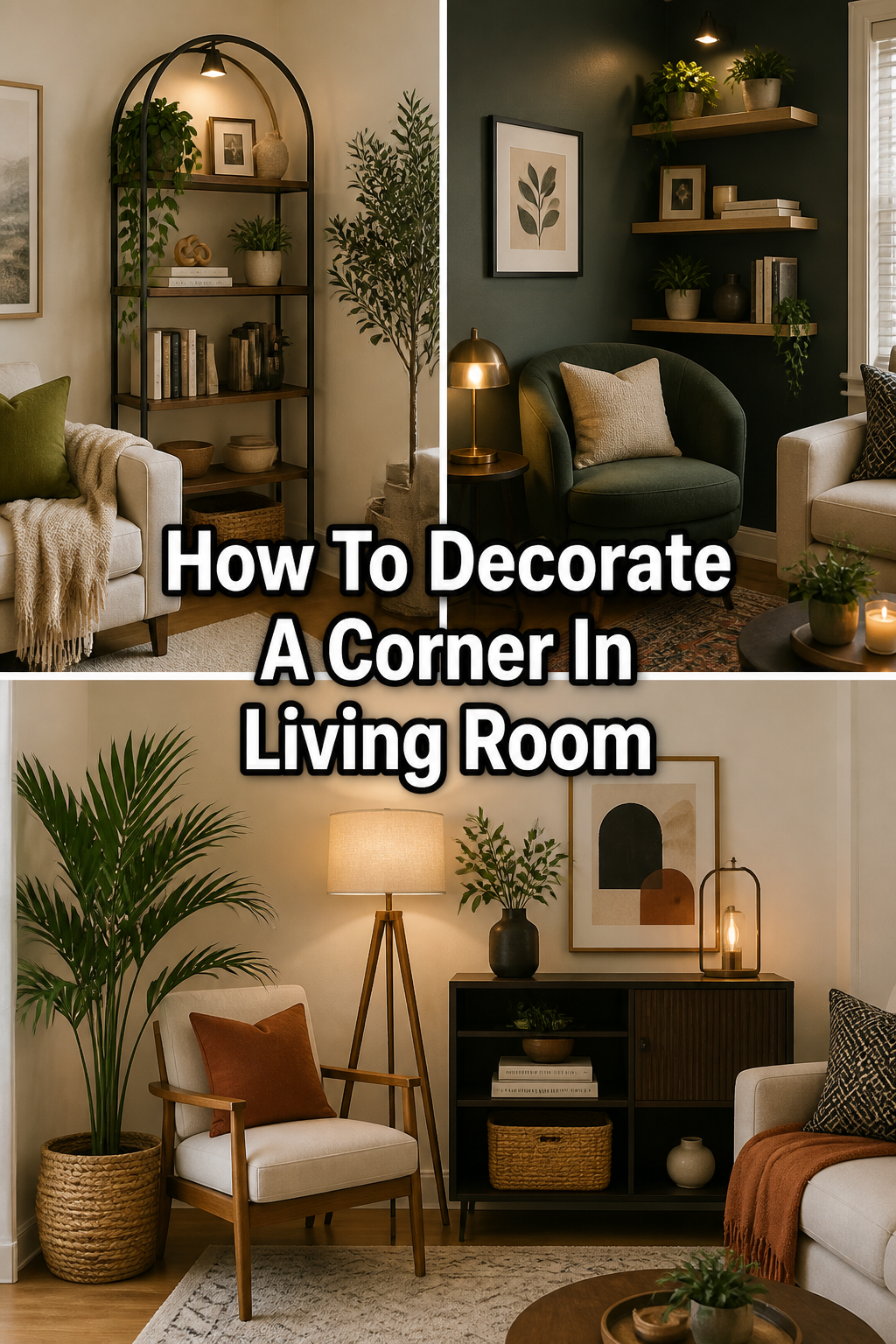
🛋️ How To Decorate A Corner In Living Room
That forgotten corner in your living room often feels like a design dilemma, doesn’t it?
I remember staring at a bland, empty space for months, wondering how to make it feel purposeful and pretty.
This guide comes from transforming many such corners into cherished nooks, and I’m excited to share those practical steps with you.
Quick Overview
You’re about to transform that neglected corner into a beautiful, functional, and inviting part of your living space.
We’ll cover everything from planning to styling, ensuring your corner becomes a highlight, not an afterthought.
- Time needed: 3-5 hours (including shopping for new items)
- Difficulty: Beginner
- What you’ll need: Measuring tape, pen and paper, inspiration photos, a few decor items (e.g., a lamp, plant, small chair)
Step-by-Step Instructions
Step 1: Assess Your Space and Needs
Look at your corner with fresh eyes. Consider its size, the natural light it receives, and its proximity to other furniture.
Think about what your living room currently lacks. Do you need more storage, a reading spot, or a place to display treasures?
Pro Tip: Snap a few photos of the empty corner from different angles. This helps you visualize possibilities and spot potential challenges.
Step 2: Measure and Plan
Grab your measuring tape and carefully measure the corner. Note down the wall lengths, floor space, and even ceiling height.
Sketch out a few rough ideas on paper. Don’t worry about artistic skill; just get a sense of how different items might fit.
Step 3: Define Your Corner’s Purpose
Decide what you want your corner to be. Is it a cozy reading nook with a comfy chair and good light?
Perhaps it’s a vibrant plant sanctuary, a stylish display area, or a functional workspace. Knowing its purpose guides all your choices.
Step 4: Choose Your Anchor Piece
Select the main furniture item that will define your corner. This could be a small accent chair, a slim console table, a tall bookshelf, or a corner-specific cabinet.
Ensure its scale is appropriate for the corner’s size. A too-large piece will overwhelm, while a too-small one will get lost.
Step 5: Layer with Lighting
Introduce a light source to make the corner feel inviting and functional. A floor lamp is a classic choice, offering both ambient light and a stylish element.
You might also consider a wall-mounted sconce for a modern touch or even string lights for a whimsical, cozy vibe, especially if it’s a reading nook.
Pro Tip: Opt for warm-toned bulbs (2700K-3000K) to create a soft, welcoming glow that enhances the cozy aesthetic.
Step 6: Add Greenery and Life
Bring in plants to add a touch of nature and freshness. A tall, slender plant like a Fiddle Leaf Fig or a Snake Plant can fill vertical space beautifully.
Smaller potted plants on a shelf or table add texture and life. Consider both real and high-quality faux options based on your light conditions and care routine.
Step 7: Introduce Texture and Comfort
Layer soft elements to boost the cozy factor. If you have a chair, add a plush throw blanket and a decorative pillow.
A small area rug can define the corner space and introduce warmth and texture underfoot, even if it’s just a sheepskin throw draped over a chair.
Step 8: Personalize with Decor
Display items that reflect your personality and style. This could be a curated collection of books, framed photos, or unique trinkets.
Hang a piece of art or a mirror on the wall above your anchor piece. A mirror can also help reflect light and make the corner feel more open.
Step 9: Consider Vertical Space
Utilize the wall space above your main furniture. Floating shelves are excellent for displaying small items without cluttering the floor.
A tall, narrow bookshelf or a vertical gallery wall can draw the eye upwards, making the corner feel taller and more expansive.
Step 10: Test and Refine
Step back and observe your newly decorated corner. Does it feel balanced? Is it functional as intended?
Don’t hesitate to rearrange items, swap out decor, or even move furniture around until it feels just right. Sometimes living with it for a day helps you see what needs tweaking.
Common Mistakes to Avoid
Overcrowding the Corner
A common pitfall is trying to fit too many items into a small corner. This makes the space feel cluttered and cramped, rather than inviting.
Instead, focus on a few key pieces that serve a purpose and are appropriately scaled. Less is often more in corner decorating.
Ignoring Scale and Proportion
Using furniture or decor that is too large or too small for the corner can throw off the entire room’s balance. A tiny chair in a vast corner looks lost, while a huge armchair in a small corner creates a bottleneck.
Always measure your space and the items you plan to use, ensuring they fit comfortably and look proportionate to each other and the room.
Lack of Lighting
Many corners are naturally darker than the rest of the room, especially if they are far from windows. Forgetting to add a dedicated light source leaves the corner feeling dim and neglected.
Always incorporate a floor lamp, table lamp, or wall sconce. Good lighting makes the space functional and enhances the cozy atmosphere you’re trying to create.
Forgetting Functionality
While aesthetics are important, a corner that only looks good but serves no purpose can feel disconnected. If you just place random decorative items without a cohesive theme, it won’t feel truly integrated.
Always define the corner’s purpose first. Whether it’s for reading, displaying, or simply adding a touch of beauty, ensure every item contributes to that intended function.
Troubleshooting
Corner Feels Dark and Gloomy
If your corner still feels dim despite adding a lamp, try incorporating reflective surfaces. A strategically placed mirror can bounce light around the space, making it feel brighter.
Also, consider lighter-colored decor items or painting the corner walls a slightly brighter shade than the rest of the room to visually open it up.
Items Don’t Fit or Look Awkward
This often happens when measurements are rushed or furniture is chosen without considering its footprint. Go back to Step 2 and re-measure everything.
Sometimes, simply rotating a chair or moving a plant stand a few inches can make a big difference. Don’t be afraid to return items that genuinely don’t work and look for better-scaled alternatives.
Corner Feels Unfinished
An unfinished corner usually lacks layers or personal touches. If it feels bland, revisit Steps 6, 7, and 8.
Add more texture with a throw or pillow, introduce a plant, or hang a piece of art. Personal items like photos or unique souvenirs truly make the space feel lived-in and complete.
Key Takeaways
- Start with Purpose: Define what you want your corner to achieve before buying anything.
- Measure Accurately: Always know your dimensions to ensure items fit perfectly.
- Choose an Anchor: A main piece of furniture grounds the space and sets the tone.
- Layer with Light: Proper lighting is crucial for both function and ambiance.
- Add Life with Greenery: Plants bring freshness and a natural touch to any corner.
- Personalize and Texture: Use decor and soft furnishings to reflect your style and enhance coziness.
Frequently Asked Questions
What if my corner is tiny?
Even the smallest corner has potential. Focus on vertical elements like tall, slender plants or floating shelves. A small, wall-mounted light and a single, carefully chosen piece of art can make a big impact without taking up much floor space.
Can I put a TV in a corner?
Yes, you absolutely can. Corner TV stands are specifically designed for this purpose, allowing the TV to sit at an angle. Ensure the viewing distance from your seating is comfortable and that glare from windows isn’t an issue.
How do I make a corner feel cozy?
To create a cozy corner, prioritize soft textures like plush throws and pillows. Introduce warm lighting, perhaps from a lamp with a fabric shade. Add personal touches like books, candles, or comfortable seating to invite relaxation.
What’s the best color for a corner accent wall?
The best color depends on your existing room palette. For a subtle accent, choose a shade slightly deeper or lighter than your main wall color. For a bolder statement, pick a complementary or contrasting color that still harmonizes with your overall design.
Our Top Recommended Finds
- Small Accent Chair: Perfect for creating a reading nook or an extra seating spot. Look for one with a slim profile.
- Arc Floor Lamp: Its curved arm allows the light source to hang over a chair or table, saving floor space directly in the corner.
- Floating Corner Shelves: Ideal for displaying small plants, books, or decorative items without needing a full bookshelf.
Your Corner Awaits Its Transformation!
Now that you have these practical steps, there’s no reason to let that living room corner remain overlooked.
Imagine the possibilities: a peaceful reading nook, a vibrant plant display, or a stylish showcase for your favorite treasures.
Take that first step today, even if it’s just measuring your space or pinning some inspiration. Your living room will thank you for it!