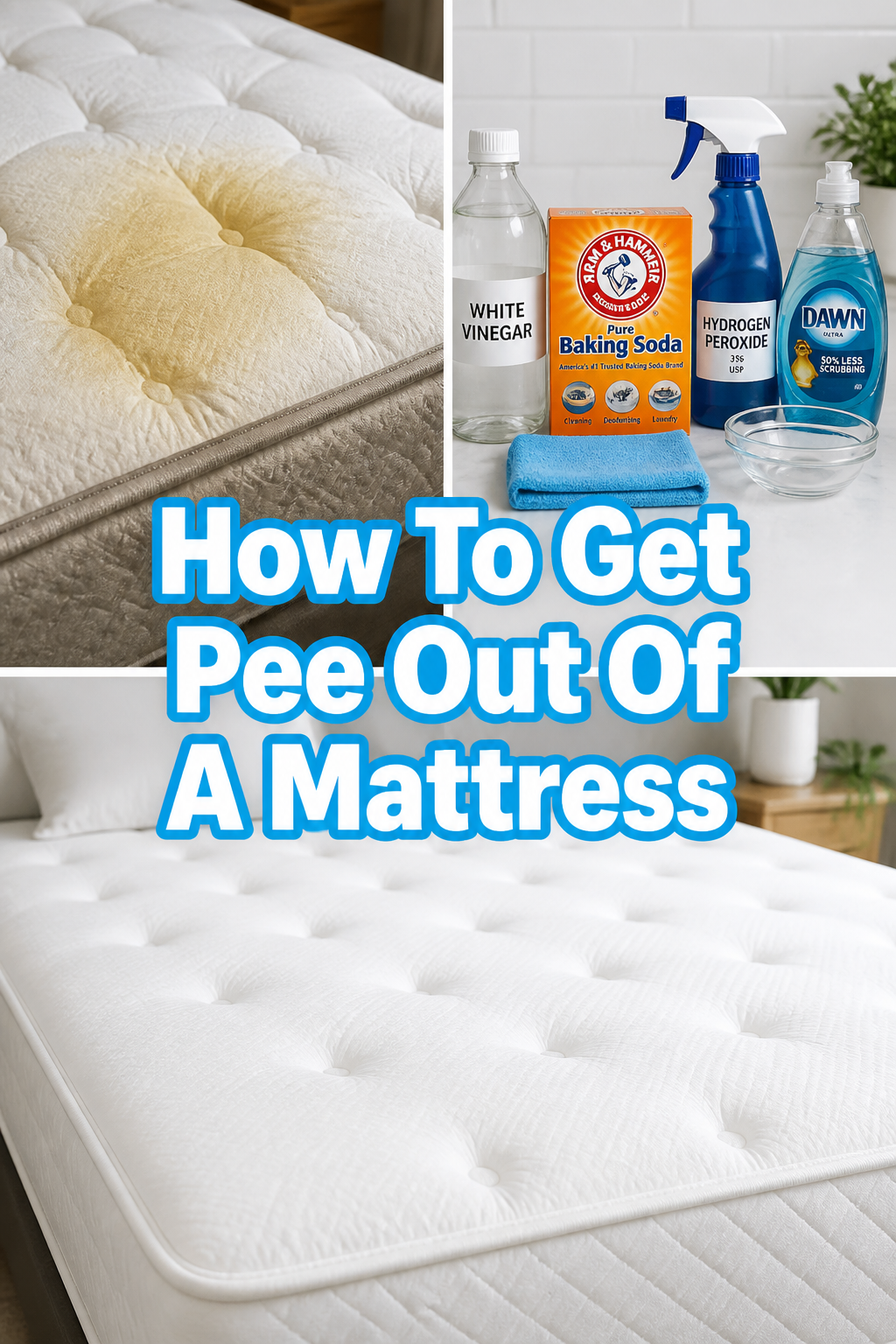
🛏️ How To Get Pee Out Of A Mattress
Waking up to a wet mattress can certainly feel like a little jolt to your serene morning routine.
I’ve been there myself, navigating the unexpected puddle and wondering how to restore my beloved sleep sanctuary.
This guide comes from real-world experience, offering gentle, effective steps to bring your mattress back to its fresh, inviting best.
Quick Overview
You’re about to embark on a journey to refresh your mattress, transforming a minor mishap into a clean slate.
We’ll tackle the stain and odor, ensuring your bedroom remains the cozy retreat you cherish.
- Time needed: 1-2 hours active cleaning, 24-48 hours drying time
- Difficulty: Beginner
- What you’ll need: Paper towels, old towels, white vinegar, baking soda, spray bottle, vacuum cleaner, optional: enzyme cleaner, fan.
Step-by-Step Instructions
Step 1: Act Swiftly and Blot
The very first thing to do is to address the wetness as quickly as possible.
Speed is your best friend here, as fresh stains are much easier to manage.
Grab a stack of paper towels or a clean, absorbent old towel.
Press firmly onto the wet area of the mattress, absorbing as much liquid as you can.
Do not rub, as rubbing can push the liquid deeper into the mattress fibers.
Instead, use a blotting motion, pressing down and lifting, then moving to a fresh, dry section of the towel.
Keep blotting until you’ve extracted as much moisture as possible from the affected spot.
Pro Tip: Think of your mattress as a sponge. You want to gently squeeze the moisture out, not spread it around. This initial step significantly reduces the work for later stages.
Step 2: Prepare a Gentle Cleaning Solution
Now that most of the liquid is gone, it’s time to create a simple, effective cleaning solution.
For most urine stains, a mixture of white vinegar and water works wonders.
In a spray bottle, combine equal parts white vinegar and cool water.
White vinegar is a natural deodorizer and mild disinfectant, perfect for tackling urine odors.
If you have a particularly stubborn or old stain, consider adding a few drops of mild dish soap to the mixture.
Shake the bottle gently to ensure everything is well combined.
Step 3: Apply the Solution Thoughtfully
With your cleaning solution ready, it’s time to apply it to the soiled area.
Lightly mist the entire affected spot with the vinegar solution.
You want the area to be damp, but not soaking wet, to avoid over-saturating the mattress.
The goal is to neutralize the urine and lift any remaining residue.
Allow the solution to sit on the mattress for about 10-15 minutes.
This gives the vinegar time to break down the uric acid and tackle the odor at its source.
Step 4: Blot Again and Air Out
After letting the vinegar solution work its magic, it’s time for another round of blotting.
Use fresh, clean paper towels or a dry, absorbent cloth.
Press down firmly on the treated area to absorb the vinegar solution and any lifted urine residue.
Again, remember to blot, not rub, to prevent pushing liquids deeper into the mattress.
Once you’ve blotted as much as you can, open windows wide to allow for maximum airflow.
If possible, position a fan to blow directly onto the mattress to aid in drying.
Good ventilation is crucial for preventing moisture buildup and ensuring a fresh finish.
Step 5: Sprinkle with Baking Soda
This step is a true game-changer for odor elimination and a touch of freshness.
Liberally sprinkle baking soda over the entire treated area, covering it completely.
Baking soda is a natural absorbent and an incredible deodorizer, pulling out any lingering smells.
Don’t be shy; create a visible layer of baking soda over the stain.
Allow the baking soda to sit on the mattress for at least 8-10 hours, or even overnight.
The longer it sits, the more effectively it will absorb moisture and odors, leaving your mattress refreshed.
Pro Tip: For particularly stubborn odors, you can let the baking soda sit for up to 24 hours. Consider doing this on a day when you don’t need the bed, perhaps while you’re out enjoying a cozy afternoon in another part of your home.
Step 6: Vacuum Away the Baking Soda
After the baking soda has had ample time to do its work, it’s time for the grand finale.
Grab your vacuum cleaner and use the upholstery attachment.
Thoroughly vacuum up all the baking soda from the mattress surface.
Take your time to ensure every last particle is removed.
As you vacuum, you’re not just removing powder; you’re also lifting away the absorbed odors and impurities.
Your mattress should now feel dry, clean, and wonderfully fresh.
Step 7: Final Airing and Inspection
Once the baking soda is gone, give your mattress one last chance to fully air out.
Leave the windows open and the fan running for a few more hours if possible.
This ensures any remaining moisture evaporates completely, preventing mildew or musty smells.
Gently press your hand over the treated area to check for any residual dampness.
Take a moment to lean in and sniff the mattress, confirming that all odors have vanished.
Your mattress should now be ready to welcome you back to a night of peaceful, fresh sleep.
Common Mistakes to Avoid
Rubbing the Stain
It’s a natural instinct to want to scrub at a stain, but with a mattress, this is counterproductive.
Rubbing pushes the urine deeper into the mattress fibers and padding, making it much harder to remove.
This can also spread the stain to a larger area, creating a bigger problem than you started with.
Always blot gently, lifting the liquid out rather than forcing it in, to protect your mattress’s integrity.
Using Too Much Water or Solution
Over-saturating your mattress with water or cleaning solution is a common pitfall.
Mattresses are designed to absorb liquids, and once soaked, they take a very long time to dry completely.
Excess moisture can lead to mildew, mold growth, and a lingering musty smell that is incredibly difficult to eliminate.
Apply solutions sparingly, aiming for dampness rather than saturation, to keep your mattress healthy and fresh.
Not Allowing Adequate Drying Time
Patience is truly a virtue when cleaning a mattress.
Rushing the drying process can trap moisture inside, leading to the same issues as over-saturating.
Even if the surface feels dry, the deeper layers might still be damp, creating an environment for unwanted growth.
Ensure your mattress is completely dry, which can take 24-48 hours, before putting on fresh bedding.
Using Harsh Chemicals
While strong cleaners might seem like the quickest fix, they can be detrimental to your mattress and your health.
Harsh chemicals can damage mattress materials, leave behind irritating residues, and emit strong fumes.
Stick to gentle, natural solutions like vinegar and baking soda, or an approved enzyme cleaner.
These options are effective without compromising the comfort and safety of your sleep space.
Troubleshooting
Lingering Odor
If you’ve followed the steps and still detect a faint odor, don’t despair; some stains are more stubborn.
The most effective solution for lingering smells is usually a second application of baking soda.
Liberally re-sprinkle the entire affected area with a fresh layer of baking soda.
Allow it to sit for an even longer period this time, perhaps 24 hours, to maximize absorption.
Ensure the room is well-ventilated during this period, and then vacuum thoroughly once more.
For truly persistent odors, a specialized enzyme cleaner can be a powerful ally; these cleaners break down uric acid crystals that cause the smell.
Visible Stain Remains
Sometimes, even after cleaning, a faint shadow of the stain might still be visible.
This often happens with older or very dark urine stains that have had time to set.
Try gently dabbing the area with a cloth dampened with a small amount of hydrogen peroxide.
Test the hydrogen peroxide on an inconspicuous area first to ensure it doesn’t bleach your mattress fabric.
Alternatively, a paste made from baking soda and a tiny bit of water can be applied to the stain.
Let the paste dry completely, then gently brush it off and vacuum, repeating if necessary.
Dampness After Drying
If the mattress still feels damp after what you thought was sufficient drying time, it’s crucial to address it immediately.
Do not put bedding back on until the mattress is completely dry to the touch.
Increase airflow dramatically by opening windows wider, using multiple fans, or even a dehumidifier in the room.
If possible and safe, you can carefully prop the mattress on its side to expose more surface area to the air.
Patience here is key; a fully dry mattress prevents mold and ensures lasting freshness.
Key Takeaways
- Act quickly: Blotting fresh urine immediately is the most crucial step for successful removal.
- Blot, don’t rub: Gently pressing and lifting prevents the stain from spreading and sinking deeper.
- Vinegar is your friend: A diluted white vinegar solution effectively neutralizes odors and breaks down urine.
- Baking soda is essential: This natural wonder absorbs lingering moisture and completely eliminates smells.
- Ensure thorough drying: Adequate airflow and time are vital to prevent mold and ensure a truly fresh mattress.
- Patience pays off: Allow sufficient time for both cleaning solutions to work and the mattress to dry completely.
Frequently Asked Questions
Can I use a steam cleaner on my mattress?
It’s generally not recommended to use a steam cleaner directly on a mattress for urine stains.
While steam can sanitize, the high heat can actually set protein-based stains like urine, making them harder to remove.
More importantly, the amount of moisture introduced by a steam cleaner can be excessive for a mattress.
This makes it incredibly difficult to dry properly, increasing the risk of mold and mildew forming inside.
How do I prevent future mattress accidents?
Prevention is always better than cure, especially when it comes to preserving your beautiful bedding.
Consider investing in a high-quality, waterproof mattress protector.
These protectors act as an invisible shield, catching spills before they reach your mattress.
For children or pets, ensure they have regular bathroom breaks, especially before bedtime.
If you have a pet that’s prone to accidents, try using pet-specific training pads or limiting their access to the bed.
Is an enzyme cleaner better than vinegar for pet urine?
For pet urine, especially cat urine, an enzyme cleaner can often be more effective than just vinegar.
Pet urine contains specific uric acid crystals that vinegar can neutralize but not always fully break down.
Enzyme cleaners contain specialized bacteria that digest these crystals, eliminating the odor at a molecular level.
Always follow the product instructions carefully when using an enzyme cleaner for best results.
How often should I clean my mattress?
While deep cleaning for accidents is infrequent, general mattress maintenance is a good practice for a healthy home.
Aim to vacuum your mattress every one to three months to remove dust mites, dead skin cells, and allergens.
Spot clean any small spills immediately using the blotting method.
Flipping or rotating your mattress every six months also helps with even wear and allows for better air circulation.
Our Top Recommended Finds
- Waterproof Mattress Protector: An essential layer that shields your mattress from spills and accidents, preserving its pristine condition.
- Enzyme Cleaner Spray: Specifically formulated to break down organic stains and odors, particularly effective for stubborn pet urine.
- Large Bag of Baking Soda: An economical and natural powerhouse for absorbing odors and moisture, always good to have on hand.
Embrace Your Fresh Start
Isn’t it wonderful how a little effort can restore the tranquility of your most personal space?
Knowing how to handle these everyday mishaps empowers you to maintain a beautiful, inviting home.
Imagine sinking into your freshly cleaned mattress tonight, feeling completely at ease in your cozy bedroom retreat.
Take these steps today and reclaim the comfort and cleanliness that makes your bedroom truly yours.