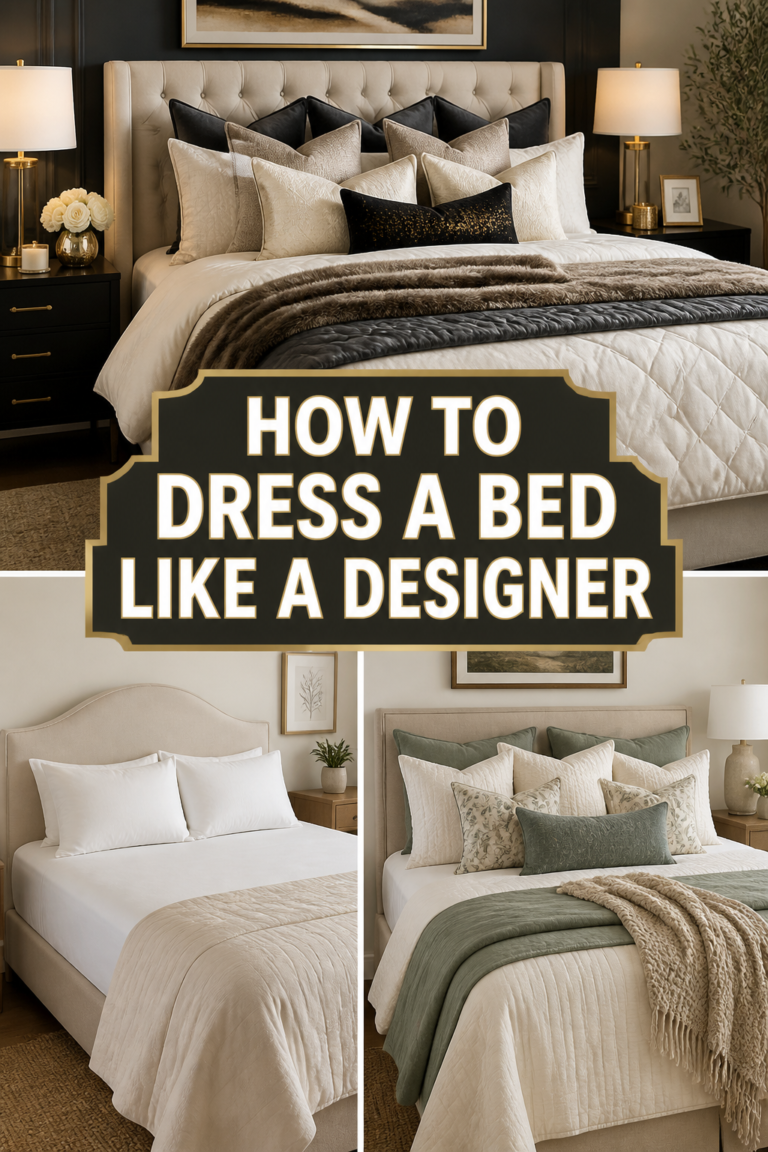
✨ How To Make A King Size Bed
There’s nothing quite like sinking into a beautifully made bed at the end of a long day.
A king size bed, in particular, offers a generous canvas for creating a truly luxurious and inviting sleep sanctuary.
Having styled countless bedrooms, I’ve discovered the simple joy and profound impact a well-made bed has on an entire room’s ambiance and your personal well-being.

Quick Overview
This guide will walk you through transforming your king size bed into a haven of comfort and style.
You’ll learn how to layer linens, arrange pillows, and add those thoughtful touches that elevate your bedroom design.
- Time needed: 30-45 minutes (initial setup), 10-15 minutes (daily refresh)
- Difficulty: Beginner
- What you’ll need: Mattress protector, king size sheets (fitted & flat), duvet or comforter, duvet cover (if applicable), sleeping pillows, decorative pillows, throw blanket.
Step-by-Step Instructions
Step 1: Prepare Your Foundation
A great bed starts with a solid foundation. This includes your mattress, box spring, or platform base.
Ensure your mattress is properly supported and sits evenly on its frame. This stability is crucial for both comfort and the overall look.
Start by clearing everything off your bed. This gives you a fresh start and a clear workspace for layering.
A clean slate allows you to appreciate each new layer as you build your cozy retreat.
Pro Tip: Rotate your mattress every 3-6 months to ensure even wear and extend its lifespan. This small habit makes a big difference in comfort.
Step 2: Add a Mattress Protector
Think of a mattress protector as the unsung hero of your bedding ensemble.
It shields your mattress from spills, allergens, and dust mites, keeping it fresh and hygienic for years.
Stretch the mattress protector smoothly over your mattress, ensuring it fits snugly without any wrinkles.
This creates a clean, smooth surface for your sheets and contributes to a tidy appearance.
Step 3: Fit the Fitted Sheet
Now it’s time for the first layer of comfort: the fitted sheet.
King size fitted sheets can sometimes be a bit of a wrestle, but a methodical approach helps.
Locate the short sides of the sheet and match them with the head and foot of your bed.
Tuck one corner firmly under the mattress, then move diagonally to the opposite corner and tuck it in.
This diagonal method helps distribute tension and makes it easier to get the remaining two corners smoothly in place.
Smooth out any creases across the top surface of the mattress. A taut fitted sheet is key to a neat bed.
Pro Tip: Look for fitted sheets with extra-deep pockets if your mattress is particularly thick or you use a mattress topper. This prevents the corners from popping off.
Step 4: Lay the Flat Sheet
The flat sheet is where personal preference often comes into play.
Some people love it for its added layer of softness and warmth, while others prefer to skip it.
If you’re using one, place the flat sheet face-down on top of the fitted sheet.
The “wrong” side of the sheet should be facing up, as the top edge will be folded back later, revealing the “right” side.
Align the top edge of the flat sheet with the head of the bed, allowing an even overhang on the sides and foot.
Tuck the flat sheet under the mattress at the foot of the bed, creating a crisp, clean fold.
For a truly polished look, create hospital corners at the foot of the bed.
This involves picking up the side overhang at the corner, folding it into a triangle, tucking the bottom part under, and then dropping the top part down before tucking in the remaining side.
Fold the top edge of the flat sheet back over itself, creating a neat cuff. This is where the “right” side of the sheet is revealed.
Step 5: Position Your Duvet or Comforter
The duvet or comforter is the heart of your bed’s warmth and visual appeal.
For a duvet, insert your duvet filler into its cover. This can be tricky with a king size, but a good method is to turn the cover inside out, grab the top corners of the filler, and pull the cover right-side out over it.
Shake and fluff the duvet or comforter vigorously to distribute the filling evenly and give it a voluminous, inviting look.
Lay it over the flat sheet, aligning it with the top edge of the bed or folding it down a few inches from the top.
This allows the folded-back flat sheet to show, adding a layer of visual interest.
Ensure it hangs evenly on both sides of the bed. A well-balanced duvet contributes to a harmonious aesthetic.
Pro Tip: For extra fluffiness, try a duvet insert that is slightly larger than your duvet cover. This creates a luxurious, overfilled look.
Step 6: Arrange Sleeping Pillows
Sleeping pillows are the foundation of your pillow arrangement.
For a king size bed, two king size sleeping pillows are standard, offering ample support and a balanced look.
Place your sleeping pillows against the headboard, standing them upright or laying them flat.
If you have king size pillow shams, insert your sleeping pillows into them.
These shams often match your duvet cover, tying the look together beautifully.
Step 7: Add Decorative Pillows
This is where you infuse personality and design flair into your bed.
Decorative pillows add texture, color, and depth, transforming a simple bed into a styled centerpiece.
Layer your decorative pillows in front of your sleeping pillows.
A common arrangement for a king size bed includes two or three Euro shams (26×26 inches) in the back, followed by two standard or queen shams, and then one or two smaller throw pillows in the very front.
Vary the sizes, shapes, and textures of your pillows to create visual interest.
Think about combining soft velvets with crisp linens or chunky knits for a rich, layered effect.
Pro Tip: Don’t overdo it. While decorative pillows are lovely, too many can make the bed feel cluttered and difficult to get into. Aim for a balance that feels luxurious, not overwhelming.
Step 8: Drape a Throw Blanket
A throw blanket is the ultimate finishing touch, adding an extra layer of warmth, texture, and visual softness.
It invites you to curl up and relax, even when the bed isn’t fully made.
Fold a throw blanket neatly across the foot of the bed, or casually drape it over one corner.
Consider a contrasting color or texture to add a pop of interest against your main bedding.
A chunky knit, a faux fur, or a soft cashmere throw can elevate the entire aesthetic.
Step 9: Consider a Bed Skirt (If Applicable)
If your bed frame or box spring is visible beneath your mattress, a bed skirt can provide a polished, finished look.
It hides unsightly storage or the bed frame itself, contributing to a clean and tidy bedroom.
Place the bed skirt over your box spring before adding your mattress.
Ensure it hangs evenly around all visible sides of the bed, creating a seamless appearance.
A well-chosen bed skirt can also add a subtle design element, from tailored pleats to flowing ruffles.
Step 10: Final Styling Touches
Step back and admire your handiwork, then consider a few final tweaks to perfect your king size sanctuary.
Fluff all your pillows one last time, gently patting them to give them a full, inviting shape.
Smooth out any remaining wrinkles on your duvet or comforter, ensuring a crisp presentation.
Consider how your bed integrates with the rest of your room. Are your bedside tables tidy?
Does the lighting complement the cozy aesthetic? A small plant or a scented candle on a nightstand can complete the serene picture.
Common Mistakes to Avoid
Using Incorrect Sized Linens
A king size bed requires king size sheets, duvet covers, and often king size sleeping pillows. Using queen or standard sizes will result in ill-fitting, bunched-up, or too-small bedding.
This looks untidy and feels uncomfortable. Always double-check labels to ensure you’re purchasing the correct dimensions for your king bed.
Over-Accessorizing with Pillows
While decorative pillows add charm, too many can make your bed feel less like a haven and more like an obstacle course. It becomes a chore to remove them all just to get into bed.
Aim for a balanced arrangement that enhances comfort and style without overwhelming the space. Three to five decorative pillows are often ideal for a king size bed.
Ignoring the Bed Skirt
If your bed frame or box spring is exposed, skipping a bed skirt can leave your bed looking unfinished and messy. It reveals the utilitarian aspects of the bed that are best kept hidden.
A bed skirt creates a seamless, polished foundation, elevating the entire look of your bed and room. Choose one that complements your bedding and room decor.
Skipping a Mattress Protector
Neglecting a mattress protector means leaving your mattress vulnerable to spills, stains, and allergens. This can significantly shorten the life of your mattress and compromise hygiene.
A good mattress protector is an essential investment for maintaining the cleanliness and longevity of your mattress, ensuring a healthier sleep environment.
Troubleshooting
Linen Slippage
If your fitted sheet constantly pops off the corners, it might be too small for your mattress’s depth, or the elastic might be worn out.
Invest in deep-pocket sheets designed for thicker mattresses or try sheet suspenders that clip to the corners for extra hold.
Bed Looking Flat
A flat-looking bed often means your duvet or comforter isn’t fluffy enough, or your pillows lack volume.
Regularly fluff your duvet and pillows by shaking them vigorously. Consider a higher-fill power duvet insert or firmer pillow inserts to add more loft and plushness.
Pillow Arrangement Issues
If your decorative pillows feel disorganized or don’t seem to fit together, you might be using too many of the same size or shape.
Experiment with varying sizes (Euro, standard, throw) and textures. Start with the largest pillows at the back and layer forward, creating a harmonious visual flow.
Key Takeaways
- Always start with a clean, well-protected mattress as your foundation.
- Layering is key to both comfort and visual depth, from fitted sheets to throws.
- Properly sized linens are crucial for a neat, tailored appearance.
- Decorative pillows add personality, but balance is important to avoid clutter.
- Fluffing and smoothing are essential steps for a truly inviting bed.
- A well-made bed enhances the entire aesthetic and feel of your bedroom.
Frequently Asked Questions
How often should I change my king size sheets?
It’s generally recommended to change your sheets every one to two weeks. Regular washing helps remove dead skin cells, body oils, and dust mites, promoting a cleaner and healthier sleep environment.
What’s the best material for king size sheets?
The best material depends on your personal preference. Cotton (especially percale or sateen weaves) is a popular choice for its breathability and durability. Linen offers a relaxed, lived-in feel, while flannel provides extra warmth in colder months.
How do I keep my king size bed looking neat every day?
A quick daily routine makes a big difference. Pull up your sheets, fluff your pillows, and smooth your duvet or comforter each morning. This quick refresh keeps your bed looking inviting and tidy without much effort.
Should I use a duvet or a comforter for my king bed?
Both are great options. A comforter is a single, pre-filled piece of bedding, easy to use. A duvet requires a separate duvet cover, which makes washing easier and allows for more flexibility in changing your bed’s style and warmth level.
Our Top Recommended Finds
- High-Quality Percale Cotton Sheet Set: Crisp, breathable, and durable, perfect for a fresh, hotel-like feel.
- Down Alternative Duvet Insert: Offers excellent warmth and fluffiness, suitable for allergy sufferers, providing that cloud-like comfort.
- Variety of Decorative Pillow Inserts: Having a few different sizes (Euro, standard, lumbar) allows you to easily swap out covers and change your bed’s look.
Crafting Your Sleep Sanctuary
Creating a beautifully made king size bed is more than just a chore; it’s an act of self-care and an expression of your personal style.
Your bed is the anchor of your bedroom, a place where you begin and end each day.
By following these steps, you’re not just making a bed; you’re cultivating a serene retreat, a space designed for ultimate relaxation and rejuvenation.
Embrace the process, experiment with textures and colors, and let your king size bed become the cozy, inspiring focal point of your home.
Why not start today and transform your sleeping space into the dreamiest haven imaginable?