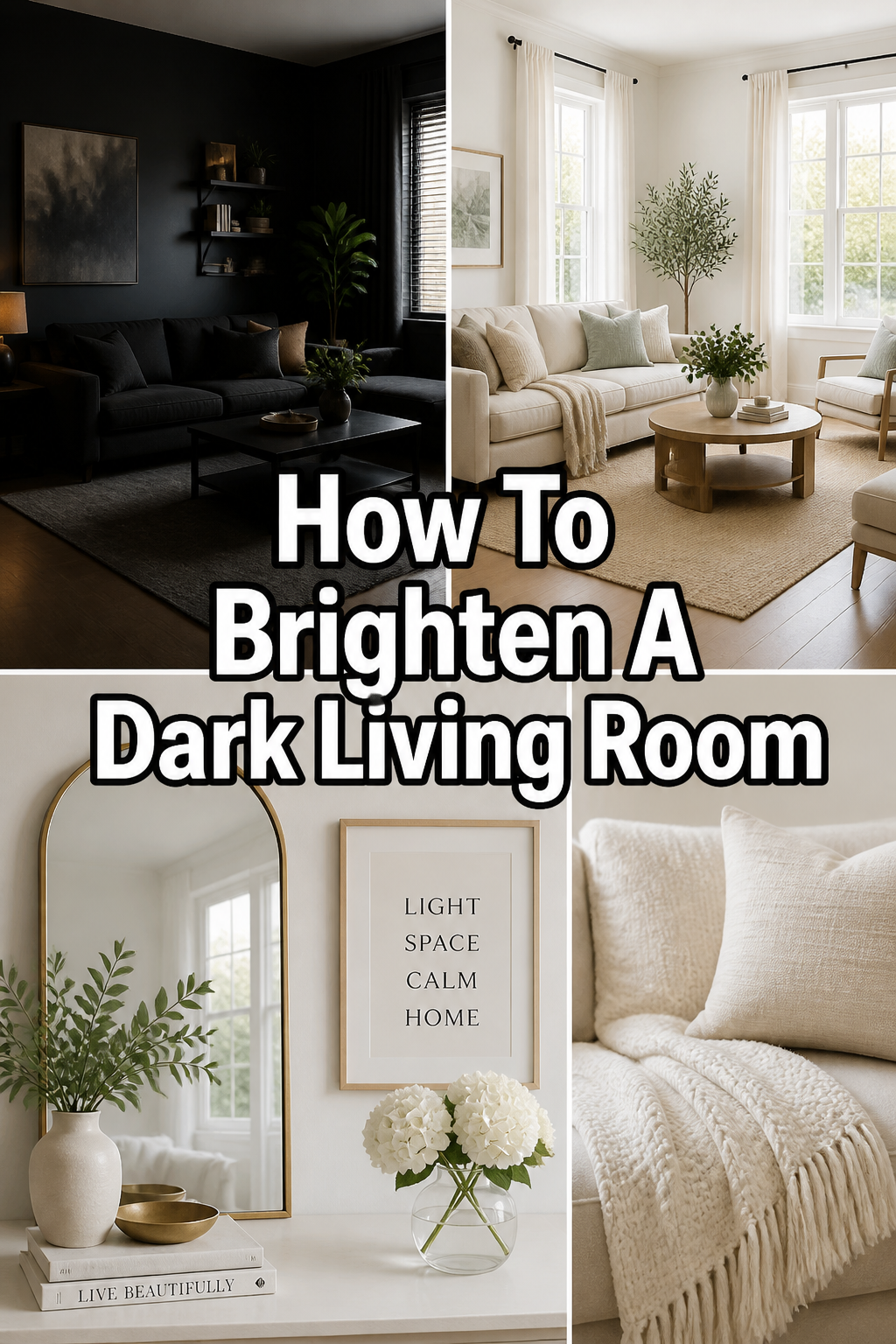
✨ How To Brighten A Dark Living Room
There’s nothing quite like walking into a living room that feels naturally bright and airy.
I remember my own challenge with a north-facing living room that felt perpetually dim, even on sunny days.
Through trial and error, I discovered the secrets to transforming it into a welcoming, light-filled sanctuary, and I’m excited to share those practical steps with you.
Quick Overview
This guide will equip you with the knowledge to transform your dark living room into a brighter, more inviting space. You’ll learn how to leverage light, color, and clever design choices to create an atmosphere that feels truly uplifting.
- Time needed: 1-3 weekends (depending on scale of changes)
- Difficulty: Beginner
- What you’ll need: Paint, brushes, cleaning supplies, lighting fixtures, mirrors, light textiles, plants, and a keen eye for detail.
Step-by-Step Instructions
Step 1: Assess Your Current Light Situation
Before making any changes, take a moment to understand your room’s natural light. Notice where the light comes from, how it moves throughout the day, and which areas remain shadowed.
Observe your existing decor. Are there heavy curtains, dark furniture, or a cluttered layout that might be absorbing light instead of reflecting it?
Pro Tip: Spend a full day in your living room, if possible, noting how the light shifts from morning to evening. This will reveal your room’s unique light patterns.
Step 2: Declutter and Simplify
A cluttered room feels heavier and darker. Begin by removing anything unnecessary that blocks light or makes the space feel confined.
Think about vertical space. Taller, bulkier items can cast large shadows. Aim for a cleaner, more open look by streamlining your possessions.
Step 3: Embrace Light and Reflective Paint Colors
Paint is one of the most transformative tools at your disposal. Light colors, especially whites, off-whites, and very pale pastels, reflect light beautifully.
Consider warm whites for a cozy feel, or cool whites for a crisp, modern look. Don’t forget the ceiling; painting it a bright white can make the room feel taller and airier.
Pro Tip: Test several paint samples on different walls. Observe them throughout the day to see how they react to your room’s specific lighting conditions.
Step 4: Maximize Natural Light Sources
Your windows are your primary source of natural light. Ensure they are clean, inside and out, to allow maximum light penetration.
Choose window treatments wisely. Opt for sheer curtains that diffuse light rather than block it, or blinds that can be easily opened all the way.
Consider hanging curtain rods wider than your windows. This allows curtains to be pulled completely clear of the glass, letting in every ray of sunshine.
Step 5: Strategically Place Mirrors
Mirrors are incredible light amplifiers. They bounce light around the room, making it feel larger and brighter.
Place a large mirror opposite a window to reflect the outdoor view and natural light. Alternatively, position it to reflect a light fixture, doubling its impact.
Multiple smaller mirrors can also work, creating a gallery wall that adds sparkle and distributes light more subtly.
Step 6: Layer Your Artificial Lighting
Natural light is wonderful, but artificial lighting is crucial for dark rooms, especially in the evenings or on cloudy days. Think in layers: ambient, task, and accent lighting.
Ambient lighting, like a central ceiling fixture or recessed lights, provides overall illumination. Task lighting, such as reading lamps, focuses light where it’s needed.
Accent lighting, like picture lights or uplights, highlights specific features and adds depth. Use bulbs with a higher Kelvin temperature (around 3000K-4000K) for a brighter, more natural daylight feel.
Pro Tip: Install dimmer switches for all your light fixtures. This allows you to adjust the mood and brightness, giving you complete control over your room’s ambiance.
Step 7: Choose Light-Colored Furniture and Textiles
Just like your walls, your furniture and textiles play a big role in light reflection. Opt for sofas, chairs, and rugs in lighter shades.
A large, light-colored rug can instantly brighten a dark floor and anchor your space. Throw pillows and blankets in pale hues add softness and reflect light.
Consider furniture with exposed legs or open designs. These pieces allow light to flow underneath and around them, preventing heavy shadows.
Step 8: Incorporate Reflective Materials and Surfaces
Beyond mirrors, many other materials can help bounce light around your living room. Think about glass, chrome, polished metals, and glossy finishes.
A glass coffee table, metallic decorative objects, or a lamp with a shiny base can add subtle sparkle and light reflection.
Even small accessories, like a silver picture frame or a vase with a glazed finish, contribute to the overall brightness.
Step 9: Add Greenery and Life
While not directly reflective, plants bring a sense of freshness and vitality that can make a room feel lighter and more alive.
Choose plants that thrive in lower light conditions if your room truly lacks sun. Their vibrant green can contrast beautifully with light walls and decor.
A well-placed plant can draw the eye upward, adding vertical interest and preventing the room from feeling too heavy at floor level.
Step 10: Mind Your Room Layout
An open and airy layout prevents shadows and allows light to flow freely. Arrange furniture to create clear pathways and avoid blocking windows or doorways.
Pull furniture slightly away from walls to give the room a more spacious feel. Consider multi-functional pieces that reduce clutter and maximize open floor space.
Experiment with different arrangements. Sometimes, simply shifting a sofa or a bookshelf can make a surprising difference in how light fills the room.
Common Mistakes to Avoid
Over-furnishing a Small Space
Filling a small or dark room with too many large pieces of furniture will make it feel even more cramped and dim. Each item casts a shadow and takes up valuable visual space.
Instead, prioritize essential pieces and choose them carefully. Opt for furniture with lighter profiles, such as open shelving instead of solid cabinets, and pieces with legs rather than skirts that go to the floor.
Ignoring the Ceiling and Floor
Many people focus only on the walls, forgetting that the ceiling and floor are massive surfaces that impact a room’s brightness. A dark ceiling can make a room feel oppressive and lower.
Always paint ceilings a bright white or a very light shade of your wall color. For floors, consider light-colored rugs, or if renovating, lighter flooring options. Even a light-colored throw rug can make a big difference.
Blocking Natural Light Sources
It’s tempting to place furniture directly in front of windows or use heavy, dark drapes for privacy. However, this is counterproductive when trying to brighten a room.
Ensure furniture is positioned to allow light to flow in freely. Choose sheer or light-filtering window treatments that can be easily opened or drawn back during the day.
Relying on a Single Light Source
A single overhead light fixture, no matter how bright, will create harsh shadows and leave corners feeling dark. This creates a flat, uninviting atmosphere.
Always layer your lighting with a mix of ambient, task, and accent lights. Use floor lamps, table lamps, sconces, and even picture lights to distribute light evenly and create depth.
Troubleshooting
Still Feels Dingy After Painting
Sometimes, even after painting with a light color, a room can still feel a bit dull. This might be due to the undertones of your chosen paint or insufficient artificial lighting.
Check your light bulbs; ensure they are a bright white (daylight or cool white) and of appropriate wattage. Consider adding more reflective surfaces like mirrors or metallic decor. A fresh coat of paint might need the support of other elements to truly shine.
Room Lacks Warmth
A very bright room can sometimes feel sterile or cold, especially if you’ve used cool whites or blues. The goal is brightness with coziness, not just starkness.
Introduce warmth through natural textures like wood, rattan, or wool. Add pops of warm colors in your accessories, such as mustard yellow throw pillows or a terracotta vase. Layering different textures helps create an inviting, warm atmosphere.
Shadows Persist
Even with ample lighting, persistent shadows can be a challenge. This often indicates that light isn’t reaching certain corners or that furniture is casting too many dark areas.
Re-evaluate your lighting placement. Add a small uplight in a dark corner to wash the wall with light. Consider moving furniture slightly away from walls to reduce harsh shadows, or use floor lamps that direct light upwards or downwards to fill shadowy voids.
Key Takeaways
- Maximize Natural Light: Keep windows clear and use sheer, light-colored window treatments.
- Embrace Light Colors: Paint walls and ceilings in bright, reflective hues to bounce light around.
- Layer Your Lighting: Combine ambient, task, and accent lighting for balanced, versatile illumination.
- Strategic Mirror Placement: Use mirrors to reflect light and create the illusion of more space.
- Light Furniture and Decor: Choose lighter-toned furniture, rugs, and accessories that don’t absorb light.
- Declutter for Openness: A clean, uncluttered space naturally feels brighter and more expansive.
Frequently Asked Questions
Can I still use dark colors in a dark living room?
Absolutely, but with intention. Dark colors can be used as accents on one wall, in artwork, or through smaller decorative items. They can add depth and sophistication. The key is to balance them with plenty of light colors, reflective surfaces, and ample lighting to prevent the room from feeling overwhelmingly dark.
What if I have very small windows?
Small windows mean you need to work harder with other elements. Ensure they are completely unobstructed by curtains or furniture. Focus heavily on layered artificial lighting, use large mirrors strategically to mimic larger windows, and prioritize light paint colors and reflective decor throughout the room.
How do I make a north-facing room brighter?
North-facing rooms receive consistent, cooler light. To brighten them, use warm white paint colors on walls to counteract the cool light. Layer lighting with warmer bulbs (around 2700K-3000K) to add a cozy glow. Incorporate warm-toned woods and textiles to bring in a sense of sunniness.
Is it expensive to brighten a room?
Not necessarily! Many effective strategies are budget-friendly. Painting is a relatively inexpensive DIY project. Moving furniture, decluttering, and cleaning windows cost nothing. You can find affordable mirrors and light-colored textiles at various price points. Focus on the high-impact, low-cost changes first.
Our Top Recommended Finds
- Sheer White Curtains: Allow light to filter through beautifully while offering a touch of privacy.
- Large Decorative Mirror: A statement piece that doubles light and creates visual space.
- Smart LED Light Bulbs: Offer adjustable brightness and color temperature, giving you ultimate control over your room’s ambiance.
Crafting Your Luminous Living Space
Transforming a dark living room is a journey of discovery, blending practicality with personal style. Each step you take, from a fresh coat of paint to a well-placed mirror, contributes to a space that feels more open, inviting, and truly reflective of you.
Don’t be afraid to experiment and trust your instincts. Your living room is waiting to shine, and with these tools, you’re ready to make it a beacon of warmth and light.
Start today, even with just one small change, and watch your home begin to glow.