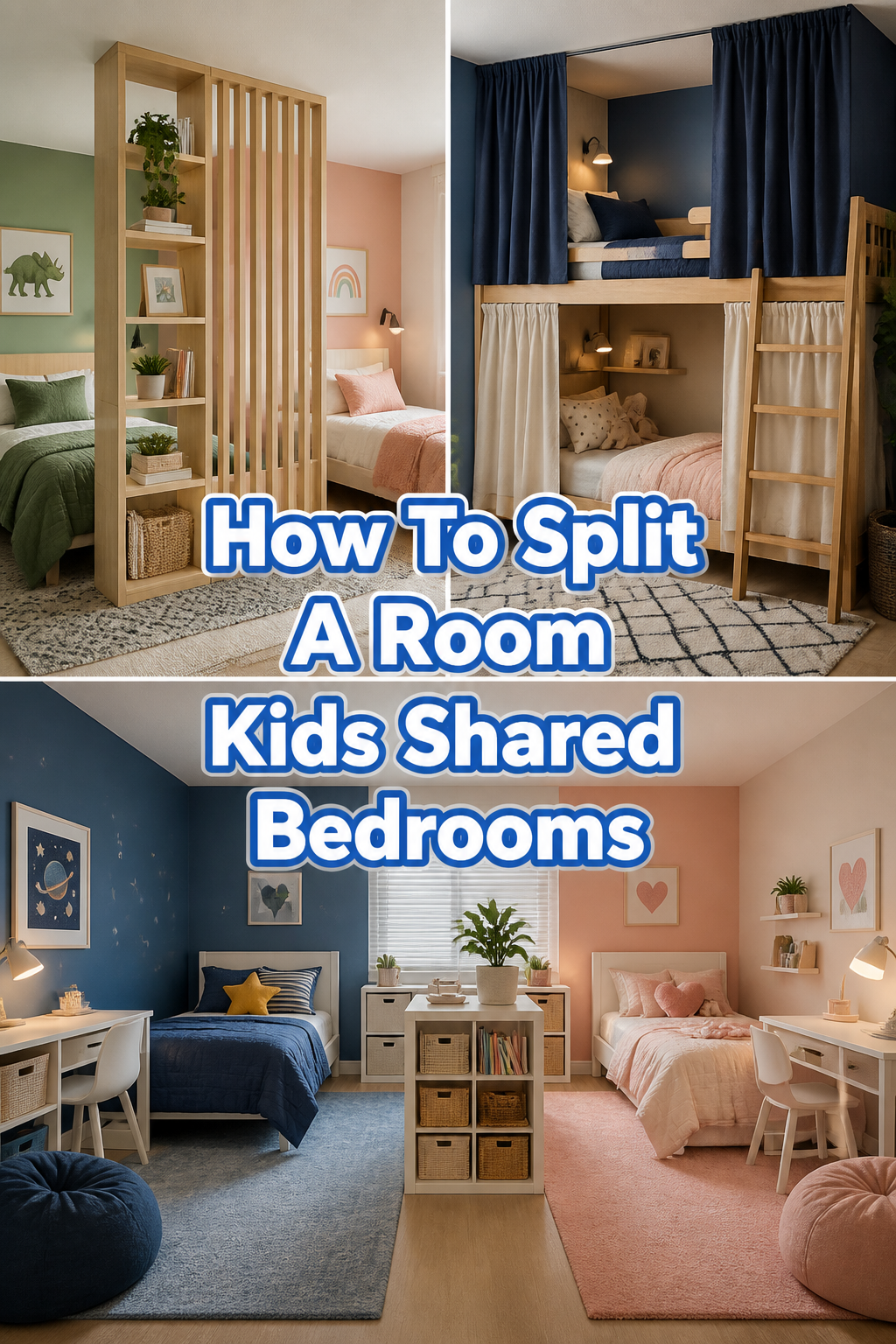
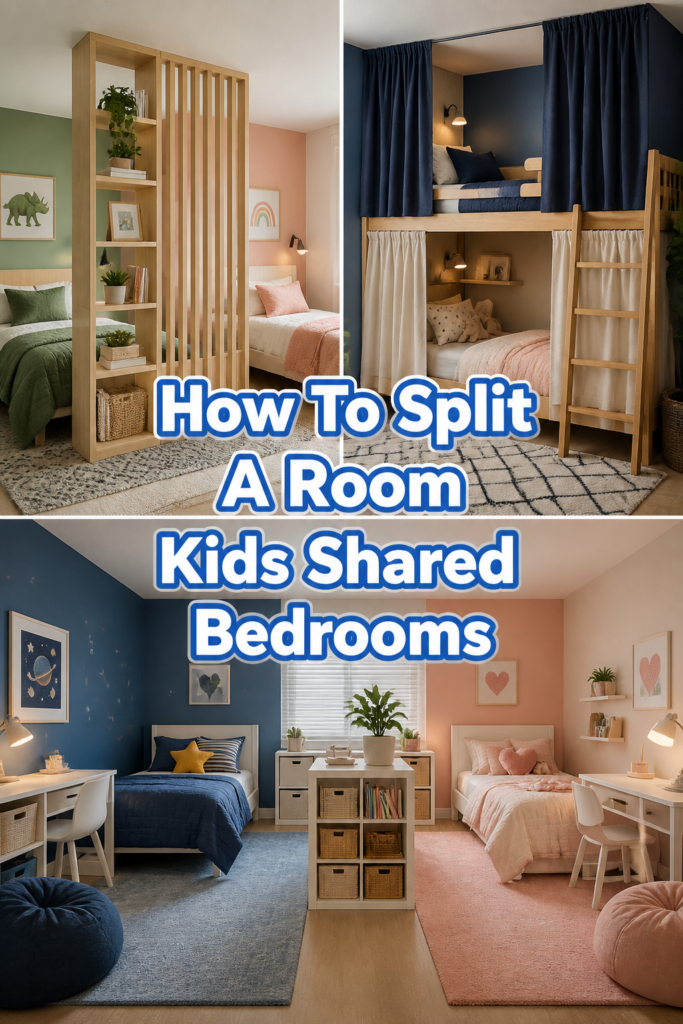
🏠 How To Split A Room Kids Shared Bedrooms
Sharing a bedroom is a childhood rite of passage that builds lifelong bonds.
I remember the late-night whispers and shared secrets from my own childhood bedroom shared with my sister.
Through years of designing spaces for growing families, I have learned that a well-split room preserves both peace and privacy.
Quick Overview
This guide helps you transform a single bedroom into a functional, harmonious space for two children.
- Time needed: 1 to 2 weekends
- Difficulty: Intermediate
- What you’ll need: Measuring tape, painter’s tape, room dividers or bookshelves, individual lighting, and a cohesive color palette.
Step-by-Step Instructions
Step 1: Measure and Map the Floor Plan
Start by clearing the room as much as possible to see the true footprint of the space.
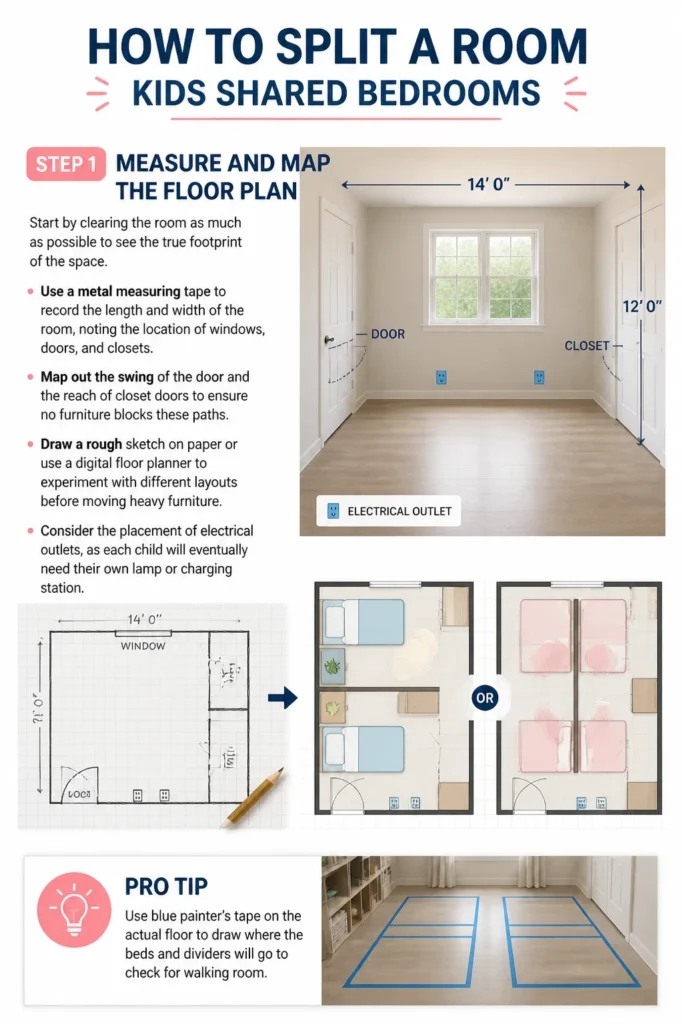
Use a metal measuring tape to record the length and width of the room, noting the location of windows, doors, and closets.
Map out the “swing” of the door and the “reach” of closet doors to ensure no furniture blocks these paths.
Draw a rough sketch on paper or use a digital floor planner to experiment with different layouts before moving heavy furniture.
Consider the placement of electrical outlets, as each child will eventually need their own lamp or charging station.
Pro Tip: Use blue painter’s tape on the actual floor to “draw” where the beds and dividers will go to check for walking room.
Step 2: Choose Your Dividing Method
Decide if you want a physical barrier or a visual suggestion of a split.
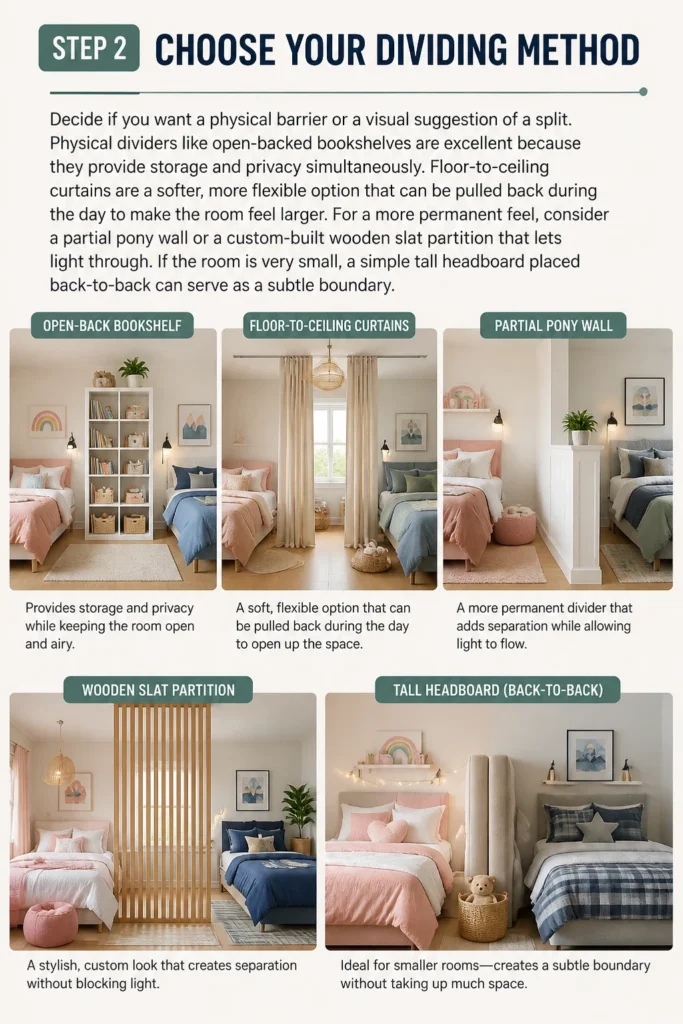
Physical dividers like open-backed bookshelves are excellent because they provide storage and privacy simultaneously.
Floor-to-ceiling curtains are a softer, more flexible option that can be pulled back during the day to make the room feel larger.
For a more permanent feel, consider a partial “pony wall” or a custom-built wooden slat partition that lets light through.
If the room is very small, a simple tall headboard placed back-to-back can serve as a subtle boundary.
Step 3: Master the Bed Layout
The placement of the beds is the most critical decision in a shared room.
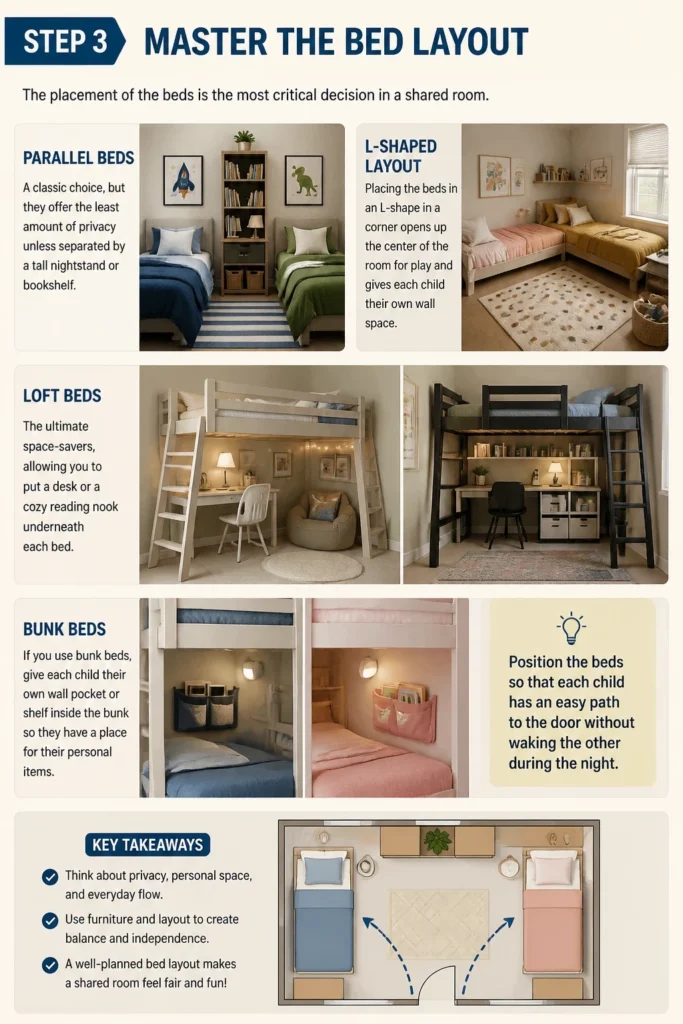
Parallel beds are a classic choice, but they offer the least amount of privacy unless separated by a tall nightstand or bookshelf.
An “L-shaped” layout in a corner opens up the center of the room for play and gives each child their own wall space.
Loft beds are the ultimate space-savers, allowing you to put a desk or a cozy reading nook underneath each bed.
If you use bunk beds, give each child their own “wall pocket” or shelf inside the bunk so they have a place for their personal items.
Position the beds so that each child has an easy path to the door without waking the other during the night.
Step 4: Use Color Blocking for Identity
Paint is one of the most affordable ways to give each child a sense of ownership over their “half.”
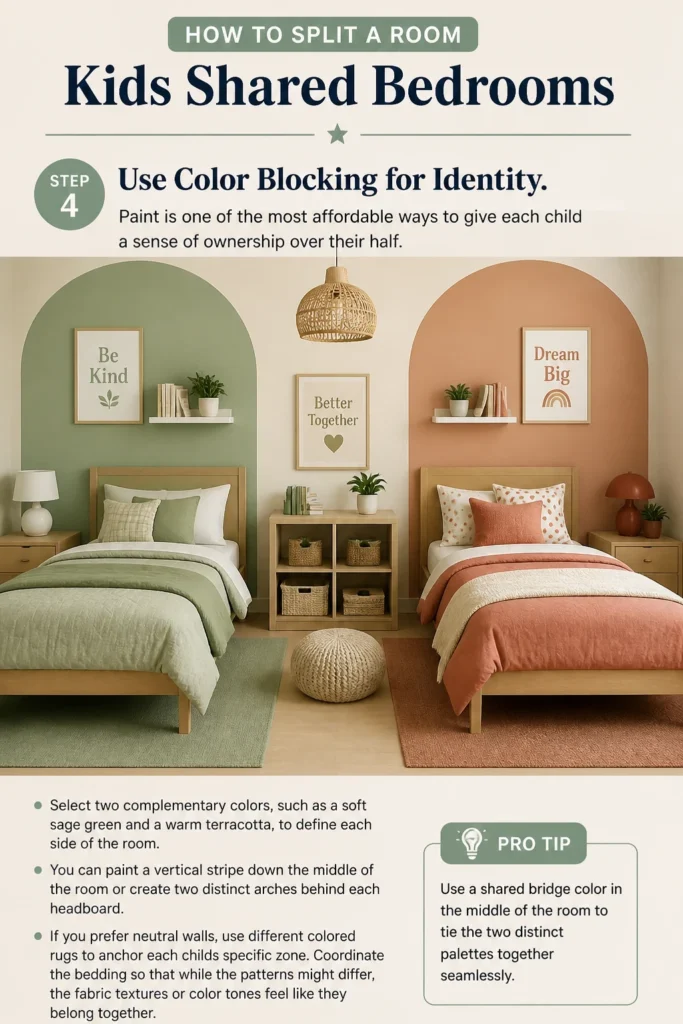
Select two complementary colors, such as a soft sage green and a warm terracotta, to define each side of the room.
You can paint a vertical stripe down the middle of the room or create two distinct “arches” behind each headboard.
If you prefer neutral walls, use different colored rugs to anchor each child’s specific zone.
Coordinate the bedding so that while the patterns might differ, the fabric textures or color tones feel like they belong together.
Pro Tip: Use a shared “bridge color” in the middle of the room to tie the two distinct palettes together seamlessly.
Step 5: Maximize Vertical Storage
When you split a room, floor space becomes a premium commodity.
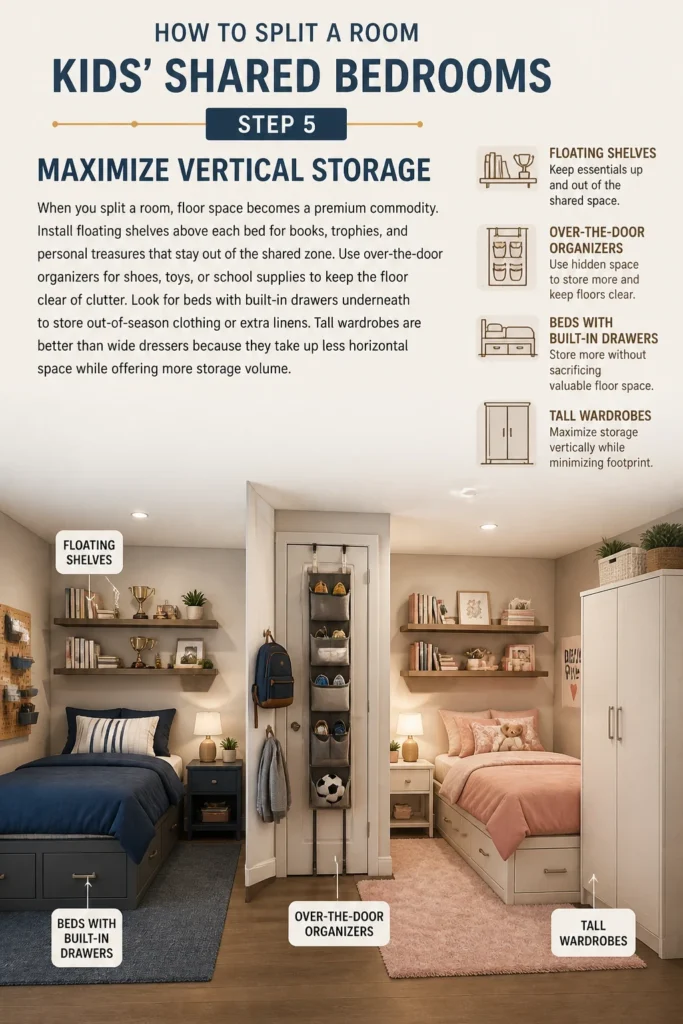
Install floating shelves above each bed for books, trophies, and personal treasures that stay out of the “shared” zone.
Use over-the-door organizers for shoes, toys, or school supplies to keep the floor clear of clutter.
Look for beds with built-in drawers underneath to store out-of-season clothing or extra linens.
Tall wardrobes are better than wide dressers because they take up less horizontal space while offering more storage volume.
Step 6: Individualize the Lighting
Arguments often start when one child wants to sleep while the other wants to read or study.
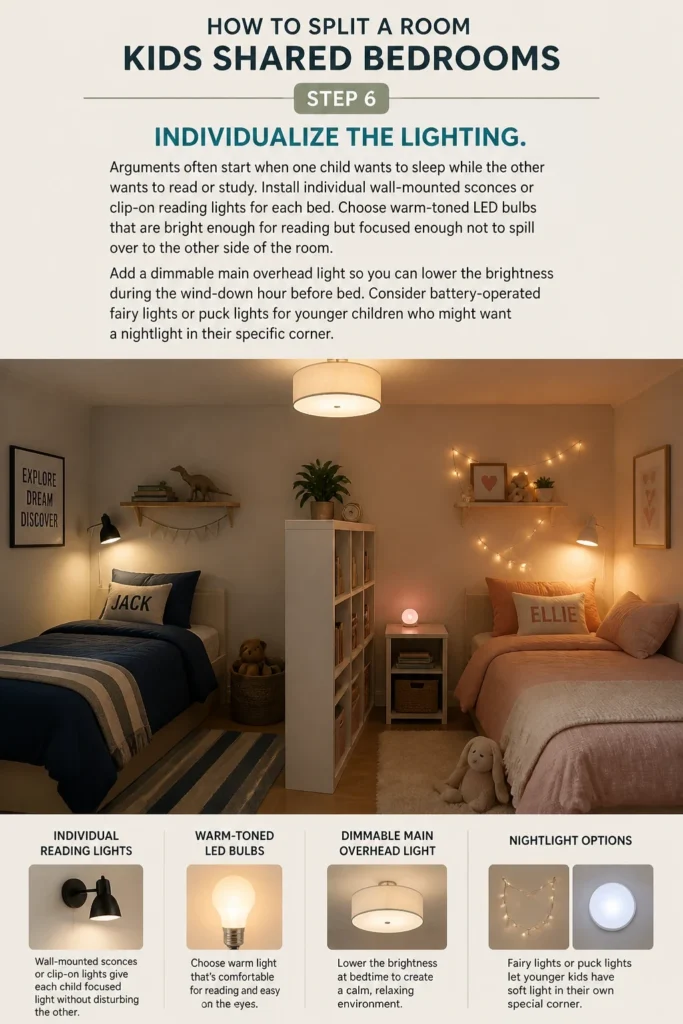
Install individual wall-mounted sconces or clip-on reading lights for each bed.
Choose warm-toned LED bulbs that are bright enough for reading but focused enough not to spill over to the other side of the room.
Add a dimmable main overhead light so you can lower the brightness during the wind-down hour before bed.
Consider battery-operated fairy lights or “puck” lights for younger children who might want a nightlight in their specific corner.
Step 7: Manage Sound and Soft Goods
Shared rooms can become echo chambers, making it hard for kids to find a quiet moment.
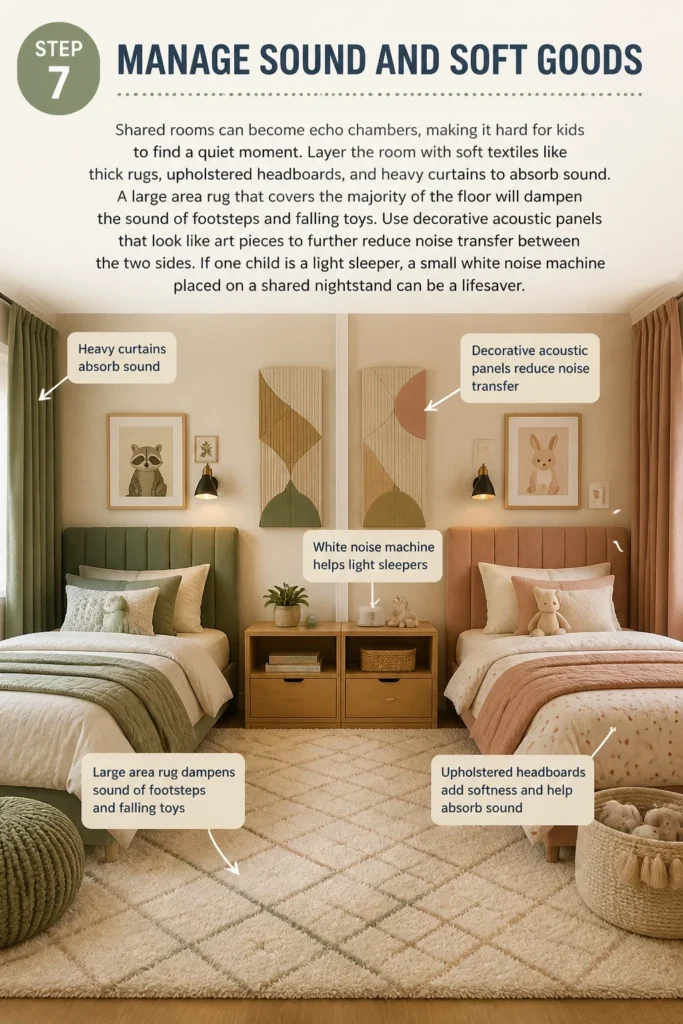
Layer the room with soft textiles like thick rugs, upholstered headboards, and heavy curtains to absorb sound.
A large area rug that covers the majority of the floor will dampen the sound of footsteps and falling toys.
Use decorative acoustic panels that look like art pieces to further reduce noise transfer between the two sides.
If one child is a light sleeper, a small white noise machine placed on a shared nightstand can be a lifesaver.
Step 8: Create a Shared Neutral Zone
While privacy is important, a shared room should also encourage togetherness.
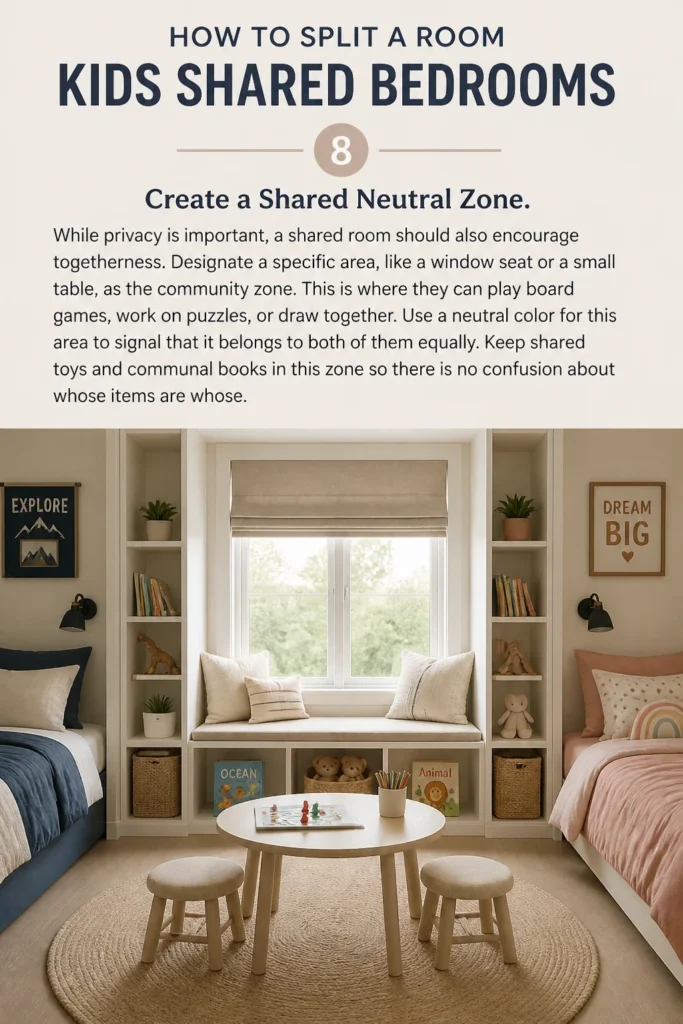
Designate a specific area, like a window seat or a small table, as the “community zone.”
This is where they can play board games, work on puzzles, or draw together.
Use a neutral color for this area to signal that it belongs to both of them equally.
Keep shared toys and communal books in this zone so there is no confusion about whose items are whose.
Common Mistakes to Avoid
Ignoring the Window Access
One of the biggest errors is placing a tall divider in a way that blocks natural light from reaching one half of the room.
This creates a “cave” effect that can make one child feel slighted or claustrophobic.
Always ensure that light can filter through the divider, perhaps by using open shelving or sheer fabrics.
Forgetting the “Middle Ground”
If you split a room too aggressively, the space can feel disjointed and cramped.
Failing to leave a clear walkway in the center of the room makes it difficult to move around and clean.
Ensure there is at least a two-foot wide path that remains completely clear of furniture and clutter.
Choosing Mismatched Furniture Scales
Using a massive loft bed for one child and a tiny toddler bed for the other creates a visual imbalance.
Even if the kids are different ages, try to keep the “heaviness” of the furniture similar on both sides.
This creates a sense of fairness and aesthetic harmony that makes the room feel intentional rather than haphazard.
Troubleshooting
The Room Is Narrow and Long
Long, narrow rooms are notoriously difficult to split down the middle without creating two “tunnels.”
Instead of a vertical split, try a horizontal split where one child’s zone is at the back of the room and the other is near the door.
Use a low-profile divider like a trunk or a bench to separate the two areas without cutting off the sightline.
Uneven Number of Windows
If the room only has one window, do not try to build a wall that cuts directly through the glass.
Instead, place the beds on the walls perpendicular to the window so both children share the view and the light.
Use mirrors on the “darker” side of the room to reflect the light from the window and brighten the space.
The Closet Is Only on One Side
When the closet is located entirely in one child’s designated zone, it can lead to constant “trespassing.”
Remove the closet doors and replace them with a curtain to make the space feel more accessible to both.
Alternatively, move the “clothing zone” out of the closet and use two identical wardrobes placed in each child’s own area.
Key Takeaways
- Measure the entire room carefully, including door swings and window heights, before buying any furniture.
- Prioritize flexible dividers like curtains or open bookshelves to maintain a sense of airiness.
- Use color blocking and individual rugs to define personal boundaries without building permanent walls.
- Invest in individual task lighting to prevent bedtime arguments and support different schedules.
- Maximize vertical space with lofts and wall-mounted shelving to keep the floor area open for play.
- Establish a shared “neutral zone” to foster a sense of community and sibling bonding.
Frequently Asked Questions
What is the best way to split a room for a boy and a girl?
Focus on a sophisticated, gender-neutral base color like navy, grey, or white for the large furniture pieces.
Use bedding, art, and accessories in each child’s preferred colors to personalize their specific sides.
A solid floor-to-ceiling curtain is often the best divider here as it provides the visual privacy needed as they grow older.
How do I split a small bedroom without making it feel tiny?
Avoid solid, dark furniture and instead opt for pieces with legs that allow you to see the floor underneath.
Use mirrors strategically to double the visual space and keep the ceiling color light to draw the eye upward.
Transparent materials, like acrylic chairs or glass-fronted cabinets, can also help maintain a sense of openness.
Can I use a rug to split a room?
Yes, placing two distinct rugs side-by-side is one of the most effective ways to define zones without using physical barriers.
Ensure the rugs are large enough that all the furniture for that “zone” sits comfortably on top of them.
This creates a “psychological boundary” that kids naturally respect during playtime and cleanup.
Our Top Recommended Finds
- Open-Back Bookshelves: These are perfect for dividing a room because they allow light to pass through while offering storage for both sides.
- Tension Rod Room Dividers: A great “no-drill” solution for hanging curtains to create instant, retractable privacy walls.
- Battery-Operated Wall Sconces: These allow you to add individual lighting to each child’s bed without needing an electrician or messy cords.
Transform Your Shared Space Today
Creating a shared sanctuary for your children doesn’t require a massive renovation or a huge budget.
Start by simply rearranging the beds this weekend to see how the flow of the room changes.
Once you have the layout right, you can slowly add the “identity” pieces like new paint or personalized bedding.
A well-designed shared room teaches children the value of compromise, respect, and the beauty of having a close companion.
Take that first measurement today and watch how a little planning can turn a crowded room into a cozy retreat for your little ones.