✨ How To Hide Electrical Box On Wall
That unsightly electrical box on your wall can feel like a stubborn design challenge, disrupting an otherwise perfect room.
I remember staring at one in my own living room, wondering how to blend it seamlessly into my cozy aesthetic.
Through trial and error, I’ve discovered wonderful, practical ways to make these necessary evils disappear, and I’m excited to share those solutions with you.
Quick Overview
This guide will walk you through creative and safe ways to conceal an electrical box, transforming a visual distraction into a delightful design feature.
You’ll learn how to integrate it into your decor, enhancing your room’s overall charm and coziness.
- Time needed: 1-4 hours (depending on complexity)
- Difficulty: Beginner to Intermediate
- What you’ll need: Measuring tape, basic tools, decorative items (art, shelves, fabric, etc.)
Step-by-Step Instructions
Step 1: Assess and Prioritize Safety
Before you begin any decorative work, it’s crucial to understand the type of electrical box you’re dealing with.
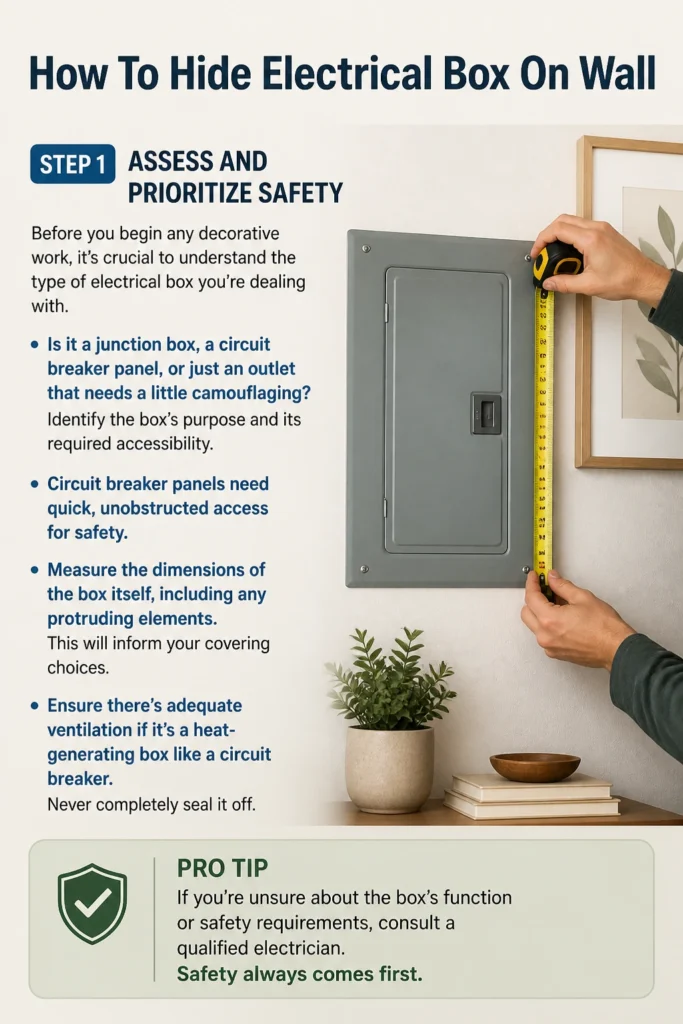
Is it a junction box, a circuit breaker panel, or just an outlet that needs a little camouflaging?
- Identify the box’s purpose and its required accessibility. Circuit breaker panels need quick, unobstructed access for safety.
- Measure the dimensions of the box itself, including any protruding elements. This will inform your covering choices.
- Ensure there’s adequate ventilation if it’s a heat-generating box like a circuit breaker. Never completely seal it off.
Pro Tip: If you’re unsure about the box’s function or safety requirements, consult a qualified electrician. Safety always comes first.
Step 2: Envision Your Aesthetic
Think about the overall style and mood of the room where the electrical box resides.

Do you want a rustic farmhouse feel, a modern minimalist look, or a bohemian sanctuary?
- Consider the existing color palette and textures in your space. Your hiding solution should complement these.
- Brainstorm ideas that align with your design vision. A hidden box can become a subtle focal point or disappear entirely.
- Sketch out a few concepts. Visualizing helps you choose the most harmonious solution for your home.
Step 3: Choose Your Camouflage Method
There are many creative ways to hide an electrical box, each offering a unique aesthetic.
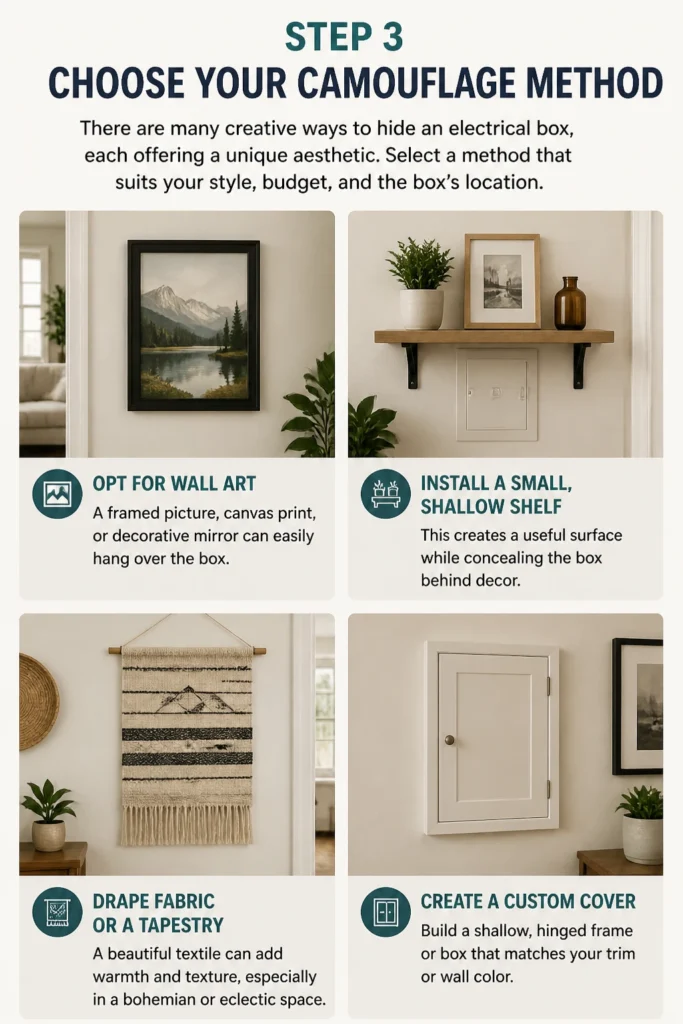
Select a method that suits your style, budget, and the box’s location.
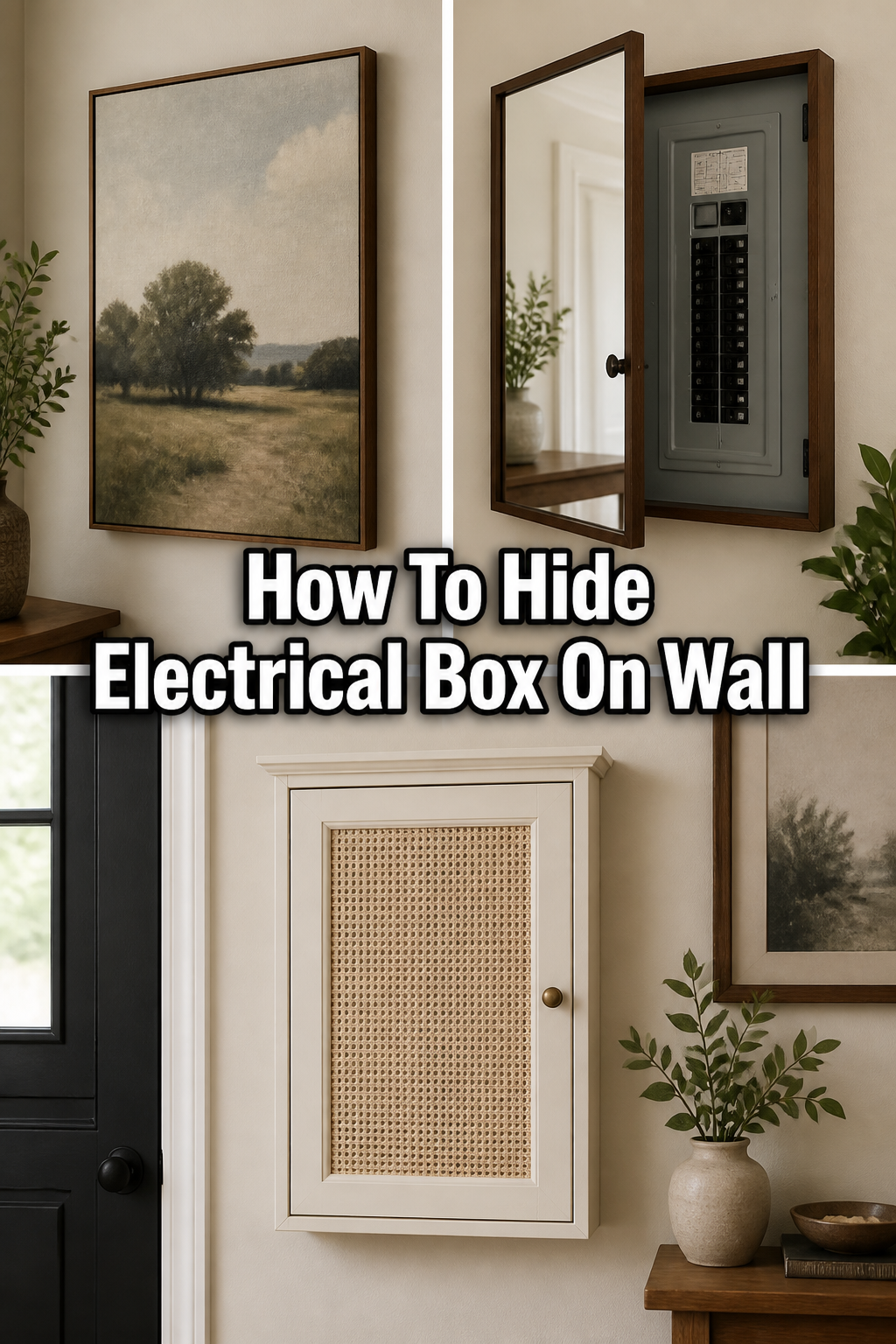
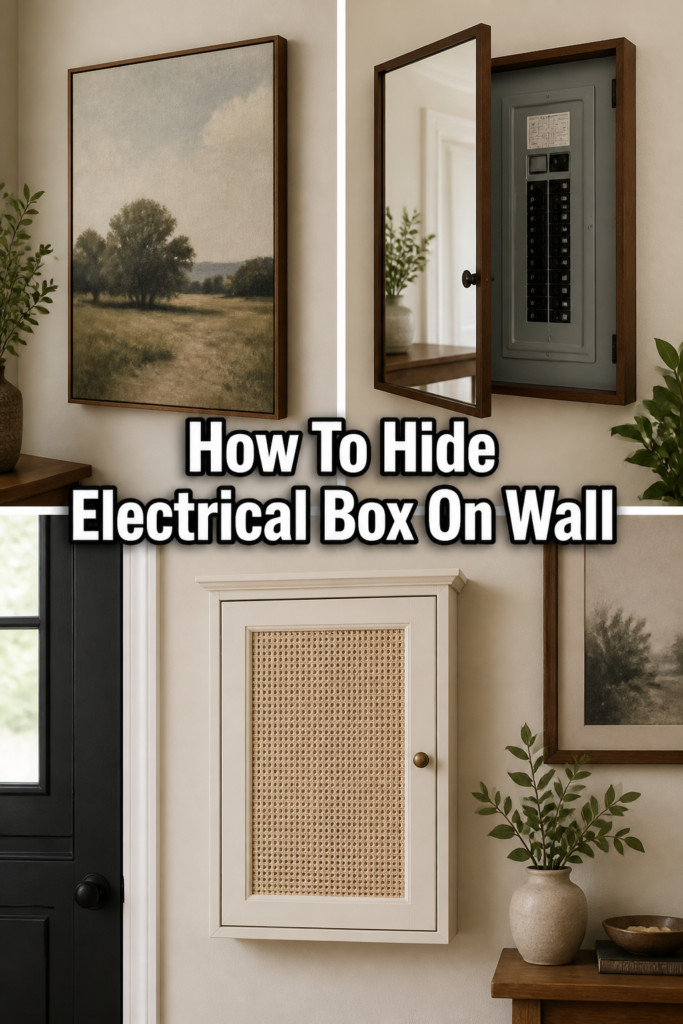
- Opt for wall art: A framed picture, canvas print, or decorative mirror can easily hang over the box.
- Install a small, shallow shelf: This creates a useful surface while concealing the box behind decor.
- Drape fabric or a tapestry: A beautiful textile can add warmth and texture, especially in a bohemian or eclectic space.
- Create a custom cover: Build a shallow, hinged frame or box that matches your trim or wall color.
Step 4: Measure and Plan Your Cover
Accurate measurements are key to a successful and aesthetically pleasing cover.
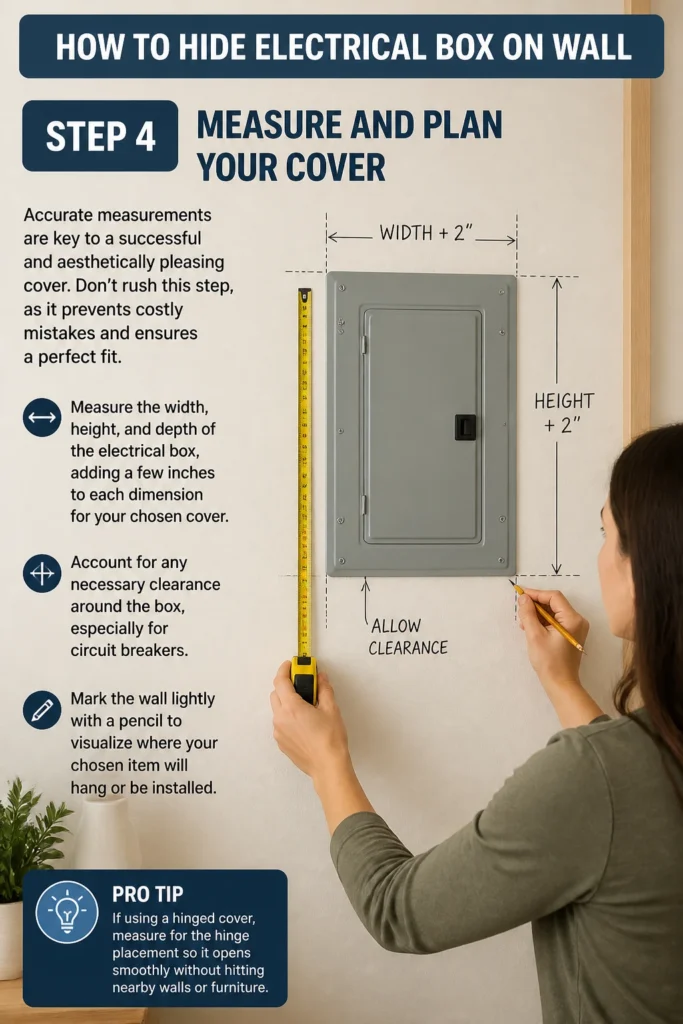
Don’t rush this step, as it prevents costly mistakes and ensures a perfect fit.
- Measure the width, height, and depth of the electrical box, adding a few inches to each dimension for your chosen cover.
- Account for any necessary clearance around the box, especially for circuit breakers.
- Mark the wall lightly with a pencil to visualize where your chosen item will hang or be installed.
Pro Tip: If using a hinged cover, measure for the hinge placement so it opens smoothly without hitting nearby walls or furniture.
Step 5: Prepare the Area
A clean and prepared surface ensures your hiding solution looks its best and adheres properly.
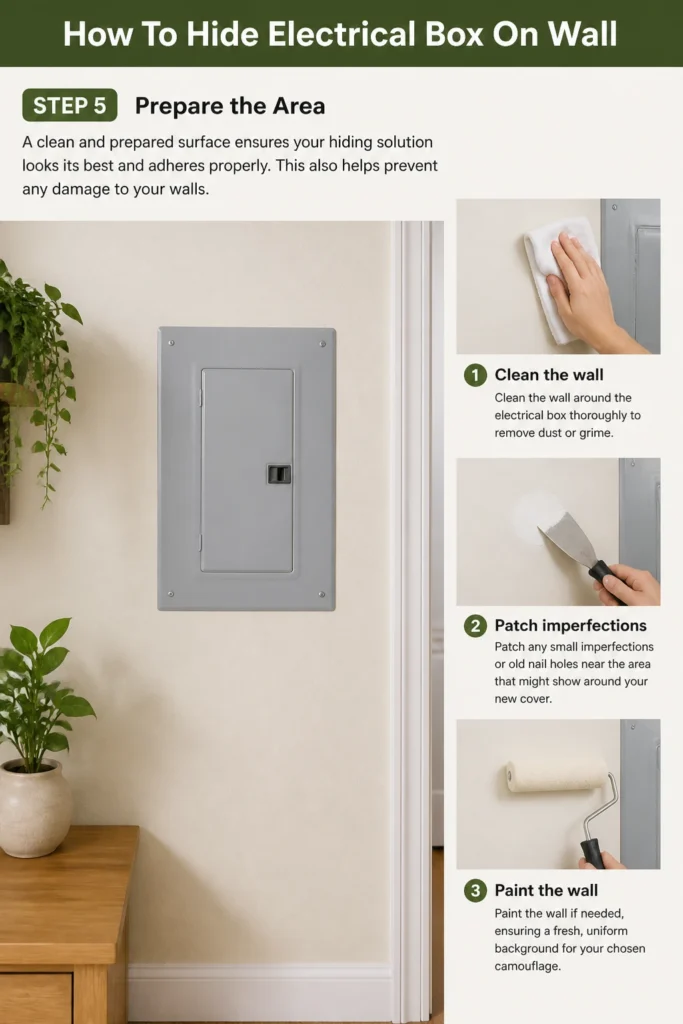
This also helps prevent any damage to your walls.
- Clean the wall around the electrical box thoroughly to remove dust or grime.
- Patch any small imperfections or old nail holes near the area that might show around your new cover.
- Paint the wall if needed, ensuring a fresh, uniform background for your chosen camouflage.
Step 6: Install Your Chosen Cover
Carefully install your chosen decorative item or custom cover, ensuring it’s secure and perfectly aligned.
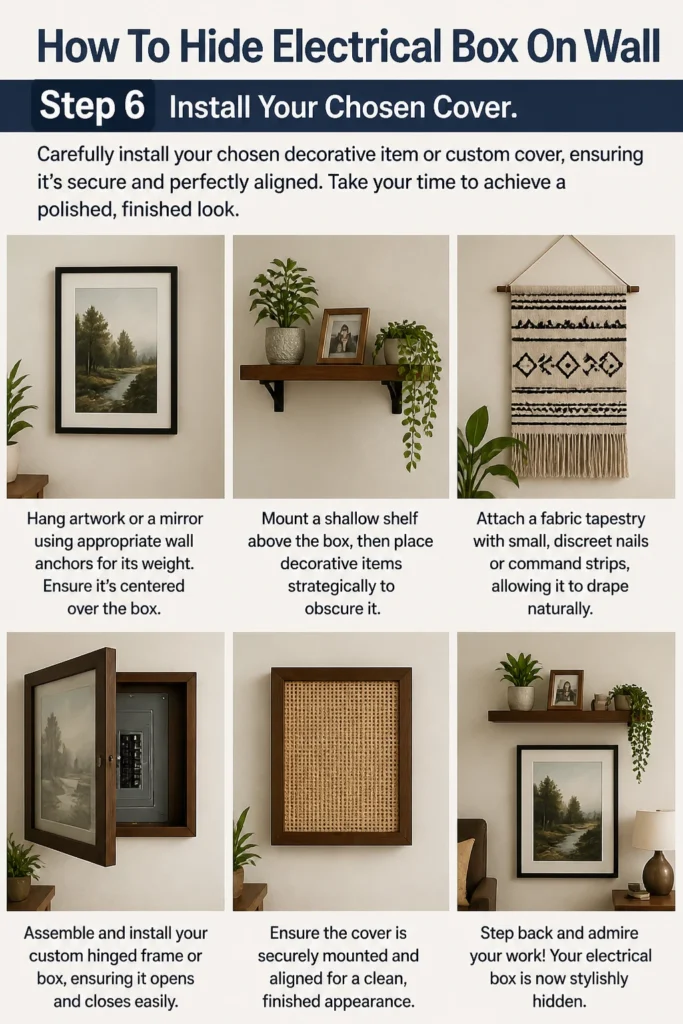
Take your time to achieve a polished, finished look.
- Hang artwork or a mirror using appropriate wall anchors for its weight. Ensure it’s centered over the box.
- Mount a shallow shelf above the box, then place decorative items strategically to obscure it.
- Attach a fabric tapestry with small, discreet nails or command strips, allowing it to drape naturally.
- Assemble and install your custom hinged frame or box, ensuring it opens and closes easily.
Step 7: Style and Accessorize
This is where your creativity truly shines, integrating the hidden box into your room’s narrative.
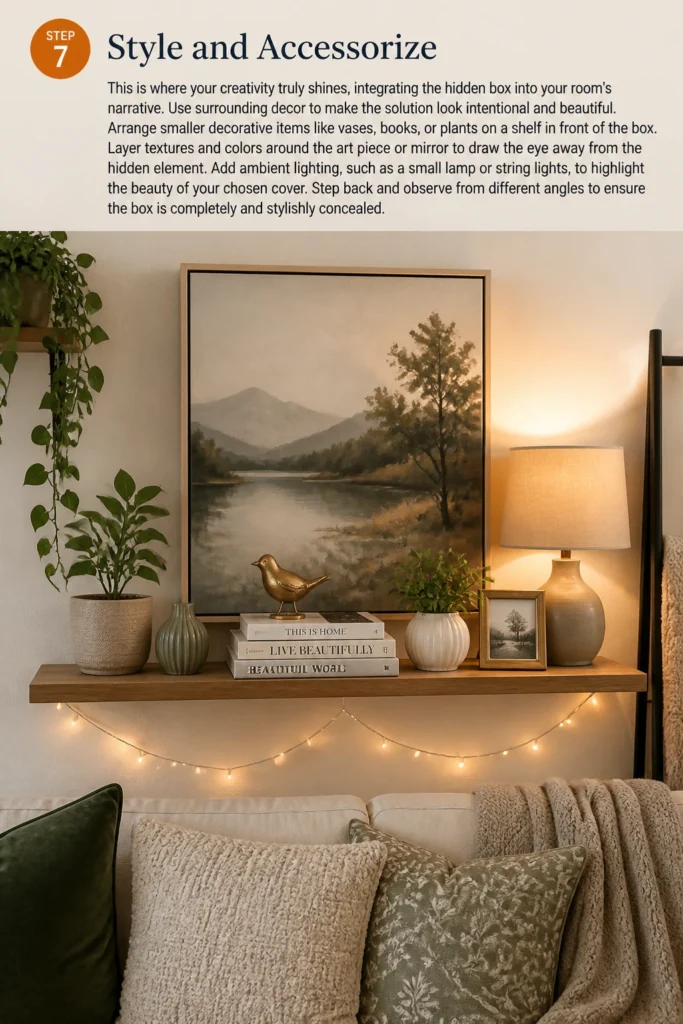
Use surrounding decor to make the solution look intentional and beautiful.
- Arrange smaller decorative items like vases, books, or plants on a shelf in front of the box.
- Layer textures and colors around the art piece or mirror to draw the eye away from the hidden element.
- Add ambient lighting, such as a small lamp or string lights, to highlight the beauty of your chosen cover.
- Step back and observe from different angles to ensure the box is completely and stylishly concealed.
Common Mistakes to Avoid
Blocking Essential Access
One of the biggest mistakes is creating a cover that makes accessing the electrical box difficult or impossible.
Circuit breaker panels, especially, need to be quickly accessible in emergencies. A permanent fixture glued or screwed shut over a panel is a safety hazard and can lead to frustration later on.
Always choose a solution that can be easily moved, hinged, or lifted away without tools. Think about how you’d get to it quickly if the power went out.
Ignoring Ventilation Needs
Some electrical boxes, particularly older ones or those with many active circuits, can generate a small amount of heat. Completely sealing them off with an airtight cover can lead to overheating and potential fire hazards.
Ensure any custom box or tight-fitting cover allows for some air circulation. If in doubt, opt for solutions like framed art or a shallow shelf that provide natural airflow rather than fully enclosing the box.
Choosing the Wrong Scale or Style
A beautiful hiding solution can still look out of place if it’s too small, too large, or doesn’t match your room’s aesthetic. A tiny piece of art over a large box will only draw more attention to it, while an oversized one might overwhelm the space.
Always consider the proportions of the box relative to the wall and the room. Select a cover that feels balanced and integrates seamlessly with your existing decor style, making it look like an intentional design choice.
Damaging the Wall or Box
Using overly aggressive adhesives, drilling into the electrical box itself, or installing heavy items with inadequate anchors can cause significant damage.
This can lead to costly repairs or, worse, electrical hazards. Always use appropriate hardware for your wall type and the weight of your chosen cover, and never drill directly into any part of the electrical box.
Troubleshooting
My cover still looks obvious.
Sometimes, even with a cover, the outline or presence of the electrical box feels too apparent. This often happens if the cover is too small or if the surrounding decor is sparse.
Try layering your decor. If using a piece of art, place a small console table below it with a lamp and a plant. If using a shelf, add more items, varying their heights and textures, to create a fuller, more distracting display. The goal is to create a “visual story” that draws the eye away from the box itself.
I need frequent access to the box, and my cover is cumbersome.
If you find yourself moving a heavy mirror or unhooking a tapestry too often, your solution isn’t practical. This indicates that the chosen method doesn’t align with the box’s accessibility needs.
Re-evaluate your options for easy access. Consider a hinged art piece that swings open like a cabinet door, or a lightweight fabric panel that can be easily lifted or pulled aside. A French cleat system for hanging art can also make removal and re-hanging very simple.
The cover doesn’t blend well with my room’s cozy aesthetic.
Sometimes a practical solution can feel a bit stark or out of place with a warm, inviting decor. This might happen if the material or style of your cover clashes with your room’s vibe.
Infuse warmth through texture and color. If you have a custom wooden cover, consider painting it a soft, muted tone or distressing it for a rustic look. Add natural elements like woven baskets or ceramics around it. For an art piece, choose one with warm colors or a comforting subject, like a landscape or abstract with soft hues.
Key Takeaways
- Always prioritize safety by understanding the box’s function and ensuring easy access, especially for circuit breakers.
- Choose a hiding method that complements your room’s existing aesthetic and color scheme for a cohesive look.
- Accurate measurements are vital for a well-fitting and visually appealing cover.
- Consider hinged solutions or lightweight, easily movable covers for boxes requiring frequent access.
- Layering decor and surrounding your cover with complementary items helps to seamlessly integrate it into your space.
- Avoid completely sealing off electrical boxes to ensure proper ventilation and prevent potential hazards.
Frequently Asked Questions
Is it safe to cover an electrical box?
Yes, it is generally safe to cover an electrical box, provided you do so correctly. The most important considerations are maintaining accessibility, ensuring proper ventilation if needed, and never drilling into the box itself. Always use non-conductive materials for your cover.
Can I paint directly onto an electrical box?
While technically possible, painting directly onto an electrical box is generally not recommended, especially for circuit breaker panels. Paint can obscure important labels, get into moving parts, or make future maintenance difficult. It’s better to use a removable or hinged cover that can be painted separately to match your wall.
What if my electrical box protrudes significantly from the wall?
If your electrical box sticks out a lot, a simple piece of flat art might not fully conceal it. In this case, consider a shadow box frame, a shallow wall cabinet, or a custom-built, hinged cover designed with extra depth. A decorative shelf with objects placed strategically can also work wonders, creating a visual barrier.
How can I hide an electrical box without drilling holes?
For those who prefer not to drill, there are several excellent options. You can use strong adhesive hooks or command strips to hang lightweight art or tapestries. A freestanding decorative screen or room divider placed in front of the box can also be effective. Additionally, a console table with tall decor can work without any wall modification.
Our Top Recommended Finds
- French Cleat Hanging System: Perfect for hanging art or custom panels securely, yet allowing for easy lift-off access when needed.
- Decorative Hinges: Choose stylish, sturdy hinges for custom-built covers, adding a touch of elegance and functionality.
- Assorted Wall Anchors: Essential for safely hanging various weights of decor without damaging your walls or risking falls.
Transforming the Unseen into the Beautiful
You’ve now got a treasure trove of ideas and practical steps to conquer that distracting electrical box.
Imagine your room feeling more cohesive, more intentional, and truly a reflection of your warm, inviting style.
Don’t let a small utility item dictate your design; instead, let it inspire your next creative project.
Pick one idea that sparks joy for you and begin transforming that wall today!