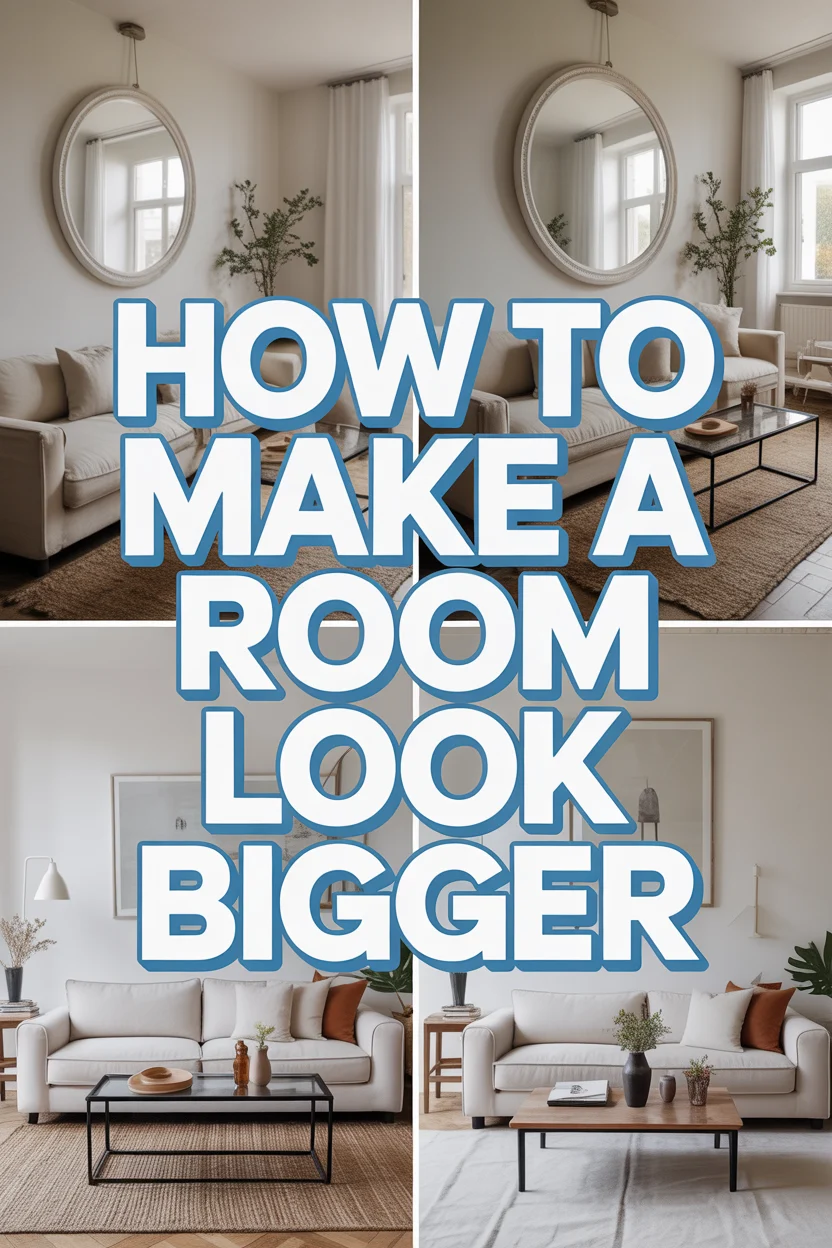
🏠 How To Make A Room Look Bigger
I remember moving into my first studio apartment and feeling like the walls were closing in on me.
It was a tiny space with a single window, but after years of experimenting with interior design, I learned that square footage is often a state of mind.
This guide shares the exact methods I used to turn that cramped box into an airy, cozy sanctuary that felt twice its actual size.
Quick Overview
You are about to transform your living space by mastering the art of visual flow and light manipulation.
- Time needed: 2 to 4 hours for basic changes; a full weekend for painting and rearranging.
- Difficulty: Beginner
- What you’ll need: Measuring tape, basic cleaning supplies, a few well-placed mirrors, and an open mind.
Step-by-Step Instructions
Step 1: Clear the Visual Noise
Start by removing every small item from your surfaces, including coffee tables, shelves, and mantels.
A room often feels small because our eyes have too many places to land, creating a sense of mental and physical clutter.
Evaluate each object and ask if it serves a purpose or brings you genuine joy in that specific spot.
Group smaller items into odd-numbered clusters rather than spreading them out across a surface.
Leaving “negative space” or empty areas on your shelves allows the room to breathe and makes the walls feel further away.
Pro Tip: Try the “one in, one out” rule for decor to ensure your surfaces never become overcrowded again.
Step 2: Embrace a Soft Color Palette
Choose light, cool tones like soft whites, pale blues, or gentle greys for your walls and large furniture pieces.
Light colors are more reflective, which maximizes the effect of natural light and makes the boundaries of the room feel less defined.
Paint your baseboards and crown molding in the same color as your walls to create a seamless vertical line.
When the trim matches the walls, the eye doesn’t stop at the floor or ceiling, which creates an illusion of extra height.
Consider a monochromatic scheme where your furniture stays within the same color family as your walls.
This prevents the room from feeling “choppy” and allows the furniture to blend into the background rather than dominating the space.
Step 3: Use Mirrors as Magic Windows
Identify the wall opposite your largest window and place a large mirror there.
This reflects the outdoor view and the natural light, essentially doubling the depth of the room instantly.
Lean a full-length mirror against a narrow wall to draw the eye upward and make the ceiling feel higher.
The vertical orientation of a tall mirror creates a sense of grandeur even in the tightest hallways or bedrooms.
Experiment with mirrored furniture, such as a small side table or a tray, to bounce light into dark corners.
These reflective surfaces break up the “heaviness” of solid wood or metal furniture pieces.
Pro Tip: Use a mirror with a thin, minimal frame to keep the focus on the reflection rather than the object itself.
Step 4: Select Furniture with Exposed Legs
Swap out heavy, skirted sofas or boxy armchairs for pieces that stand on tapered legs.
When you can see the floor extending underneath your furniture, the brain perceives more total floor area.
Look for “low-profile” pieces that sit closer to the ground to keep the top half of the room open.
Furniture that cuts off your line of sight in the middle of a room makes the space feel truncated and small.
Incorporate glass or acrylic pieces, like a “ghost” chair or a glass-topped coffee table.
These items provide the function you need without taking up any visual space, making them nearly invisible to the eye.
Step 5: Hang Curtains High and Wide
Mount your curtain rod as close to the ceiling as possible rather than right above the window frame.
This simple trick draws the eye upward and gives the impression of much taller windows and higher ceilings.
Extend the rod several inches past the sides of the window so the curtains barely cover the glass when open.
This makes the window itself look massive and allows the maximum amount of sunlight to pour into the room.
Select lightweight, sheer fabrics that allow light to filter through while still providing a sense of privacy.
Heavy, dark drapes can feel like a solid wall, effectively shrinking the room the moment you hang them.
Step 6: Layer Your Lighting
Avoid relying solely on a single overhead light fixture, which often casts harsh shadows in the corners.
Shadows make the edges of a room disappear, which makes the entire space feel like it is closing in on you.
Place floor lamps and table lamps in different corners to pull the eye to the very edges of the space.
Lighting the perimeter of a room defines its true size and creates a warm, inviting glow that feels expansive.
Add small accent lights inside bookshelves or under cabinets to create layers of depth.
These pockets of light add interest and make the room feel like it has multiple “zones” rather than just one small area.
Pro Tip: Use warm-toned LED bulbs to keep the space feeling cozy rather than clinical or cold.
Step 7: Go Big with Your Rugs
Measure your space and choose a rug that is large enough for all the furniture legs to sit on top of it.
A small rug that floats in the middle of the room acts like a “postage stamp,” making the floor look fragmented.
Ensure there are at least 12 to 18 inches of bare floor showing around the edges of the rug.
This border of floor creates a frame that helps the room feel organized and intentionally designed.
Opt for simple patterns or solid textures rather than busy, high-contrast designs.
A rug with too much going on can overwhelm a small room and make the floor feel cluttered.
Step 8: Utilize Vertical Space
Install floating shelves that go all the way up to the ceiling to store books and decor.
Drawing the eye toward the ceiling reminds the viewer of the room’s height, which balances out a narrow floor plan.
Hang your artwork slightly higher than eye level to encourage people to look up.
This creates a sense of loftiness and makes the walls feel more substantial and grand.
Choose tall, slender indoor plants like a Fiddle Leaf Fig or a Dracaena to add life without taking up much floor space.
The natural green elements soften the corners of the room and provide a fresh, airy feeling.
Common Mistakes to Avoid
Pushing All Furniture Against the Walls
It is tempting to shove every piece of furniture against the perimeter to create a “dance floor” in the middle. This actually highlights the small dimensions of the room and makes the layout feel stiff. Pulling your sofa even just three inches away from the wall creates a “shadow line” that adds depth and airiness.
Using Too Many Small Decorations
A collection of tiny trinkets and small picture frames creates visual “clutter” that confuses the eye. It is much better to have one large, impactful piece of art than ten small ones scattered around. Larger pieces provide a focal point that anchors the room and makes it feel more expensive and spacious.
Ignoring the Fifth Wall
The ceiling is often forgotten, but it plays a huge role in how a room feels. Leaving a ceiling dingy or painted a dark color when the walls are light can make the room feel like a cave. Keeping the ceiling a bright, crisp white or a very pale version of your wall color helps “lift” the top of the room.
Troubleshooting
The Room Has No Windows
If you are working with a windowless basement or office, you have to create your own “light.” Use several mirrors to reflect light from a doorway or from high-quality floor lamps that mimic daylight. Adding a large piece of art that depicts a landscape or an open horizon can also provide a “mental” window for the eye to rest on.
The Layout Is Long and Narrow
Narrow rooms often feel like hallways, which can be frustrating to furnish. Break the room into functional zones using rugs or the placement of your furniture. For example, use the back of a sofa to separate a small seating area from a workspace, which makes the room feel like two purposeful spaces rather than one awkward one.
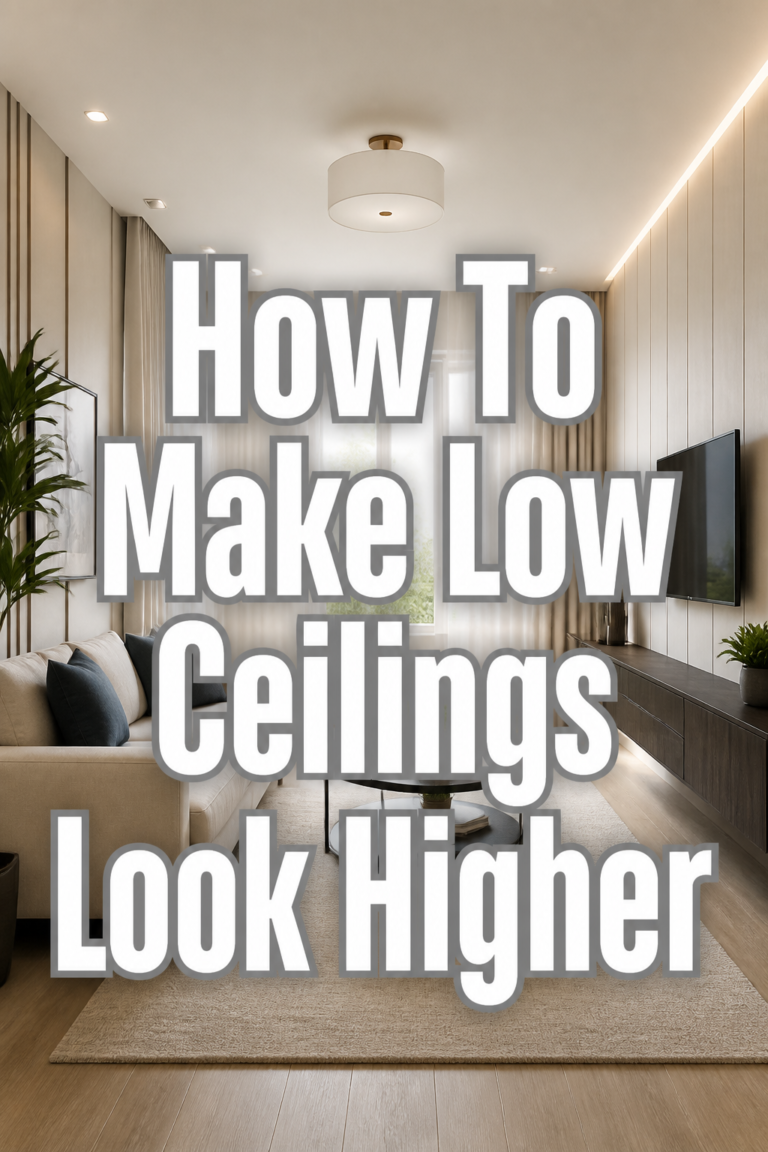
The Ceilings Are Very Low
Low ceilings can make any room feel cramped regardless of the floor space. Focus on vertical lines, such as striped wallpaper or tall, thin floor lamps, to create the illusion of height. Avoid hanging low-slung chandeliers or ceiling fans that hang down into the living space, as these physically cut the room’s height.
Key Takeaways
- Maximize light: Use mirrors and light paint colors to reflect as much light as possible.
- Show the floor: Choose furniture with legs and use large rugs to create a sense of continuous space.
- Think vertically: Draw the eye upward with high curtains, tall shelves, and elevated artwork.
- Reduce visual noise: Declutter surfaces and choose a few large statement pieces over many small items.
- Create flow: Leave space between furniture and walls to allow for “breathable” air.
- Be intentional: Every piece should have a purpose and fit the scale of the room.
Frequently Asked Questions
Can I ever use dark colors in a small room?
Yes, you can use dark colors if you want to create a “jewel box” effect. Darker shades like navy or charcoal can actually make the corners of a room disappear, creating an infinite feeling. However, this works best in rooms with plenty of lamps and cozy textures where the goal is intimacy rather than brightness.
How many mirrors are too many?
You generally want to avoid having mirrors on every single wall, as this can become disorienting. Stick to one or two large, strategic mirrors that reflect light or a beautiful view. If you find yourself constantly catching your own reflection in a way that feels distracting, you might have one too many.
Is it okay to have a large sofa in a small living room?
Surprisingly, one large sofa often looks better than a cramped collection of small chairs. A single, appropriately sized sectional can anchor the room and provide plenty of seating without making the floor look “choppy.” Just ensure the sofa has legs and isn’t so big that it blocks the natural walking paths of the room.
Does wallpaper make a room look smaller?
It depends entirely on the pattern. Large-scale, airy patterns with a light background can actually add depth to a wall. Small, busy, and dark patterns tend to close the space in and make the walls feel like they are leaning toward you. If you are unsure, try a “feature wall” behind your bed or sofa instead of papering the entire room.
Our Top Recommended Finds
- Over-the-Door or Leaner Mirror: A simple, thin-framed mirror is the most effective tool for doubling your visual space instantly.
- Acrylic Coffee Table: These “invisible” tables provide a surface for your coffee or books without blocking any of the floor view.
- Tension Rod or Ceiling-Mount Curtain Track: These allow you to hang curtains at the highest possible point without complicated drilling into the wall.
Transform Your Space Today
You don’t need a sledgehammer or a massive renovation budget to change the way your home feels.
Start by moving one piece of furniture away from the wall or clearing off a single cluttered shelf to see how the energy of the room shifts.
If you enjoyed these tips, you might want to look into how to choose the perfect indoor plants for low-light spaces or explore the basics of “hygge” to make your newly spacious room feel even cozier.
Take one small step this afternoon, and you will be amazed at how much bigger your world can feel.