🏠 How To Hide Furnace And Water Heater
I remember walking into my first home and feeling a sudden wave of disappointment when I saw the basement.
Right in the corner of what I hoped would be a cozy den sat a hulking, metallic furnace and a rusted water heater.
It took me months of sketching and planning to realize that these mechanical necessities do not have to ruin your home’s aesthetic.
Quick Overview
Transforming your utility area from an industrial eyesore into a seamless part of your living space is a rewarding project.
This guide will show you how to build or install a stylish enclosure that keeps your home safe and beautiful.
- Time needed: 4 to 8 hours depending on the chosen method
- Difficulty: Intermediate
- What you’ll need: Measuring tape, lumber or pre-made screens, hinges, louvered doors or fabric, and basic hand tools.
Step-by-Step Instructions
Step 1: Research Local Building Codes
Check your local regulations before you buy a single piece of wood or fabric.
Most municipalities have very specific rules about how much “combustion air” a furnace or water heater needs to function safely.
If you build a wall too close, you risk creating a fire hazard or causing your appliances to fail prematurely.
Contact your local building inspector or a licensed HVAC professional to ask about the required clearance distances.
Usually, you need at least 6 to 12 inches of space on all sides, but this varies wildly depending on the age and model of your unit.
Pro Tip: Take a photo of the manufacturer’s plate on your units so you can look up the specific clearance requirements online.
Step 2: Measure the Clearance Zone
Outline a “no-go” zone on your floor using painter’s tape to visualize the footprint of your new enclosure.
Measure the height from the floor to the ceiling, accounting for any pipes or ductwork that might be hanging low.
Allow for extra room to reach the shut-off valves and the pilot light in case of an emergency.
You want to ensure that a technician can still get their tools and body into the space for annual maintenance.
If the space is too cramped, the technician might have to tear down your beautiful work to fix a simple leak.
Step 3: Choose Your Design Aesthetic
Decide if you want a permanent built-in look or a flexible, temporary solution.
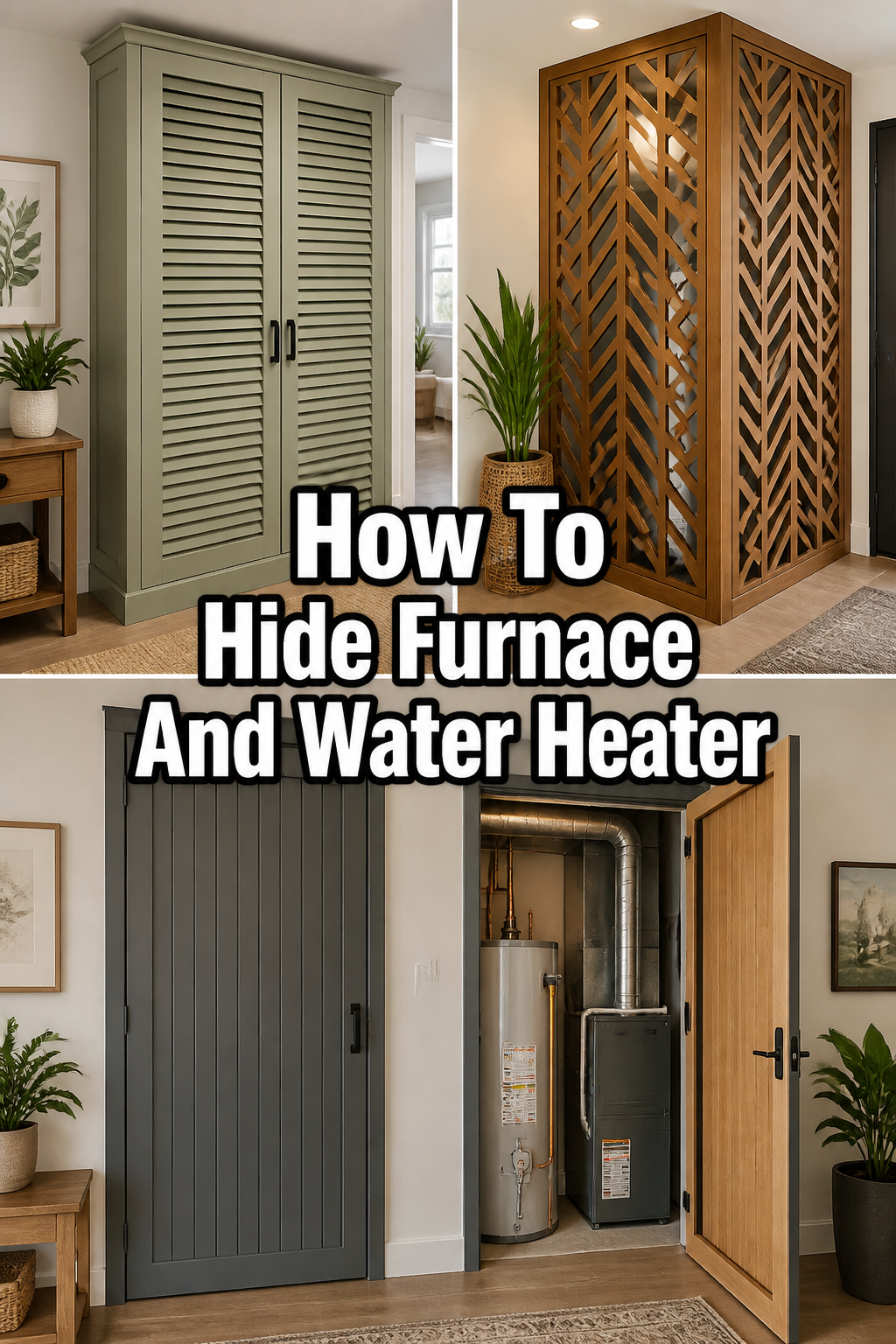
Sliding barn doors offer a rustic, cozy feel and provide excellent access without needing floor space for a door to swing open.
Consider using decorative laser-cut screens if you want a modern, airy vibe that allows for maximum ventilation.
Fabric partitions or heavy floor-to-ceiling curtains are the easiest “DIY” option for those who want a soft, textile-heavy look.
Think about the existing textures in your room so the new addition feels like it was always meant to be there.
Step 4: Construct the Framework
Build a simple “U-shaped” or “L-shaped” frame using 2×4 lumber if you are going for a solid wall enclosure.
Secure the base plate to the floor and the top plate to the ceiling joists, making sure everything is perfectly level.
Leave a wide opening for the doors; this is not the time to be stingy with space.
If you are using a freestanding screen, ensure it has a wide enough base or is anchored to the wall so it won’t tip over.
A sturdy frame is the foundation of a professional-looking finish that won’t rattle when the furnace kicks on.
Step 5: Prioritize Proper Ventilation
Select louvered doors or mesh panels instead of solid wood slabs to ensure your appliances can “breathe.”
Furnaces and gas water heaters require a constant supply of oxygen to burn fuel efficiently.
Install a vent grill at the top and bottom of your enclosure if you absolutely must use solid doors.
This creates a natural chimney effect, allowing cool air to enter at the bottom and warm air to escape at the top.
Pro Tip: If you use fabric, choose a breathable natural material like linen rather than a heavy, plastic-backed blackout curtain.
Step 6: Install Easy-Access Doors
Mount your chosen doors using heavy-duty hinges that can handle the weight of the material.
Bi-fold doors are a fantastic middle ground because they provide a wide opening while only taking up half the swing space.
Add magnetic catches to the top of the doors to keep them flush and prevent them from swinging open on their own.
Make sure the handles are easy to grab, especially if you need to get to the water shut-off valve in a hurry.
A well-hung door makes the difference between a “closet” and a “clutter-hider.”
Step 7: Apply Soundproofing Elements
Apply weatherstripping or foam tape to the inside of the door frame to dampen the sound of the furnace motor.
Many homeowners find that the “hum” of the mechanical room is the most distracting part of the basement.
Use acoustic panels on the inside of the enclosure walls if the noise is particularly loud.
Just ensure these panels are fire-rated and do not touch the actual appliance.
This small step turns a functional project into a true upgrade for the comfort of your home.
Step 8: Finish and Decorate
Paint the enclosure the same color as your walls to make it “disappear” into the room.
Alternatively, use a bold accent color or a wood stain to turn the enclosure into a beautiful focal point.
Hang lightweight art or a decorative wreath on the exterior of the doors to further disguise their purpose.
You can even add a small floating shelf nearby to hold laundry supplies or decorative candles.
The goal is to make the space feel intentional and curated rather than just a hidden utility closet.
Common Mistakes to Avoid
Blocking the Air Intake
Many people think they can just wrap their water heater in a tight wooden box to save space. This is a dangerous error because it starves the burner of oxygen and can lead to carbon monoxide buildup. Always ensure there is a clear path for air to circulate freely around the base of the unit.
Using Flammable Materials Too Close
It is tempting to use cheap plywood or thin plastic screens right up against the metal casing of a furnace. These units get incredibly hot, especially during the winter months. Using materials that aren’t fire-rated or placing them too close to the exhaust flue can lead to a house fire.
Neglecting Future Repairs
Do not build a permanent wall that requires a sledgehammer to remove if the water heater fails. Water heaters have a limited lifespan and will eventually need to be replaced. Designing an enclosure that is easily “deconstructable” or has wide enough doors for a full unit replacement will save you thousands of dollars in the future.
Troubleshooting
The Enclosure Vibrates or Rattles
If you hear a buzzing sound every time the furnace starts, your frame is likely touching the ductwork or the unit itself. Check for any points of contact between the wood and the metal. You can solve this by adding rubber spacers or increasing the gap between the frame and the appliance.
A Strange Smell Near the Enclosure
If you notice a musty or “hot” smell, your ventilation is likely insufficient. Heat is being trapped inside the small space, which can scorch the wood or cause the appliance to overheat. Immediately add more vent grills or switch to a more breathable door material to allow the heat to dissipate.
Difficulty Reaching the Filter
Furnace filters need to be changed every few months, and if the door is hard to open, you will likely skip this chore. If you find the filter is blocked by a support beam, you may need to relocate that beam or create a specific “access hatch” just for the filter slot. Keeping maintenance easy ensures your home stays clean and your furnace runs efficiently.
Key Takeaways
- Prioritize safety by following local building codes and manufacturer clearance requirements.
- Ensure constant airflow using louvered doors, vents, or breathable fabrics.
- Design for total access so technicians can perform repairs without destroying your work.
- Use soundproofing materials like foam tape to reduce mechanical noise in living areas.
- Match the enclosure’s style to your room’s existing decor to create a seamless look.
- Avoid using flammable materials too close to hot exhaust pipes or burner assemblies.
Frequently Asked Questions
Is it safe to put a curtain in front of a water heater?
It can be safe as long as the curtain is made of fire-retardant material and is kept at a significant distance from the pilot light and exhaust flue. You should never let the fabric touch the unit itself. Always maintain at least 12 inches of clearance to prevent the fabric from catching fire or blocking the air intake.
How much clearance does a furnace need?
Most modern furnaces require at least 6 inches of clearance on the sides and 24 to 30 inches in the front for servicing. Older models may require significantly more space due to higher heat output and less efficient insulation. Always check the sticker on the side of your specific unit for the manufacturer’s official requirements.
Can I use a sliding barn door for my utility closet?
Yes, sliding barn doors are one of the best options for hiding a furnace because they don’t require floor space to swing open. They also naturally have a small gap between the door and the wall, which provides some passive ventilation. Just ensure the door is wide enough to reveal the entire unit when slid to the side.
Will hiding my furnace make it run less efficiently?
If you provide enough ventilation, hiding your furnace will have no impact on its efficiency. However, if you restrict the airflow, the furnace will have to work harder to pull in oxygen, which can increase your energy bills and wear out the motor. Proper venting is the key to maintaining a high-performing system.
Our Top Recommended Finds
- Louvered Bi-Fold Doors: These are perfect for providing built-in ventilation while hiding bulky appliances in tight spaces. They come in various wood finishes that can be painted or stained to match your room.
- Magnetic Door Catches: These small, inexpensive tools keep your enclosure doors tightly shut and prevent them from rattling when the furnace fan is running. They are easy to install and provide a high-end feel to your DIY project.
- Fire-Rated Acoustic Foam: Use this on the interior walls of your enclosure to significantly reduce the noise of your mechanical units. Ensure you choose the fire-rated version specifically designed for utility rooms.
Transform Your Space Today
Now that you have a clear plan, it is time to stop staring at those metal tanks and start building.
Once you hide those mechanical units, you will be amazed at how much larger and more inviting your room feels.
You might even find that you finally have the perfect corner for a cozy reading nook or a streamlined home office.
Take that first measurement this afternoon and begin the journey toward a more beautiful, cohesive home.