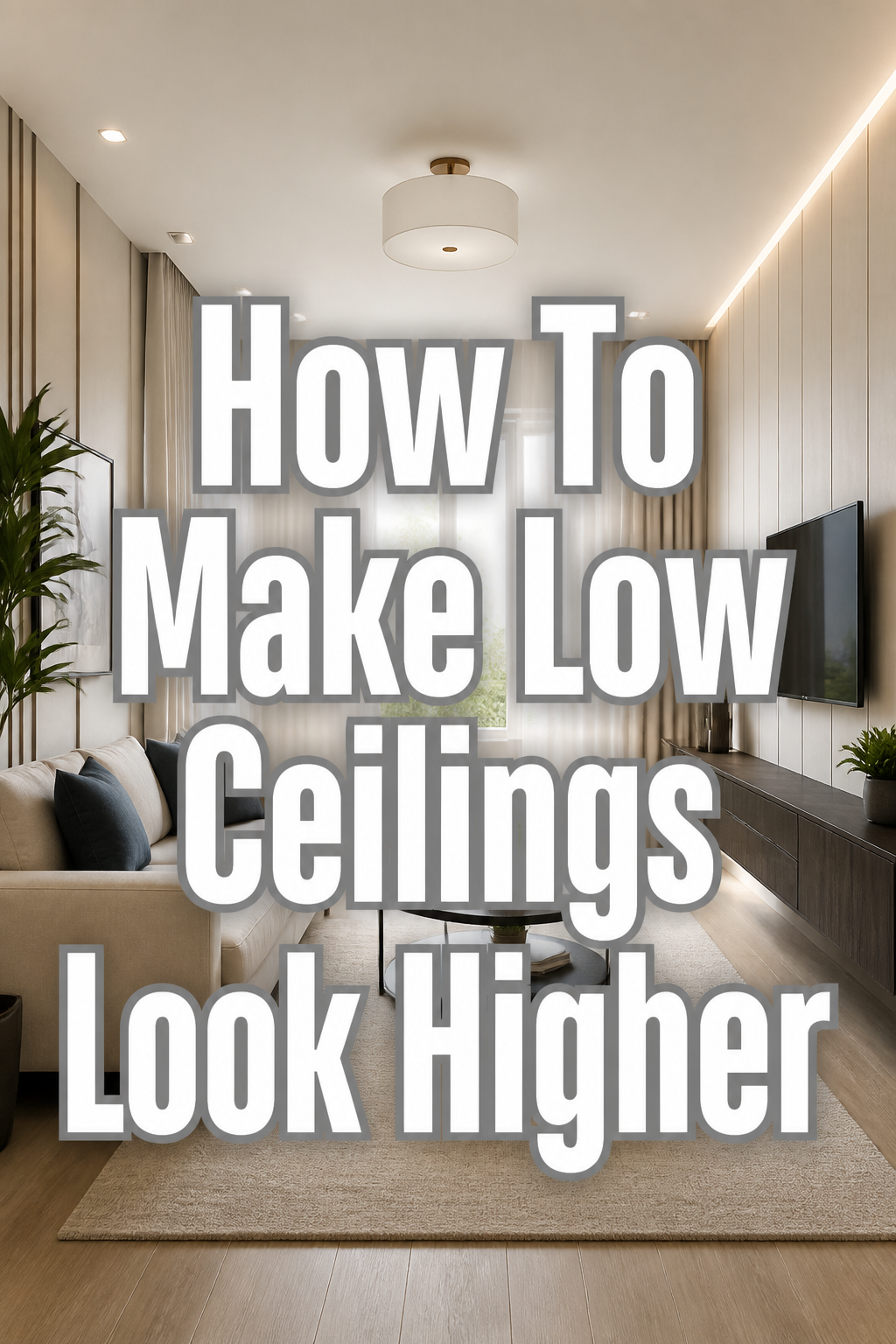
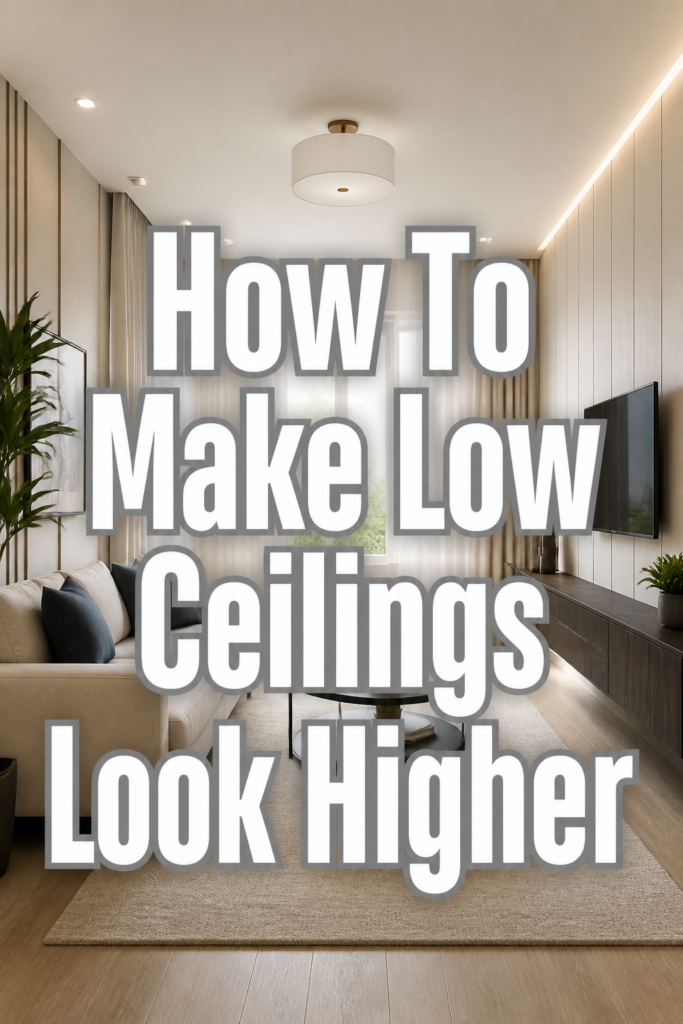
⬆️ How To Make Low Ceilings Look Higher
Low ceilings can sometimes make a room feel a little less expansive, a bit more confined than we’d like.
But what if I told you that with a few clever design tricks, you can completely transform that perception?
Having lived in a charming bungalow with surprisingly low ceilings myself, I’ve learned firsthand the magic of thoughtful design in creating an illusion of height and openness.
Quick Overview
This guide will walk you through simple yet effective strategies to visually lift your ceilings, making your home feel more spacious and inviting.
You’ll discover how to use color, light, furniture, and decor to create a beautiful, airy atmosphere.
- Time needed: 2-8 hours (depending on chosen projects)
- Difficulty: Beginner to Intermediate
- What you’ll need: Paint, brushes, rollers, measuring tape, curtains, curtain rods, mirrors, lighting fixtures, vertical decor items, and a little creative spirit.
Step-by-Step Instructions
Step 1: Paint Your Way to Taller Walls
Color is one of your most powerful tools for creating visual illusions. Using the right paint strategy can dramatically impact how high your ceilings feel.
Opt for lighter, cooler colors on your walls. These shades tend to recede, making walls appear further away and ceilings higher.
Consider painting your ceiling a color lighter than your walls, or even pure white. This creates a sense of openness and reflects more light.
Pro Tip: To truly blur the line between wall and ceiling, paint a narrow strip (2-4 inches) of your ceiling color down the top of your walls. This subtle trick fools the eye into thinking the wall extends higher.
Step 2: Embrace Verticality with Decor
Your eyes naturally follow lines. By incorporating strong vertical elements, you can guide the gaze upwards, making the ceiling seem more distant.
Choose tall, slender pieces of furniture like bookcases or étagères. Make sure they draw the eye up towards the ceiling.
Hang artwork vertically, or arrange a gallery wall with a clear upward progression. Avoid wide, horizontal pieces that emphasize width over height.
Pro Tip: Place tall, leafy plants in corners. Their natural upward growth adds a wonderful organic vertical element, bringing life and height to the room.
Step 3: Elevate Your Windows with Curtains
Window treatments offer a fantastic opportunity to add perceived height. It’s all about how and where you hang them.
Install curtain rods several inches above the actual window frame, as close to the ceiling as possible. This instantly makes the window appear taller.
Select floor-to-ceiling curtains. They should just graze the floor, creating a continuous vertical line that elongates the room.
Choose lightweight, sheer, or light-colored fabrics. Heavy, dark curtains can weigh down the room’s aesthetic.
Pro Tip: Extend your curtain rods wider than the window frame. This makes the window look larger and allows more natural light in when curtains are open, further brightening the space.
Step 4: Reflect and Expand with Mirrors
Mirrors are a designer’s secret weapon for making any space feel larger and brighter. They work wonders for low ceilings too.
Place large mirrors strategically on walls. They reflect light and the opposite side of the room, creating an illusion of depth and expanded space.
Consider a tall, lean mirror that leans against a wall. This provides a strong vertical line that draws the eye upwards.
Look for mirrors with minimal or no frames. This creates a more seamless, integrated look that doesn’t visually break up the wall.
Step 5: Illuminate with Strategic Lighting
The right lighting can dramatically influence how a room feels, including its perceived height. Avoid fixtures that hang down too much.
Opt for recessed lighting or flush-mount fixtures. These lights sit flush with the ceiling, maintaining a clean, uninterrupted line.
Incorporate uplighting. Floor lamps or wall sconces that cast light upwards bounce illumination off the ceiling, making it appear brighter and higher.
Avoid bulky pendant lights or chandeliers that hang low. They can visually chop the room and emphasize the ceiling’s lowness.
Pro Tip: Use dimmers on your lights. Adjusting the light intensity can create different moods and perceptions of space throughout the day.
Step 6: Streamline Your Furniture Choices
The scale and profile of your furniture play a big role in how open and spacious a room feels. Keep things low and sleek.
Select low-profile furniture pieces. Sofas, chairs, and tables that are closer to the ground create more open space above them, making the room feel taller.
Choose furniture with slender legs rather than solid bases. This allows light and sightlines to pass underneath, enhancing the airy feel.
Avoid oversized, bulky furniture that takes up too much visual space. Keep the overall look light and uncluttered.
Step 7: Declutter and Organize Ruthlessly
A cluttered room feels smaller and more closed in, regardless of ceiling height. An organized space feels expansive and calm.
Remove unnecessary items from surfaces and floors. Every bit of clear space contributes to a feeling of openness.
Utilize hidden storage solutions like ottomans with storage, or built-in cabinets. Keep visual distractions to a minimum.
Maintain clear pathways throughout the room. This enhances flow and makes the space feel less constricted.
Pro Tip: Embrace a minimalist approach to decor. Fewer, more intentional pieces can create a greater impact and prevent the room from feeling visually heavy.
Step 8: Pay Attention to Doors and Trim
Even architectural details like doors and trim can be manipulated to create an illusion of height. Think vertical and subtle.
Consider painting door and window trim the same color as your walls. This creates a continuous surface that doesn’t visually break up the wall, allowing the eye to travel upwards.
Choose narrow or simple trim profiles instead of heavy, ornate ones. Less visual bulk around openings helps maintain an airy feel.
If possible, opt for taller doors during renovation. A door that almost reaches the ceiling is a powerful vertical element.
Common Mistakes to Avoid
Dark Ceiling Colors
Painting your ceiling a dark or heavy color is a common pitfall. Dark colors absorb light and visually lower the ceiling, making the room feel more cave-like.
Instead, choose light, reflective colors like white, off-white, or a very pale tint of your wall color. This reflects light and creates an expansive, airy feel, pushing the ceiling upwards.
Heavy, Bulky Furniture
Filling a room with oversized, massive furniture pieces can quickly overwhelm a space with low ceilings. These pieces take up too much visual real estate, making the room feel cramped and the ceiling even lower.
Focus on low-profile, streamlined furniture with visible legs. This allows light and air to flow beneath, creating a sense of openness and making the room feel less crowded.
Cluttered Walls and Floors
A room filled with too many small decorative items, busy patterns, or floor clutter will feel visually chaotic and smaller. This “visual noise” prevents the eye from moving freely upwards.
Embrace thoughtful minimalism. Curate your decor, focusing on a few key pieces that contribute to the room’s verticality or openness. Keep floors clear and surfaces tidy to promote a sense of calm and space.
Using Short Curtains
Hanging curtains just to the window sill or only slightly below the frame is a missed opportunity. This visually cuts off the window and emphasizes the actual height of the opening, rather than extending it.
Always hang curtains as high as possible, close to the ceiling, and ensure they reach all the way to the floor. This creates long, continuous vertical lines that draw the eye up, making both the windows and the room appear taller.
Troubleshooting
Room Still Feels Cramped
If your room still feels a bit tight, re-evaluate your lighting. Are you relying on a single overhead light? Add uplighting with floor lamps or wall sconces to brighten the ceiling and corners, making the space feel more open.
Also, take another look at your furniture arrangement. Ensure pathways are clear and that no large pieces are blocking natural light from windows. Sometimes a slight shift can make a big difference.
Can’t Paint (Rental Property)
Don’t worry if painting isn’t an option. You can still achieve a significant impact. Focus heavily on vertical decor elements like tall mirrors, floor-to-ceiling curtains hung high, and vertical art arrangements.
Strategic lighting, especially uplighting, becomes even more crucial. Use low-profile furniture and keep the space meticulously decluttered to maximize the feeling of openness.
Feeling Overwhelmed by Choices
It’s easy to feel overwhelmed with so many design ideas. Start with the easiest and most impactful changes first. Painting the ceiling and walls a lighter color is often the biggest game-changer.
Next, tackle curtains and lighting. You don’t have to do everything at once. Even one or two well-executed strategies can make a noticeable difference and build your confidence for more.
Key Takeaways
- Light, cool colors on walls and ceilings make a room feel more expansive.
- Vertical lines in decor, art, and furniture guide the eye upwards, adding perceived height.
- Hang curtains high and long to visually elongate windows and walls.
- Mirrors create depth and reflect light, making rooms feel larger and brighter.
- Strategic lighting, especially uplighting and recessed fixtures, avoids visually lowering the ceiling.
- Low-profile and streamlined furniture keeps the visual space open and airy.
- Decluttering and maintaining clear sightlines are essential for a spacious feel.
Frequently Asked Questions
Can I use wallpaper on low ceilings?
Yes, you absolutely can! Choose wallpapers with subtle vertical patterns, delicate stripes, or a textured finish rather than bold, horizontal designs. These patterns will help draw the eye upwards without overwhelming the space.
What about crown molding?
For low ceilings, it’s generally best to keep crown molding simple and thin. Heavy, ornate molding can visually bring the ceiling down. Painting the molding the same color as your walls, or even the ceiling, can also help it blend in and avoid creating a harsh visual break.
Are ceiling fans a no-go?
Not necessarily. If you need a ceiling fan, choose a flush-mount or very low-profile model. Avoid fans with long downrods or bulky light kits that hang too far into the room. A sleek, unobtrusive design will minimize its visual impact.
Should I use rugs in a room with low ceilings?
Yes, rugs can define zones and add warmth. Opt for lighter-colored rugs or those with subtle patterns that don’t visually chop up the floor space. A large rug that covers most of the floor can also help make a room feel more cohesive and expansive.
Our Top Recommended Finds
- Light-colored, matte interior paint: A soft, flat finish on walls and ceilings absorbs less light, making the room feel taller and more open.
- Sheer, floor-to-ceiling curtain panels: These allow maximum natural light while creating a continuous vertical line that draws the eye up.
- Large, frameless wall mirror: An expansive mirror without a heavy frame provides instant depth and reflects light beautifully, expanding the perceived space.
Embrace the Height Potential in Your Home
Transforming a room with low ceilings is a delightful journey of illusion and smart design. Every small change you make contributes to a grander sense of space and openness.
Don’t let perceived limitations hold you back from creating a home that feels light, airy, and truly reflective of your style.
Why not pick one idea from this guide and give it a try this weekend? You might be amazed at the difference a little paint, a new curtain rod, or a well-placed mirror can make.