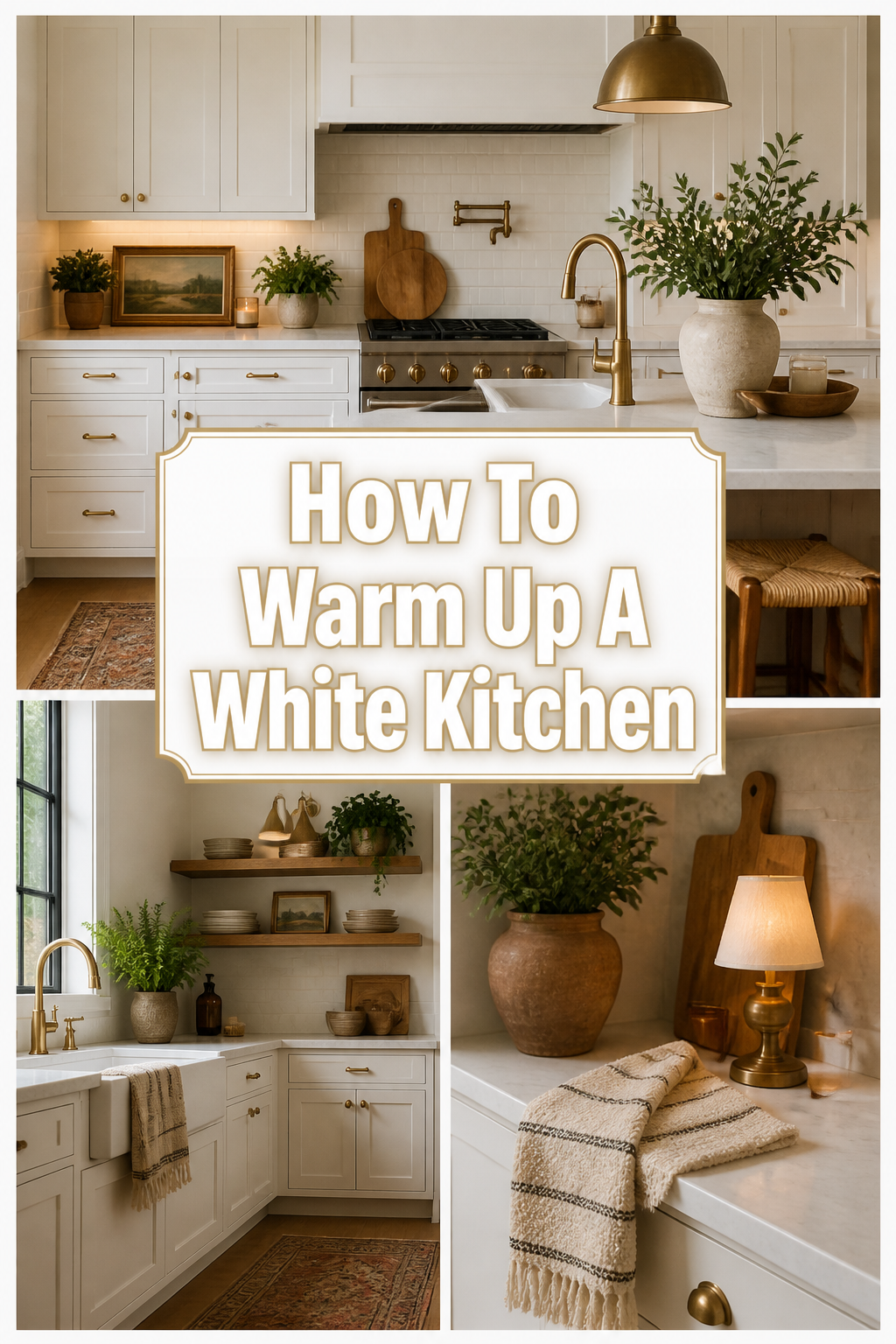
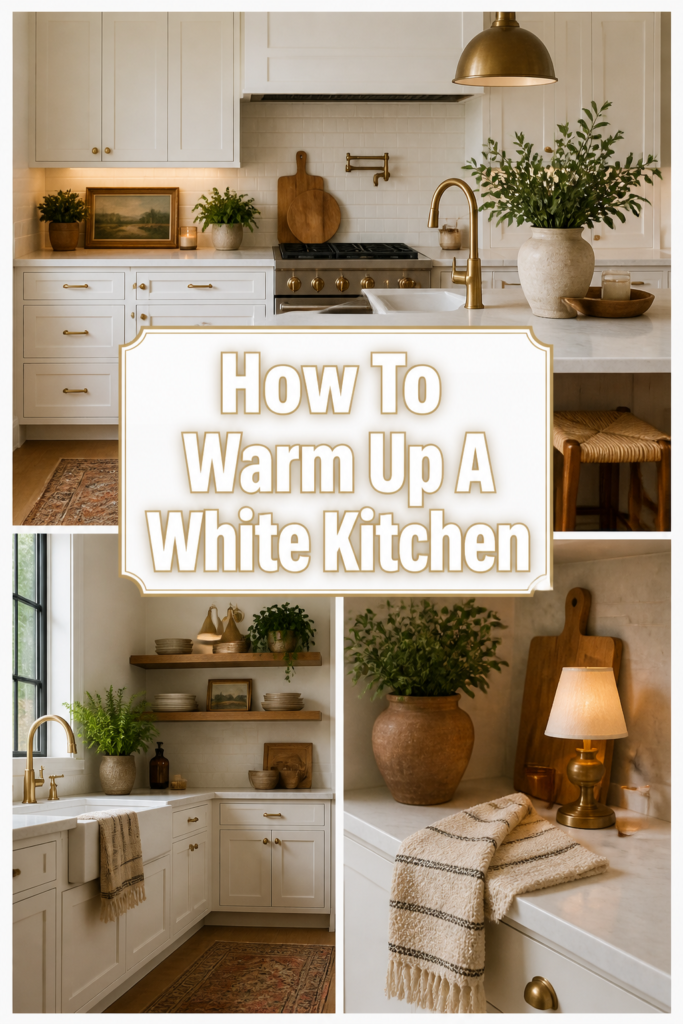
🏠 How To Warm Up A White Kitchen
I remember standing in my brand-new kitchen years ago, staring at the pristine white cabinets and the gleaming white subway tile.
It was beautiful and bright, but it felt remarkably like a cold, sterile laboratory where I should be conducting experiments instead of making pancakes.
Through years of interior design work and personal trial and error, I discovered that a white kitchen isn’t a finished product, but a blank canvas waiting for soul and character.
Quick Overview
This guide will help you transform a stark, clinical kitchen into a cozy, inviting hub without the need for a full renovation.
- Time needed: 2 to 4 days (depending on hardware swaps)
- Difficulty: Beginner
- What you’ll need: Natural wood accents, warm-toned hardware, textiles, indoor plants, and soft lighting.
Step-by-Step Instructions
Step 1: Introduce Natural Wood Elements
Layer different wood tones throughout the space to break up the vast expanses of white cabinetry and countertops.
Natural wood brings an organic, grounding energy that instantly counters the “cool” feeling of white paint and stone.
Lean a collection of thick, wooden cutting boards against your backsplash to create a functional yet beautiful focal point.
Try to mix wood species like white oak for a modern feel or reclaimed walnut for a deeper, more historic vibe.
Swap out standard plastic or metal bar stools for wooden ones with visible grain and soft curves.
Pro Tip: Don’t worry about matching your wood tones perfectly; a mix of light and medium woods feels more intentional and collected over time.
Step 2: Soften the Space with Textiles
Place a durable, high-quality runner rug on the floor to provide physical warmth and visual interest underfoot.
A vintage-style Turkish rug or a chunky jute runner adds a layer of pattern and texture that white kitchens often lack.
Hang linen tea towels over the oven handle or sink edge in earthy shades like terracotta, sage, or mustard.
Textiles absorb sound, which helps eliminate the “echo” effect that often makes large white kitchens feel cold and empty.
Consider adding a fabric window treatment, such as a Roman shade or a simple cafe curtain, to soften the hard lines of the window frame.
Step 3: Upgrade to Warm-Toned Hardware
Replace cold chrome or brushed nickel handles and knobs with warm metals like unlacquered brass, copper, or bronze.
These “living finishes” will develop a beautiful patina over time, adding a sense of history and age to a new kitchen.
Match your cabinet hardware to your kitchen faucet for a cohesive, high-end look that feels thoughtfully designed.
If you prefer a more modern look, matte black hardware can also provide a sharp, warm contrast against white doors.
Focus on the “touch points” of your kitchen; heavy, high-quality hardware feels better in your hand and adds a sense of luxury.
Pro Tip: Before buying a full set, order one sample pull to ensure the finish looks right against your specific shade of white paint.
Step 4: Master the Art of Layered Lighting
Switch out your light bulbs for ones with a “Warm White” temperature, typically between 2700K and 3000K.
Cooler bulbs (4000K and up) will make your white cabinets look blue or clinical, while warm bulbs make them feel creamy and inviting.
Add a small, cordless table lamp to a corner of your countertop to create a soft, ambient glow during the evening hours.
This “mood lighting” is perfect for late-night snacks or early morning coffee when you don’t want the harshness of overhead cans.
Install under-cabinet LED strips to illuminate your workspace and add depth to the shadows beneath your wall units.
Step 5: Incorporate Living Greenery
Position a few potted herbs like rosemary, basil, or mint on a sunny windowsill or a wooden pedestal.
The vibrant green leaves provide a natural pop of color that feels fresh and lively against a monochromatic background.
Use a large, clear glass vase or a stoneware crock to display seasonal branches or long-lasting eucalyptus stems.
Plants literally breathe life into a room, making it feel less like a showroom and more like a lived-in home.
Choose planters made of terracotta or handmade ceramic to add even more earthy texture to your shelves and counters.
Step 6: Display Meaningful Decor and Art
Hang a framed oil painting or a vintage print on a small section of empty wall or even propped on the counter.
Art is often forgotten in the kitchen, but it is one of the fastest ways to inject personality and warmth into the room.
Showcase your favorite ceramics, such as handmade mugs or a collection of stoneware bowls, on open shelving.
When you display items you actually use and love, the kitchen starts to tell a story about the people who live there.
Group items in odd numbers, like a trio of vintage canisters, to create a balanced and pleasing visual arrangement.
Pro Tip: Use “museum putty” on the bottom of countertop art frames to keep them from sliding on slippery stone surfaces.
Step 7: Add Texture Through Woven Materials
Tuck woven wicker or seagrass baskets into the open cubbies or onto the tops of your cabinets.
Woven materials introduce a “fuzzy” texture that contrasts beautifully with the smooth, hard surfaces of quartz and tile.
Use a rattan tray to corral your daily essentials, like salt and pepper shakers or olive oil bottles, to keep the counter tidy.
The natural fibers of the tray act as a visual “buffer” between your items and the white countertop.
Replace metal fruit bowls with wooden or woven versions to keep your produce on display in a cozy way.
Common Mistakes to Avoid
Over-Cluttering the Countertops
In an effort to add warmth, many people make the mistake of covering every square inch of the counter with decor. This actually creates visual stress and makes the kitchen feel smaller and more chaotic rather than cozy. Focus on a few high-impact “vignettes” and leave plenty of white space for the eye to rest.
Using Too Many Cool-Toned Accents
If you pair a white kitchen with gray rugs, blue towels, and silver hardware, you are doubling down on the “cold” aesthetic. While these colors are beautiful, they won’t provide the warmth you are looking for. Stick to a palette of “sun-kissed” colors like tan, gold, ochre, and warm greens to balance the white.
Neglecting the “Fifth Wall”
The ceiling is often left as a flat, white expanse, which can make a kitchen feel cavernous. If your budget allows, adding wooden beams or even a warm-toned beadboard can completely transform the atmosphere. If a renovation isn’t possible, simply changing the pendant lights to something with a woven or brass shade can draw the eye upward and add warmth.
Troubleshooting
The Room Still Feels Too “Yellow”
If you’ve added warm bulbs and wood but the kitchen now looks dingy, you may have over-corrected. Check the “CRI” (Color Rendering Index) of your light bulbs; you want a CRI of 90 or higher. High CRI bulbs show colors accurately without making everything look like it has a yellow filter over it.
The Wood Tones Clash
Sometimes a very orange-toned oak can clash with a very red-toned cherry wood. If your wood elements feel “off,” try to find a common thread, such as a similar grain pattern or a matte finish. You can also use a neutral element, like a white ceramic vase, to physically separate two different wood pieces on a counter.
The Kitchen Feels Too Dark Now
Adding too many dark wood accents or heavy textiles can occasionally suck the light out of a white kitchen. Balance your dark accents with reflective surfaces like a brass tea kettle or glass-front cabinet doors. This ensures the warmth doesn’t come at the expense of the bright, airy feeling you probably liked about the white kitchen in the first place.
Key Takeaways
- Balance is key: Use natural materials like wood and stone to ground the brightness of white cabinets.
- Lighting matters: Always opt for 2700K to 3000K bulbs to avoid a clinical, blue-toned atmosphere.
- Touch the floor: Use rugs and runners to add texture and dampen the acoustic echoes of a hard-surfaced room.
- Hardware is jewelry: Swapping silver for brass or bronze is the fastest way to “level up” the warmth of the room.
- Go green: Live plants provide a necessary organic element that softens the sharp lines of modern cabinetry.
- Edit your decor: Choose a few meaningful pieces rather than cluttering the space with generic items.
Frequently Asked Questions
Can I warm up a kitchen with white appliances?
Yes, white appliances can actually look very intentional and “retro-cool” if you surround them with the right textures. Focus heavily on wooden cutting boards and warm-toned rugs to bridge the gap between the white plastic/metal and the rest of the room. Avoid using too much stainless steel nearby, as it can make the white appliances look dated rather than stylistic.
Is it okay to mix metals in a white kitchen?
Mixing metals is actually encouraged because it makes the room feel like it evolved over time. A good rule of thumb is to have one “dominant” metal, like brass for your handles, and one “accent” metal, like matte black for your lighting. Avoid mixing more than three different finishes to keep the space from looking messy.
What color rug is best for a white kitchen?
Look for rugs that feature “warm neutrals” like cream, beige, and tan, or “muted earth tones” like rust and olive. A rug with a bit of a pattern is usually better than a solid color because it hides crumbs and spills more effectively. Avoid stark black and white patterns, as they can feel too high-contrast and “cold” for a cozy kitchen.
How do I make a small white kitchen feel bigger but warmer?
Use vertical space by hanging wooden shelves or a brass pot rack to draw the eye upward. Keep the floor as clear as possible, but use a light-colored jute rug to add texture without visual weight. Small kitchens benefit greatly from “living” decor like a single tall branch in a vase, which adds height and life without taking up much counter space.
Our Top Recommended Finds
- Hand-Carved Extra Large Wooden Dough Bowl: This is a perfect centerpiece for a kitchen island. It provides a massive hit of warm wood texture and can be filled with seasonal fruit or moss balls.
- Unlacquered Brass Cabinet Latches: These add a vintage, “English kitchen” feel that is incredibly charming. They feel substantial to use and the finish only gets better with age.
- Vintage-Inspired Washable Runner: Kitchens are high-traffic areas prone to spills. A washable runner allows you to have the beauty of a traditional rug without the stress of permanent stains.
Bring Your Kitchen To Life
Now that you have the blueprint for a cozier space, start with one small change today.
Maybe it is swapping out your tea towels or buying a single wooden pedestal for your dish soap.
Once you see how a single touch of warmth transforms the light in the room, you will be inspired to keep going.
If you enjoyed this guide, you might also like our deep dive into “Choosing the Right Cabinet Hardware” or our tutorial on “Styling Open Kitchen Shelves.”
Your kitchen is the heart of your home; make sure it feels as warm as the meals you create inside it.