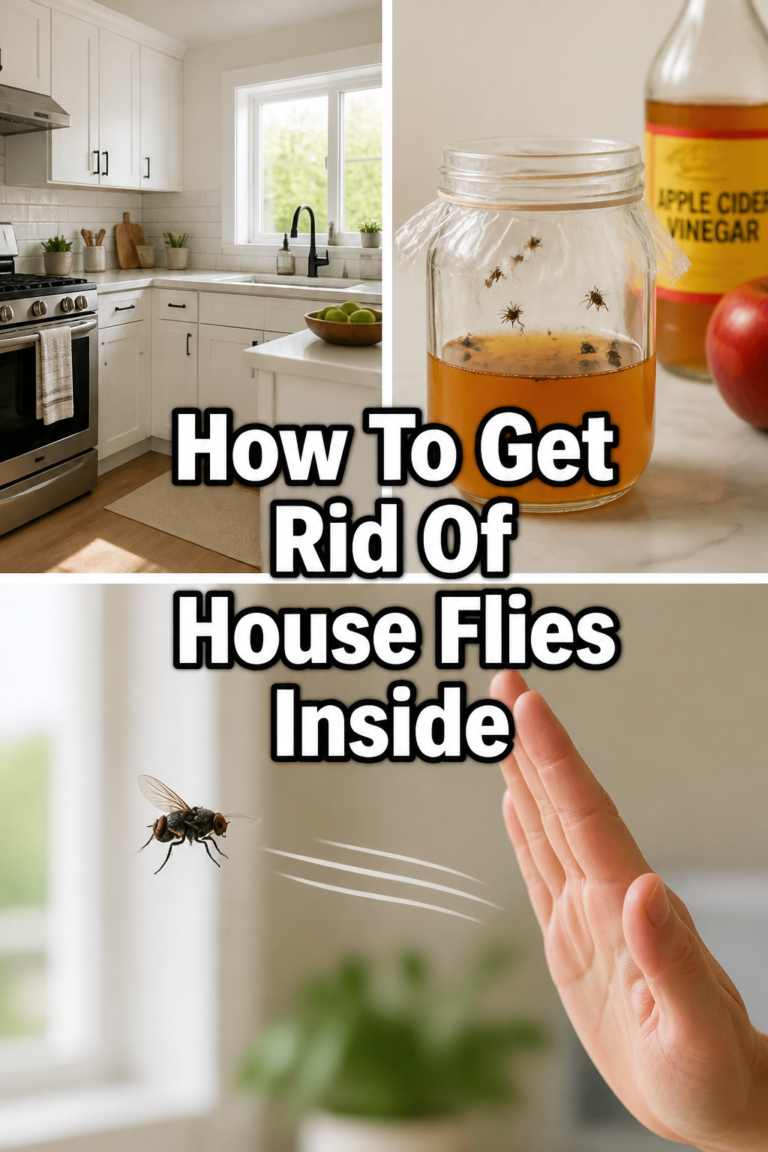
🪰 How To Get Rid Of Flies In The House
Oh, the joy of a quiet afternoon at home, a cup of tea in hand, sunlight streaming through the window.
Then, a buzzing sound breaks the spell, and you spot it – a fly, or worse, several, darting across your beautifully curated space.
It’s a common nuisance, but don’t worry; I’ve personally tackled this challenge in my own cozy corners, and I’m here to share the secrets to reclaiming your serene sanctuary.
Quick Overview
This guide will empower you to transform your home into a fly-free zone, restoring peace and preserving your living space’s inviting charm. You’ll learn to identify sources, implement effective prevention, and maintain a consistently fresh, beautiful environment.
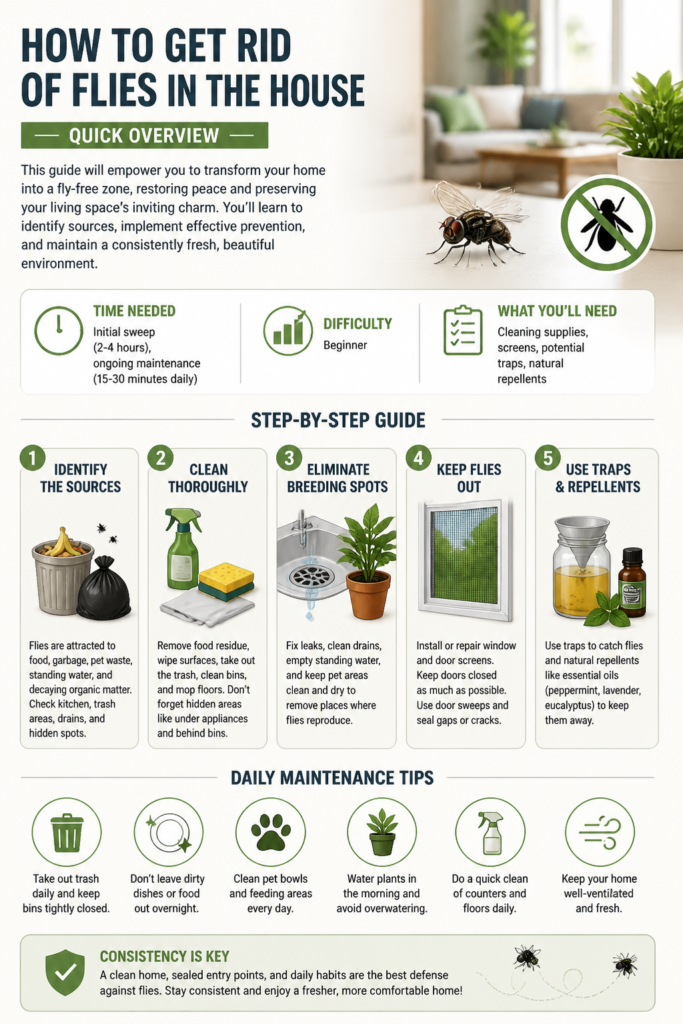
- Time needed: Initial sweep (2-4 hours), ongoing maintenance (15-30 minutes daily)
- Difficulty: Beginner
- What you’ll need: Cleaning supplies, screens, potential traps, natural repellents
Step-by-Step Instructions
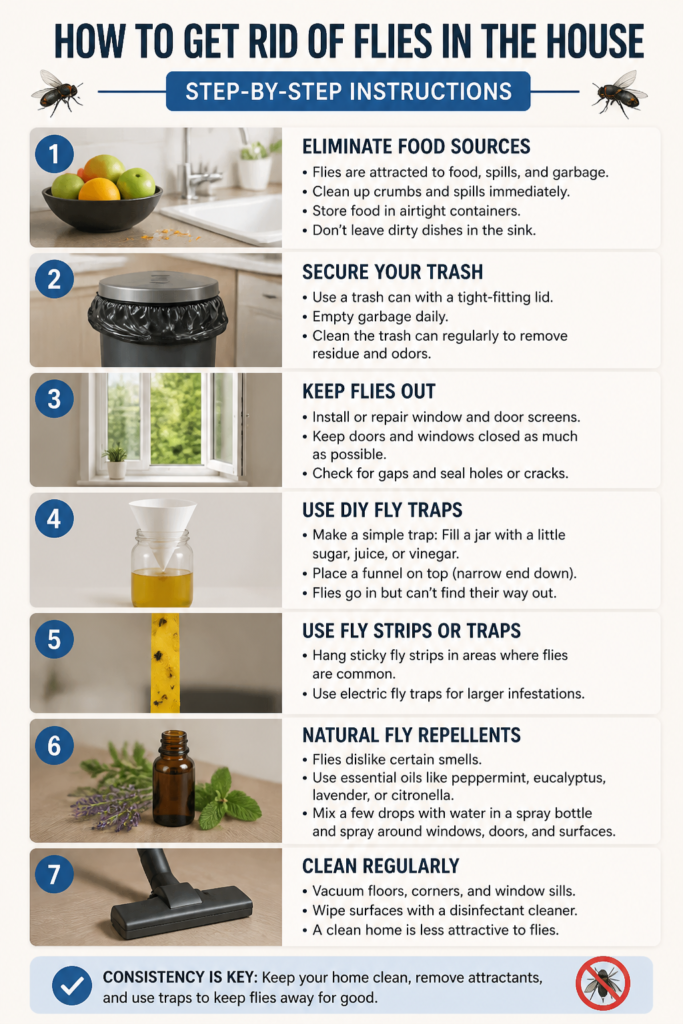
Step 1: Become a Fly Detective: Identify the Culprits
The first step to a fly-free home is understanding your enemy. Different flies are attracted to different things, so a little detective work goes a long way.
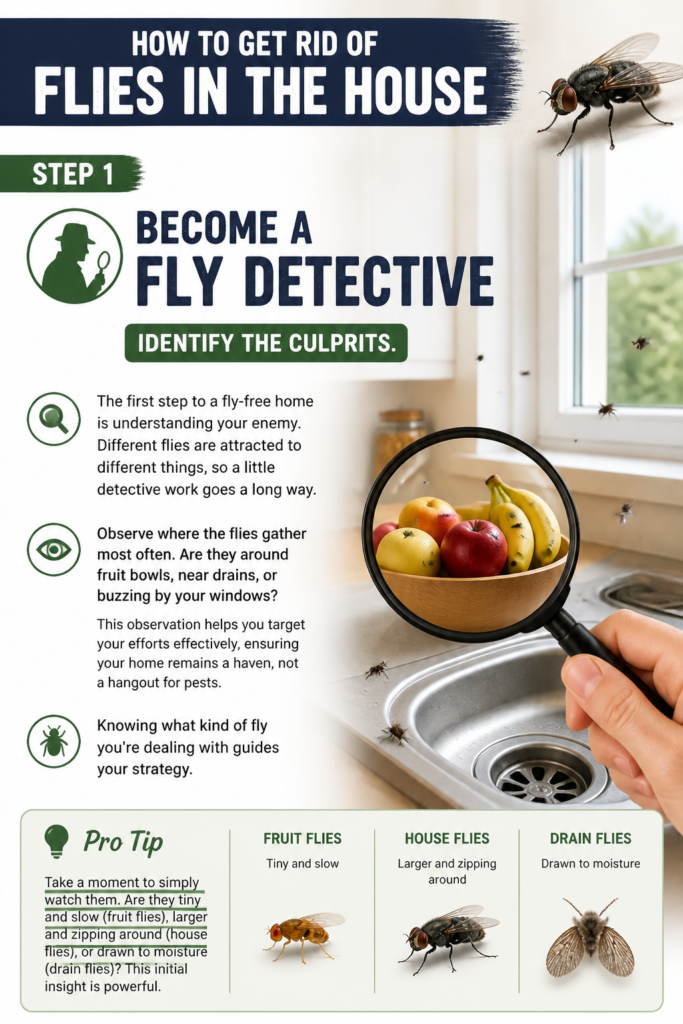
Observe where the flies gather most often. Are they around fruit bowls, near drains, or buzzing by your windows?
This observation helps you target your efforts effectively, ensuring your home remains a haven, not a hangout for pests. Knowing what kind of fly you’re dealing with guides your strategy.
Pro Tip: Take a moment to simply watch them. Are they tiny and slow (fruit flies), larger and zipping around (house flies), or drawn to moisture (drain flies)? This initial insight is powerful.
Step 2: Declutter and Deep Clean with Intention
A clean home is a happy home, and an unappealing one for flies. This step is about more than just tidying; it’s about creating an immaculate environment that reflects your desired aesthetic.
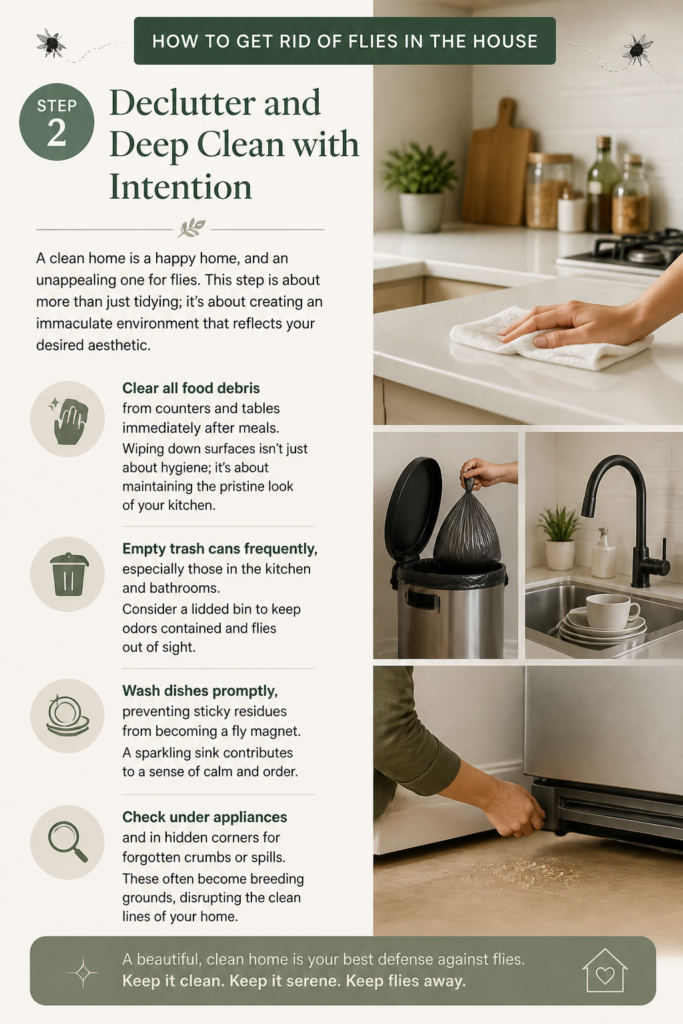
Clear all food debris from counters and tables immediately after meals. Wiping down surfaces isn’t just about hygiene; it’s about maintaining the pristine look of your kitchen.
Empty trash cans frequently, especially those in the kitchen and bathrooms. Consider a lidded bin to keep odors contained and flies out of sight.
Wash dishes promptly, preventing sticky residues from becoming a fly magnet. A sparkling sink contributes to a sense of calm and order.
Check under appliances and in hidden corners for forgotten crumbs or spills. These often become breeding grounds, disrupting the clean lines of your floor plan.
Step 3: Seal Your Sanctuary: Fortify Entry Points
Your home should be a fortress against unwanted guests, including flies. Thoughtful sealing not only keeps pests out but also improves your home’s energy efficiency.
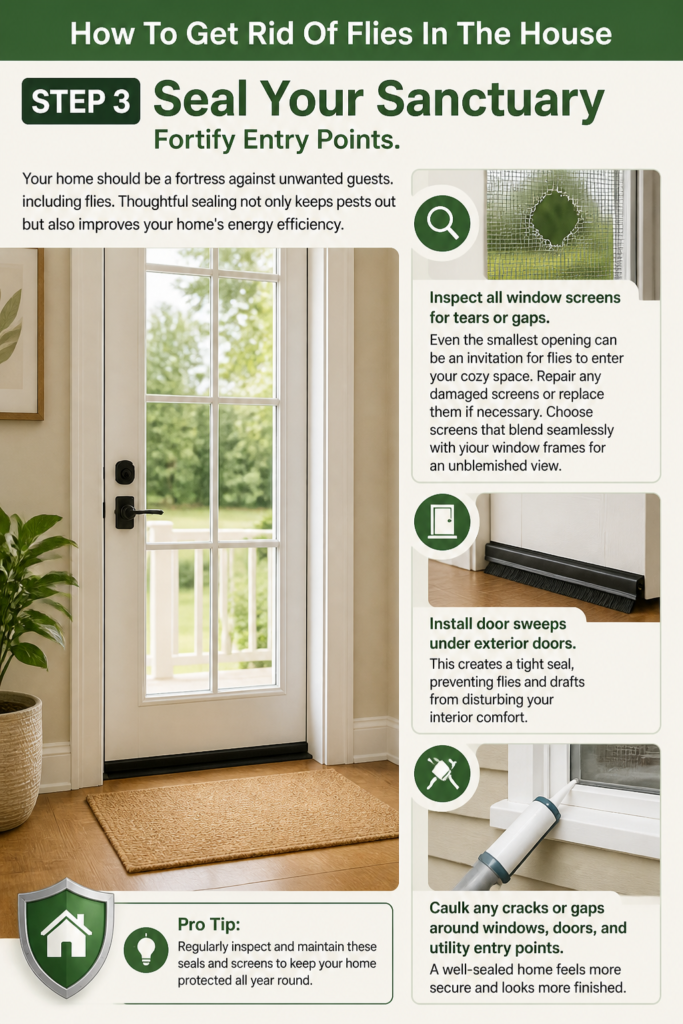
Inspect all window screens for tears or gaps. Even the smallest opening can be an invitation for flies to enter your cozy space.
Repair any damaged screens or replace them if necessary. Choose screens that blend seamlessly with your window frames for an unblemished view.
Install door sweeps under exterior doors. This creates a tight seal, preventing flies and drafts from disturbing your interior comfort.
Caulk any cracks or gaps around windows, doors, and utility entry points. A well-sealed home feels more secure and looks more finished.
Step 4: Mind Your Moisture: Address Damp Areas
Flies, especially drain flies, love damp environments. Addressing moisture issues is crucial for maintaining a fresh, appealing atmosphere throughout your home.
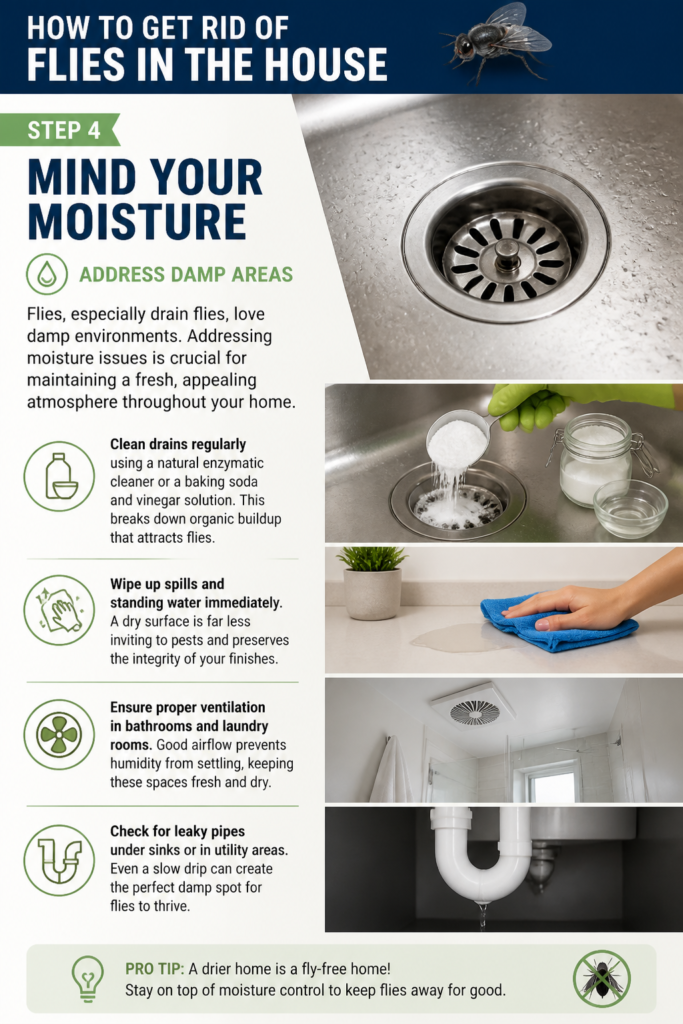
Clean drains regularly using a natural enzymatic cleaner or a baking soda and vinegar solution. This breaks down organic buildup that attracts flies.
Wipe up spills and standing water immediately. A dry surface is far less inviting to pests and preserves the integrity of your finishes.
Ensure proper ventilation in bathrooms and laundry rooms. Good airflow prevents humidity from settling, keeping these spaces fresh and dry.
Check for leaky pipes under sinks or in utility areas. Even a slow drip can create the perfect damp spot for flies to thrive.
Step 5: Smart Storage: Contain Food and Waste
Thoughtful storage is key to deterring flies while maintaining an organized, visually pleasing kitchen. Every item should have its place, especially food.
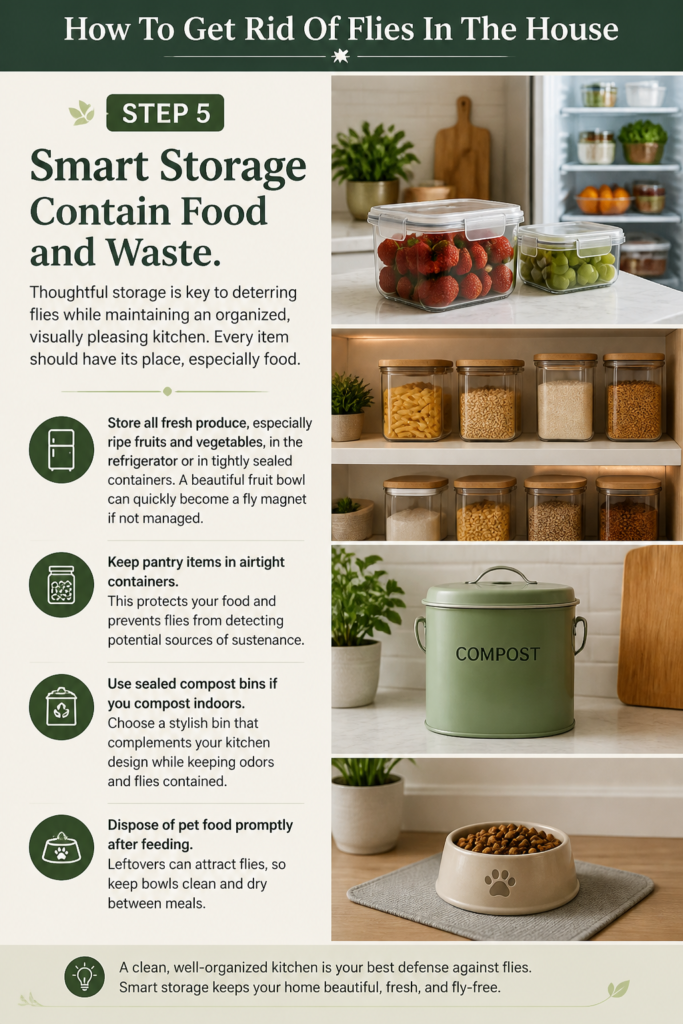
Store all fresh produce, especially ripe fruits and vegetables, in the refrigerator or in tightly sealed containers. A beautiful fruit bowl can quickly become a fly magnet if not managed.
Keep pantry items in airtight containers. This protects your food and prevents flies from detecting potential sources of sustenance.
Use sealed compost bins if you compost indoors. Choose a stylish bin that complements your kitchen design while keeping odors and flies contained.
Dispose of pet food promptly after feeding. Leftovers can attract flies, so keep bowls clean and dry between meals.
Step 6: Cultivate a Clean Garden & Outdoor Buffer
Your outdoor space acts as the first line of defense for your indoor sanctuary. Maintaining a tidy exterior helps prevent flies from even considering your home.
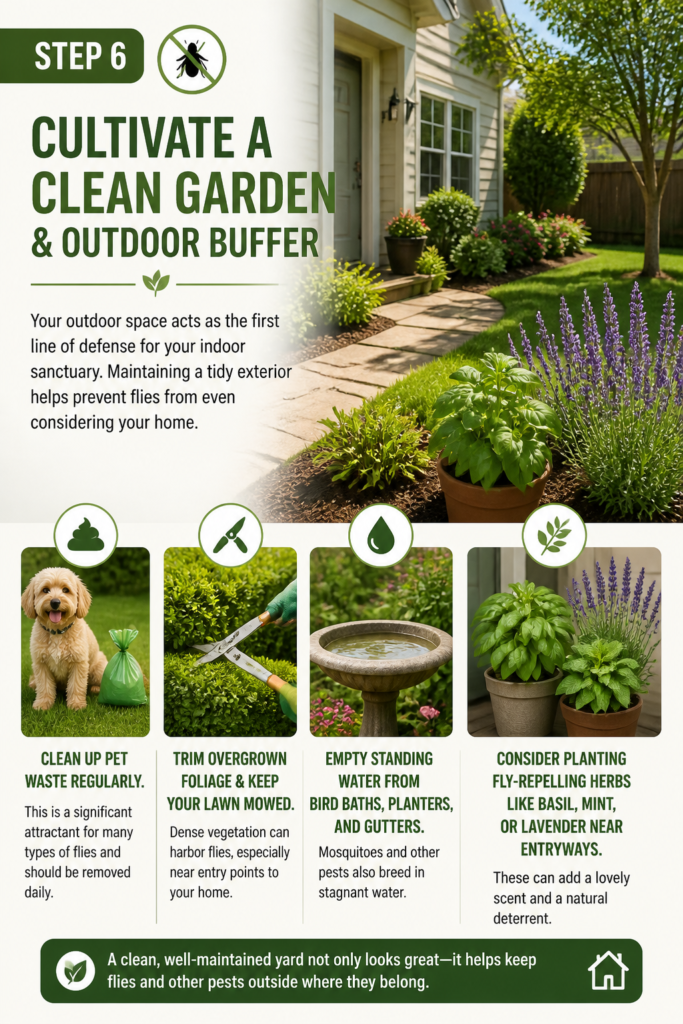
Clean up pet waste from your yard regularly. This is a significant attractant for many types of flies and should be removed daily.
Trim overgrown foliage and keep your lawn mowed. Dense vegetation can harbor flies, especially near entry points to your home.
Empty standing water from bird baths, planters, and gutters. Mosquitoes and other pests also breed in stagnant water.
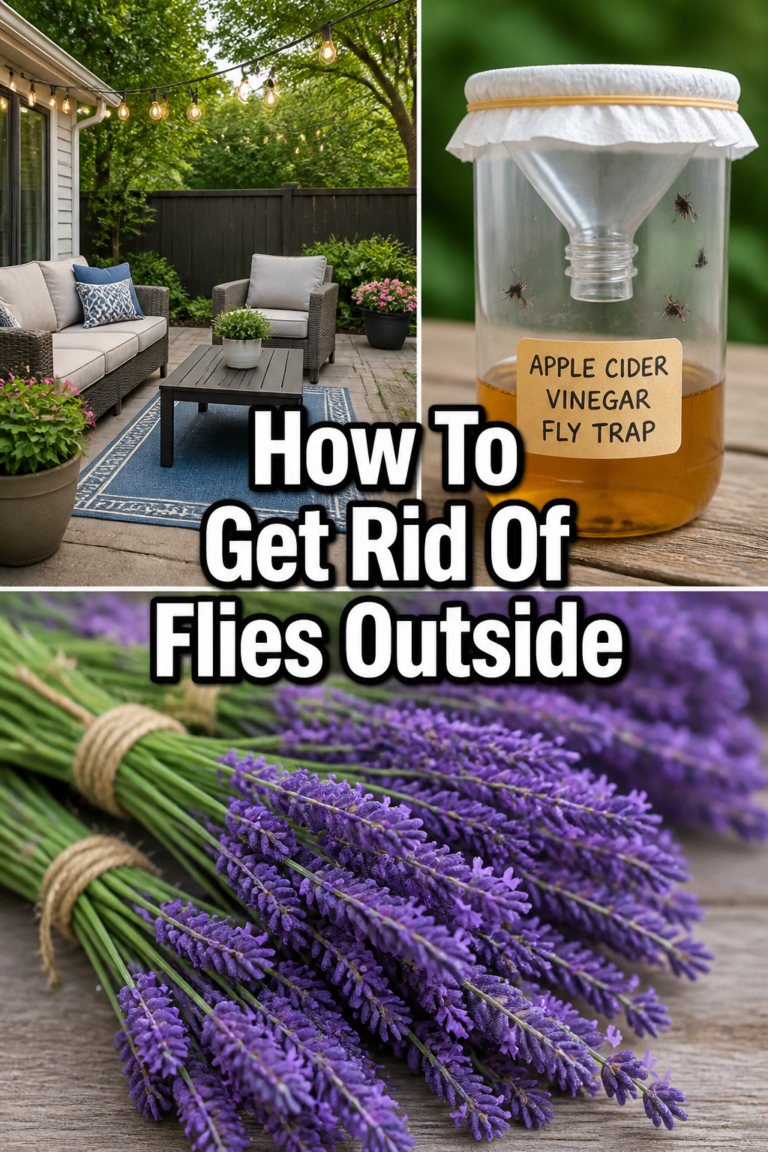
Consider planting fly-repelling herbs like basil, mint, or lavender near entryways. These can add a lovely scent and a natural deterrent.
Step 7: Strategic Traps & Natural Repellents
Sometimes, despite your best efforts, a few persistent flies might appear. This is where targeted, discreet solutions come into play.
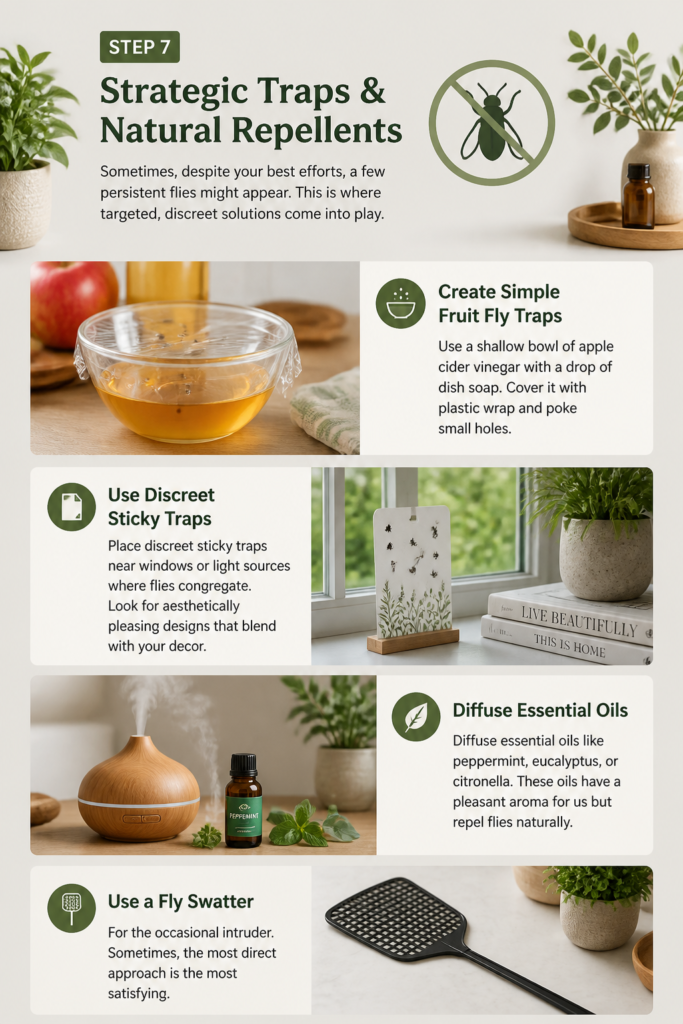
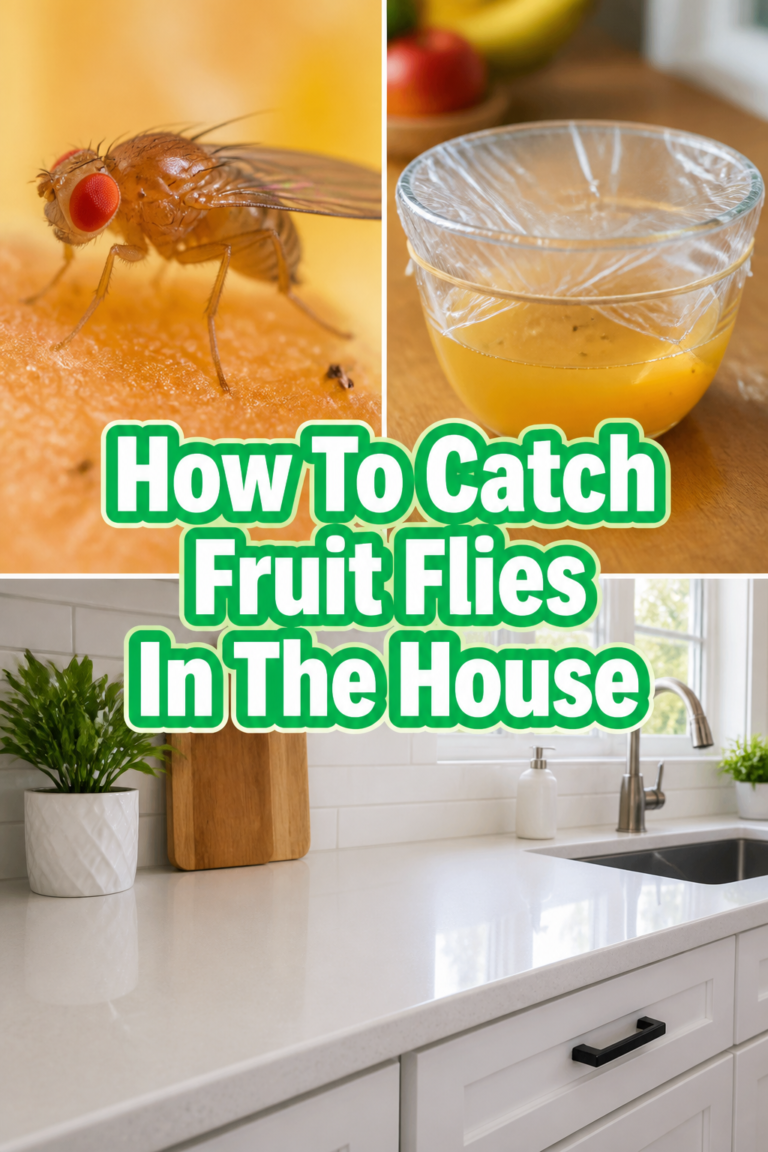
Create simple fruit fly traps using a shallow bowl of apple cider vinegar with a drop of dish soap. Cover it with plastic wrap and poke small holes.
Place discreet sticky traps near windows or light sources where flies congregate. Look for aesthetically pleasing designs that blend with your decor.
Diffuse essential oils like peppermint, eucalyptus, or citronella. These oils have a pleasant aroma for us but repel flies naturally.
Use a fly swatter for the occasional intruder. Sometimes, the most direct approach is the most satisfying.
Step 8: Embrace the Long-Term Lifestyle: Consistent Vigilance
Getting rid of flies isn’t a one-time project; it’s an ongoing commitment to a beautiful, healthy home. This step is about integrating fly prevention into your daily rhythm.

Schedule regular deep-cleaning sessions, perhaps weekly or bi-weekly. This ensures no hidden spots become problematic.
Maintain your screens and door seals seasonally. A quick check can prevent future infestations.
Encourage family members to adopt clean habits. A shared responsibility makes maintaining a fly-free home much easier.
Enjoy the peace of mind that comes with a consistently clean, fresh, and inviting home. This ongoing effort preserves your space’s serene beauty.
Common Mistakes to Avoid
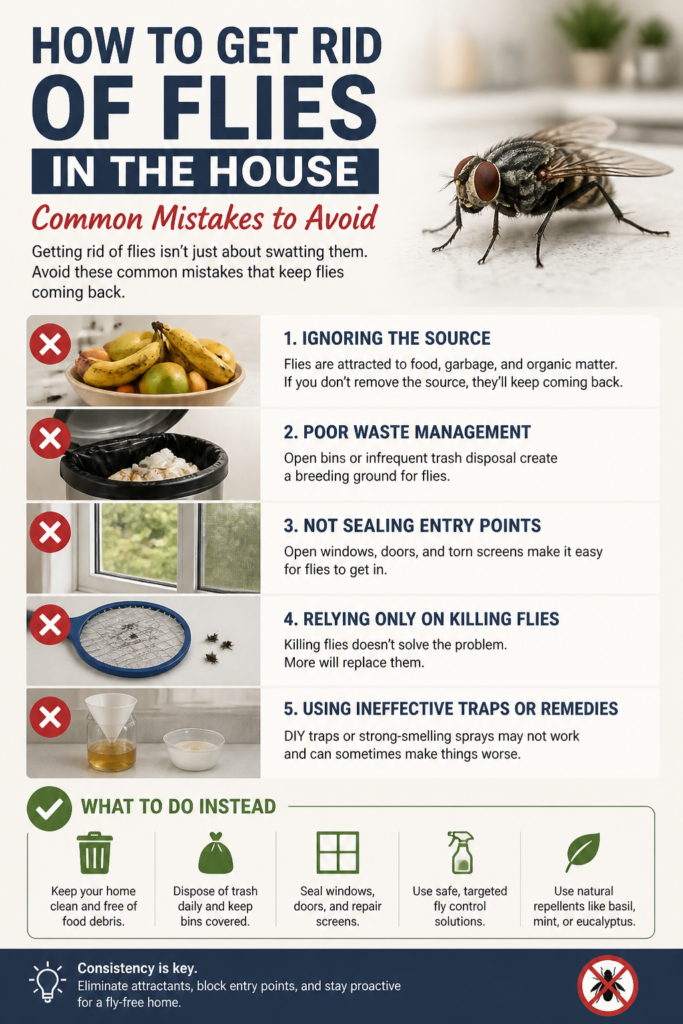
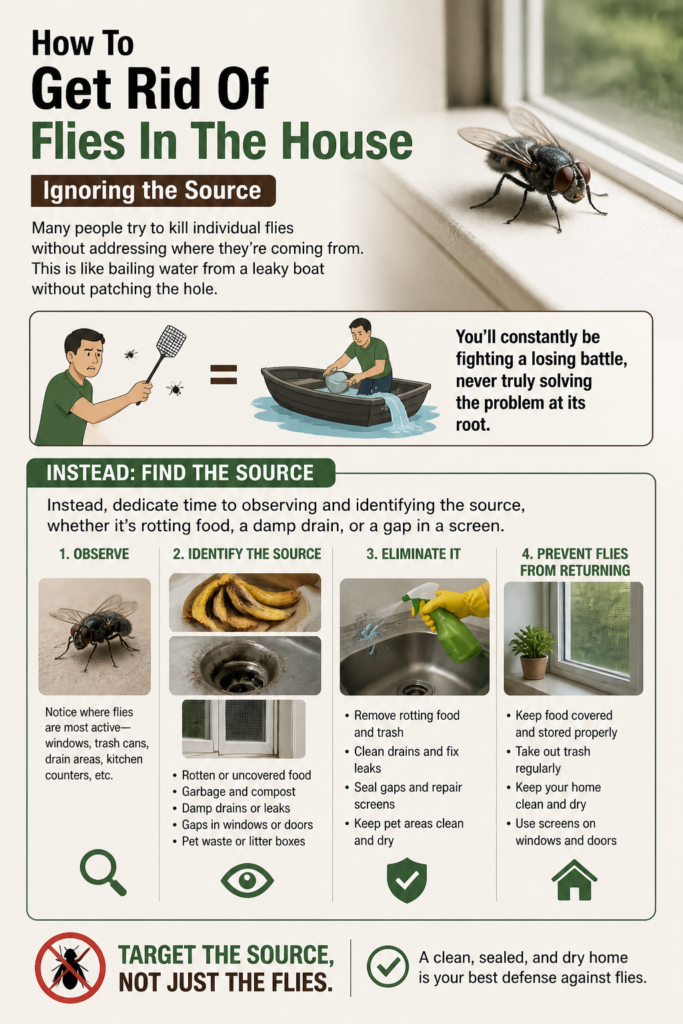
Ignoring the Source
Many people try to kill individual flies without addressing where they’re coming from. This is like bailing water from a leaky boat without patching the hole. You’ll constantly be fighting a losing battle, never truly solving the problem at its root. Instead, dedicate time to observing and identifying the source, whether it’s rotting food, a damp drain, or a gap in a screen.
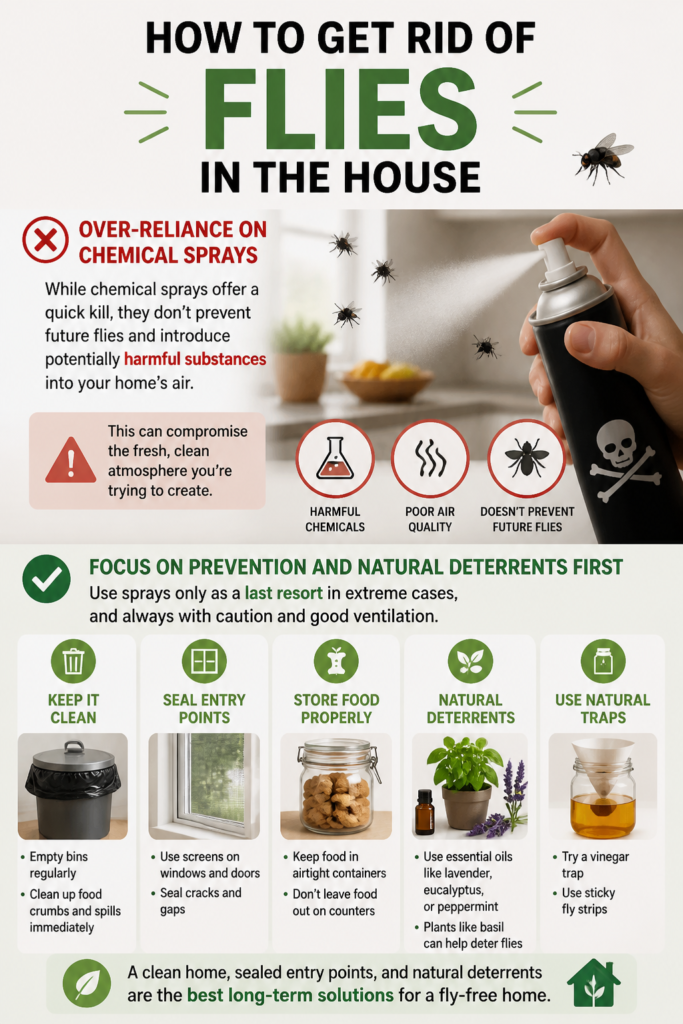
Over-Reliance on Chemical Sprays
While chemical sprays offer a quick kill, they don’t prevent future flies and introduce potentially harmful substances into your home’s air. This can compromise the fresh, clean atmosphere you’re trying to create. Focus on prevention and natural deterrents first, using sprays only as a last resort in extreme cases, and always with caution and good ventilation.
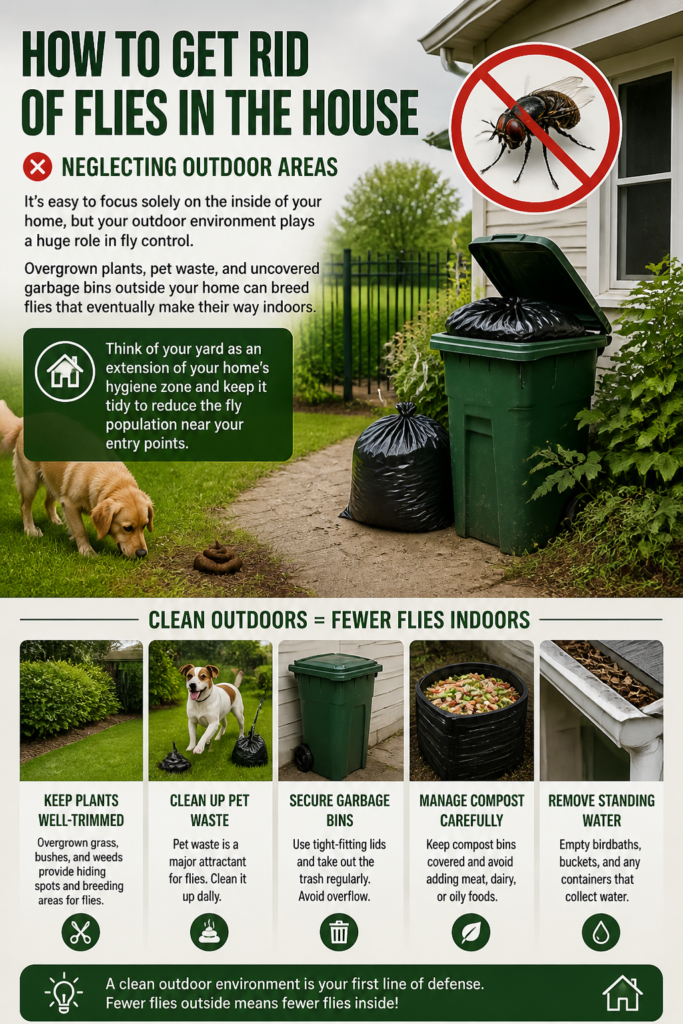
Neglecting Outdoor Areas
It’s easy to focus solely on the inside of your home, but your outdoor environment plays a huge role in fly control. Overgrown plants, pet waste, and uncovered garbage bins outside your home can breed flies that eventually make their way indoors. Think of your yard as an extension of your home’s hygiene zone and keep it tidy to reduce the fly population near your entry points.
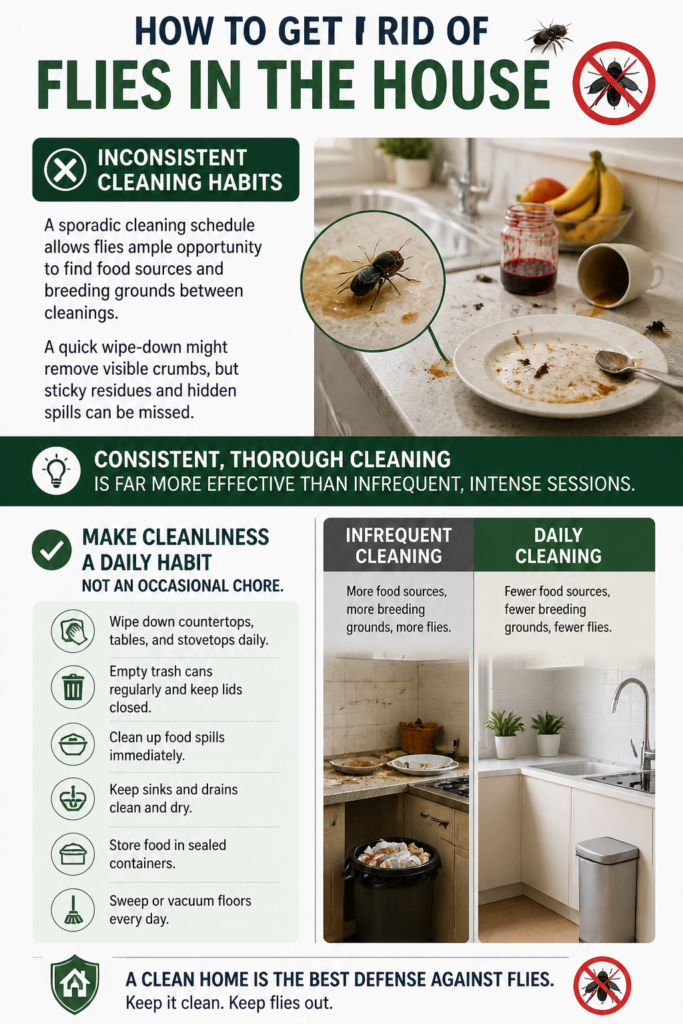
Inconsistent Cleaning Habits
A sporadic cleaning schedule allows flies ample opportunity to find food sources and breeding grounds between cleanings. A quick wipe-down might remove visible crumbs, but sticky residues and hidden spills can be missed. Consistent, thorough cleaning is far more effective than infrequent, intense sessions. Make cleanliness a daily habit, not an occasional chore.
Troubleshooting
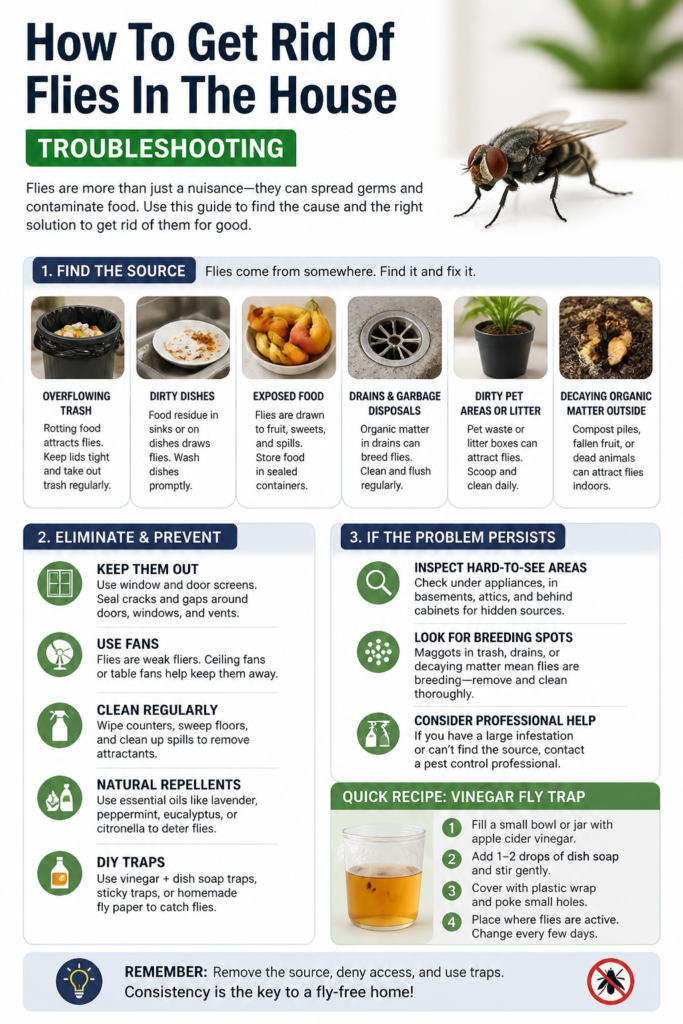
Flies Persist Despite Cleaning
If you’ve cleaned thoroughly and flies are still present, it’s time to re-evaluate potential hidden sources. Check less obvious spots like the drip tray under your refrigerator, forgotten potatoes or onions in a pantry, or even a dead animal in a wall void. Sometimes, flies can also originate from a neighbor’s yard if conditions are very poor. Double-check all window and door seals, as even a tiny gap can be enough for persistent flies.
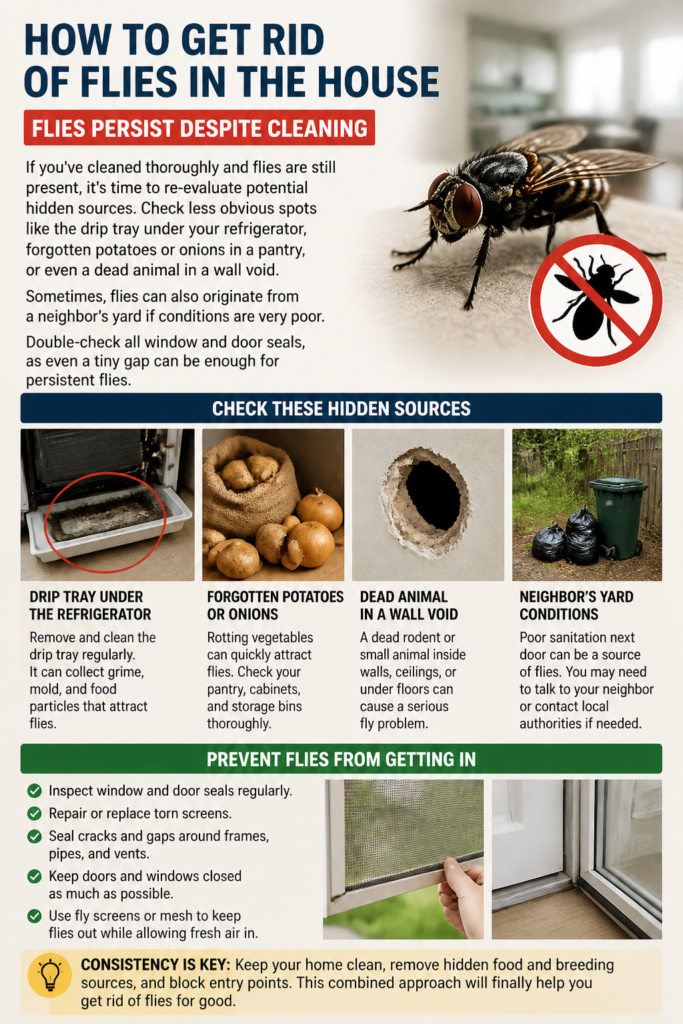
Persistent Fruit Fly Problem
Fruit flies are notoriously tricky. If they keep appearing, ensure every single piece of produce is either refrigerated or in an airtight container. Even a single overripe banana peel in a trash can or a forgotten splash of juice can sustain them. Clean drains with a brush and enzymatic cleaner to remove the biofilm where they lay eggs. Consider setting up multiple small fruit fly traps in affected areas.
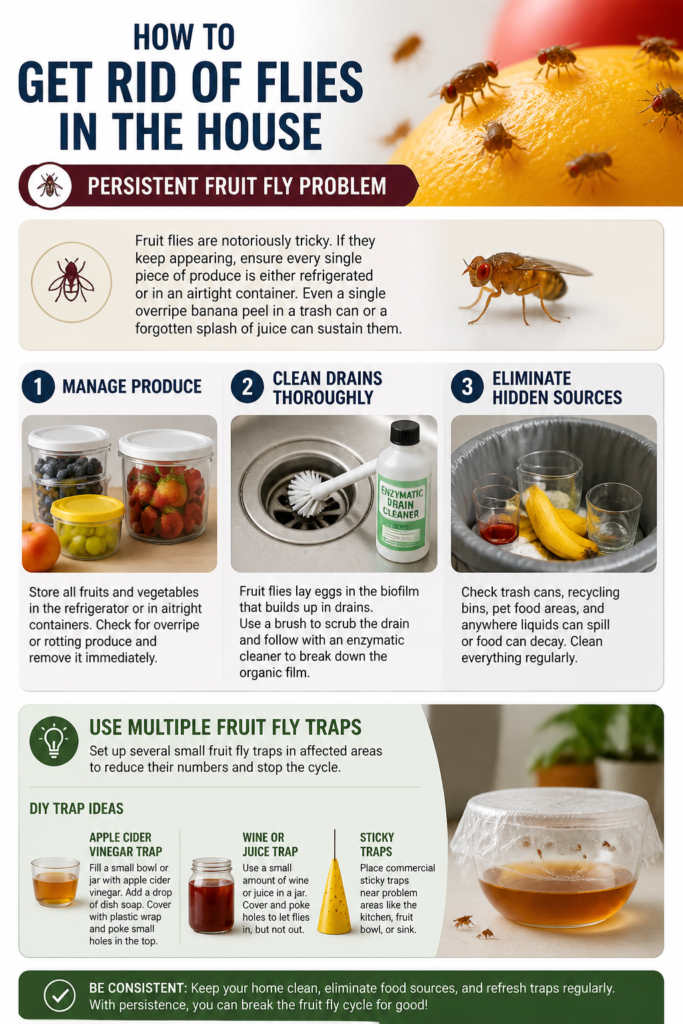
Flies Attracted to Specific Rooms
If flies are consistently drawn to one room, there’s a reason. In a bathroom, it could be a leaky toilet seal, a damp bathmat, or a clogged drain. In a living room, it might be a houseplant with damp soil or a forgotten snack under a cushion. Focus your detective work on that specific area, checking for moisture, food sources, or even a small crack in a window frame that’s unique to that room.
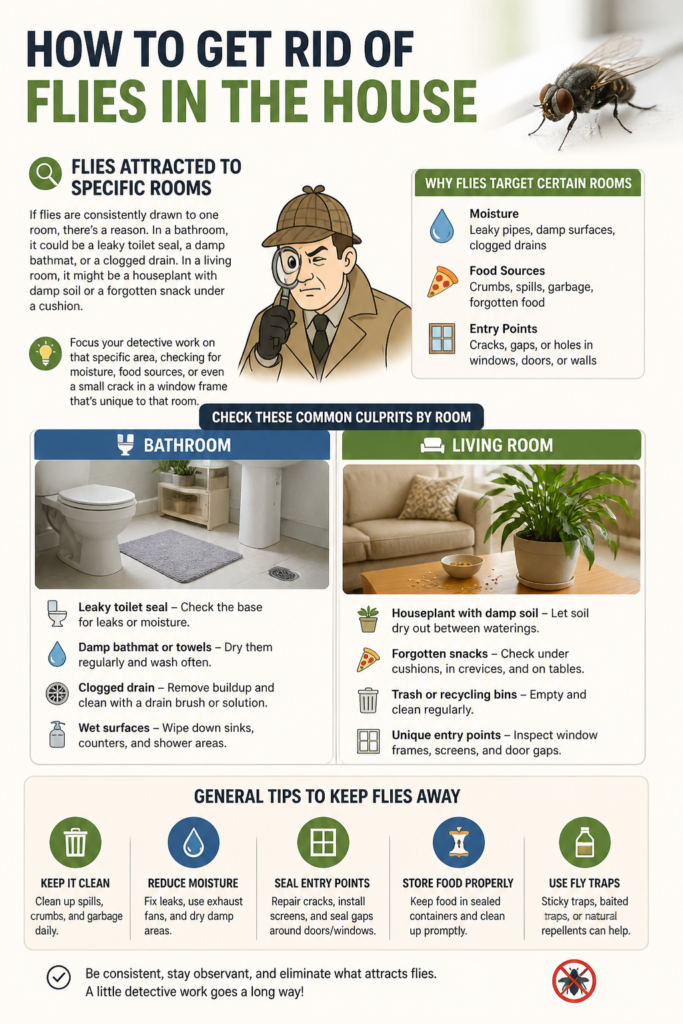
Key Takeaways
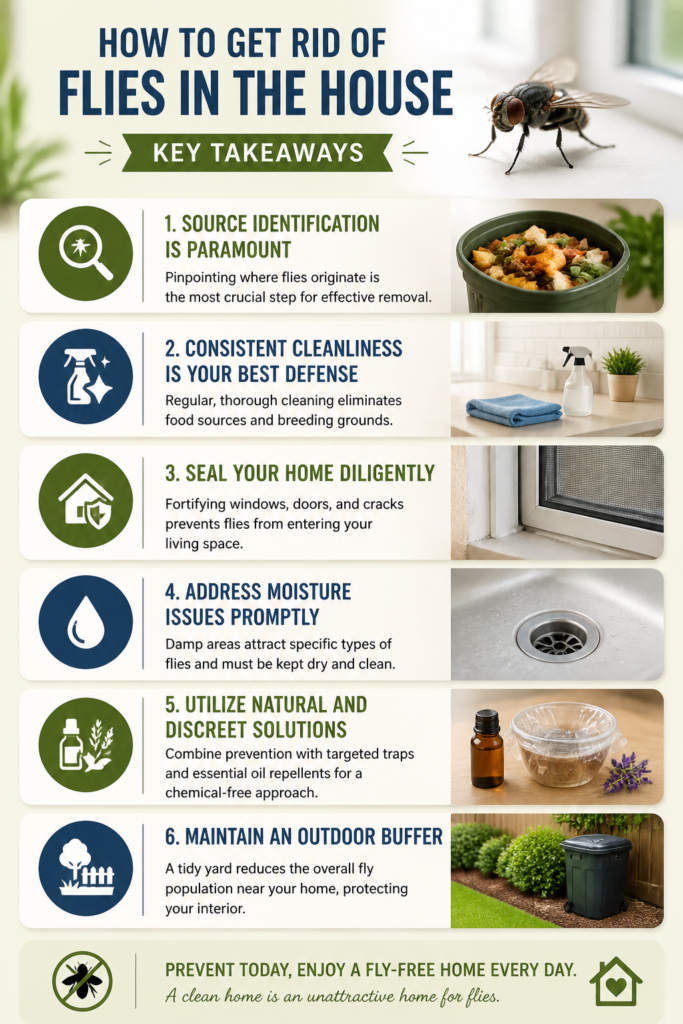
- Source Identification is Paramount: Pinpointing where flies originate is the most crucial step for effective removal.
- Consistent Cleanliness is Your Best Defense: Regular, thorough cleaning eliminates food sources and breeding grounds.
- Seal Your Home Diligently: Fortifying windows, doors, and cracks prevents flies from entering your living space.
- Address Moisture Issues Promptly: Damp areas attract specific types of flies and must be kept dry and clean.
- Utilize Natural and Discreet Solutions: Combine prevention with targeted traps and essential oil repellents for a chemical-free approach.
- Maintain an Outdoor Buffer: A tidy yard reduces the overall fly population near your home, protecting your interior.
Frequently Asked Questions
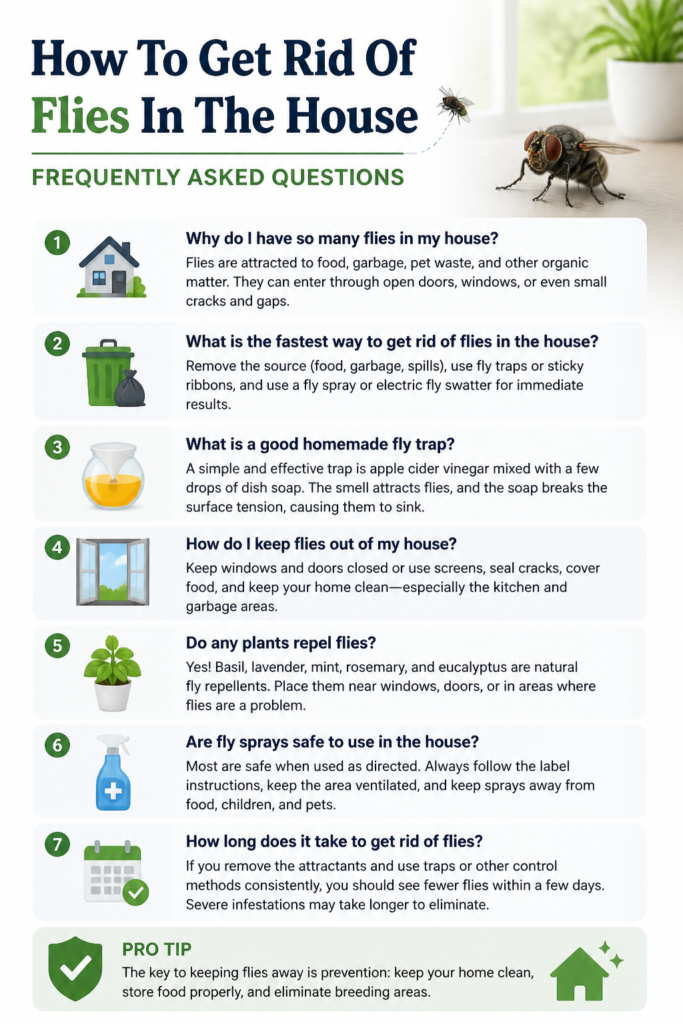
Are flies dangerous?
While most common house flies aren’t directly dangerous in the way a venomous spider might be, they can carry and transmit bacteria and pathogens from dirty surfaces to your food and living areas. They can spread food poisoning, dysentery, and other illnesses, making their presence a hygiene concern for your household.
How long do flies live?
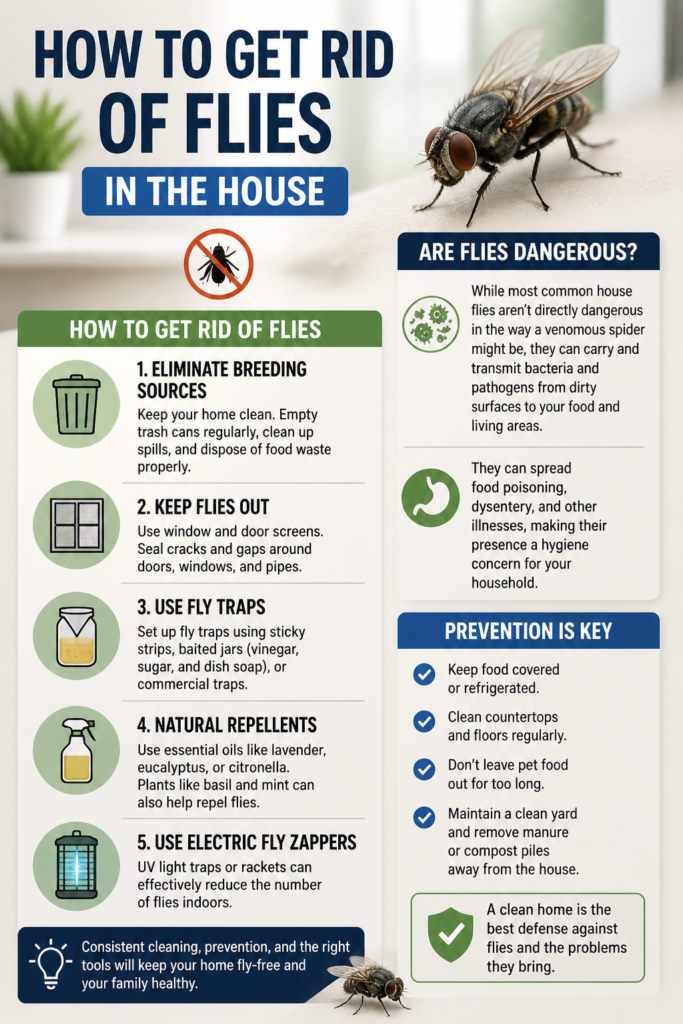
The lifespan of a common house fly is relatively short, typically around 15 to 30 days. However, during this time, a single female fly can lay hundreds of eggs, leading to rapid population growth if not controlled. This short but prolific life cycle highlights the importance of addressing breeding sources quickly.
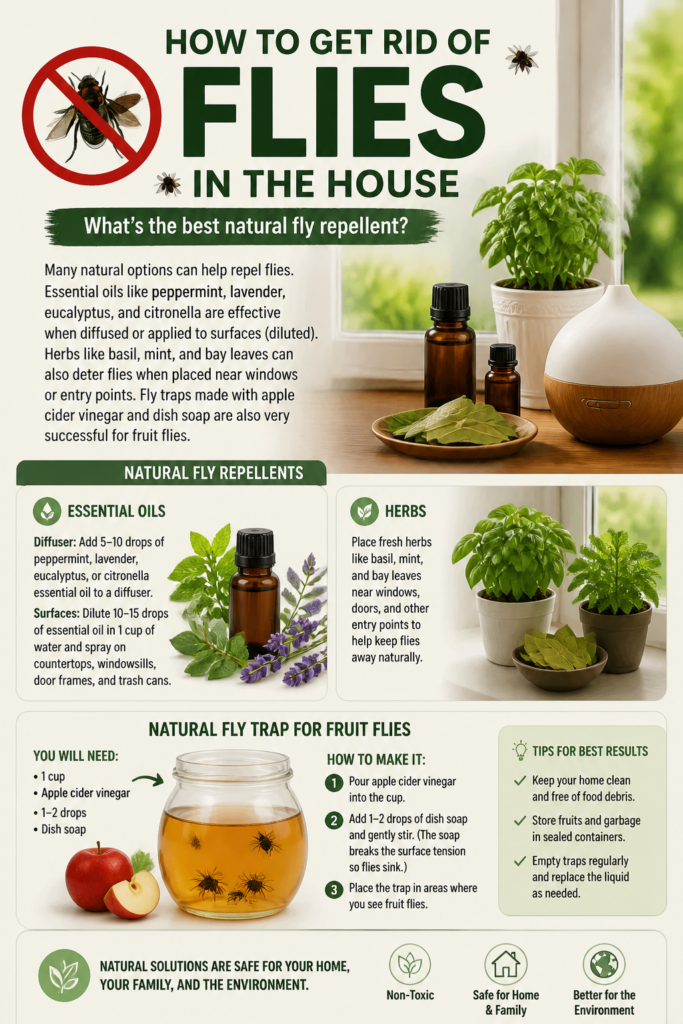
What’s the best natural fly repellent?
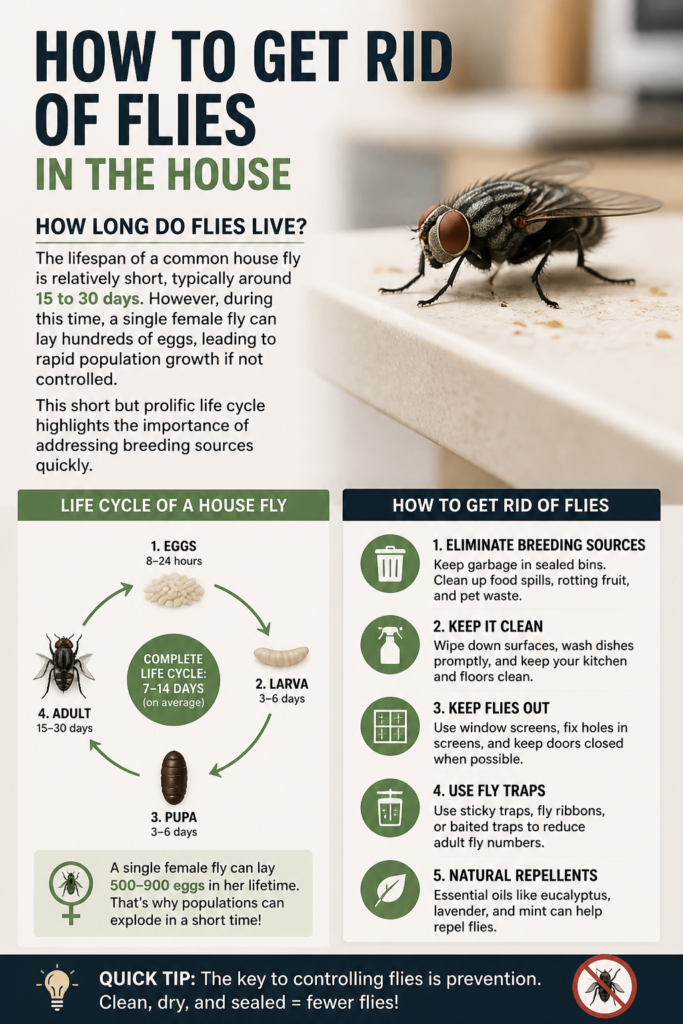
Many natural options can help repel flies. Essential oils like peppermint, lavender, eucalyptus, and citronella are effective when diffused or applied to surfaces (diluted). Herbs like basil, mint, and bay leaves can also deter flies when placed near windows or entry points. Fly traps made with apple cider vinegar and dish soap are also very successful for fruit flies.
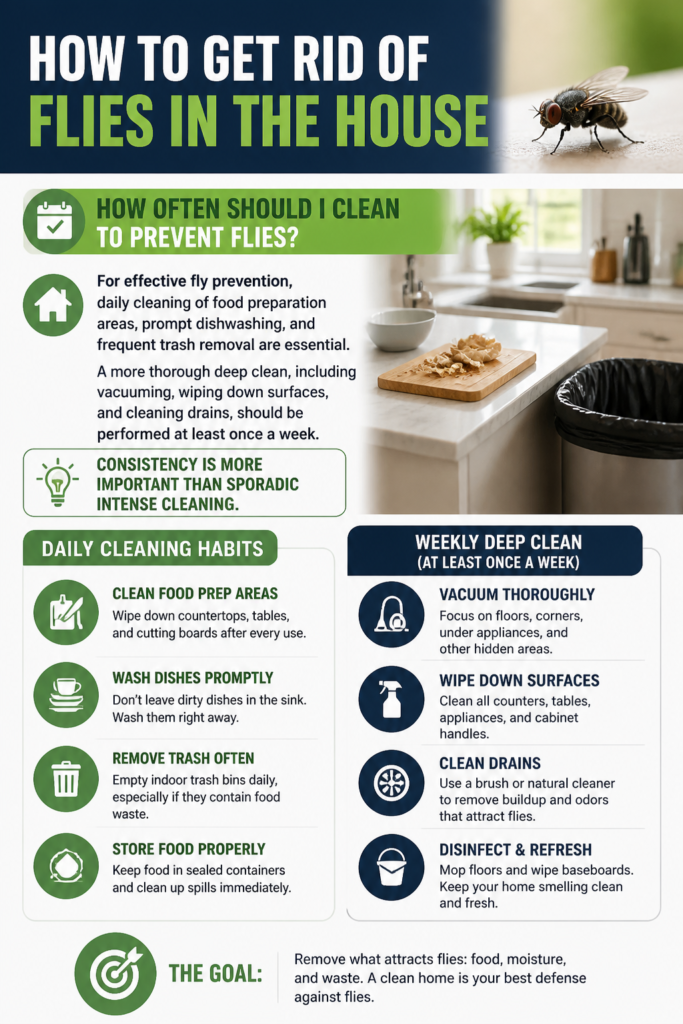
How often should I clean to prevent flies?
For effective fly prevention, daily cleaning of food preparation areas, prompt dishwashing, and frequent trash removal are essential. A more thorough deep clean, including vacuuming, wiping down surfaces, and cleaning drains, should be performed at least once a week. Consistency is more important than sporadic intense cleaning.
Our Top Recommended Finds
- Aesthetic Fruit Fly Traps: Look for discreet, decorative traps that blend into your kitchen decor while effectively luring and capturing fruit flies.
- Essential Oil Diffuser with Repellent Oils: A stylish diffuser allows you to enjoy calming aromas while naturally deterring flies with oils like peppermint or lemongrass.
- High-Quality Window Screens & Door Sweeps: Investing in durable, well-fitting screens and sweeps ensures a lasting barrier against flies, maintaining your home’s integrity.

Embrace Your Fly-Free Haven
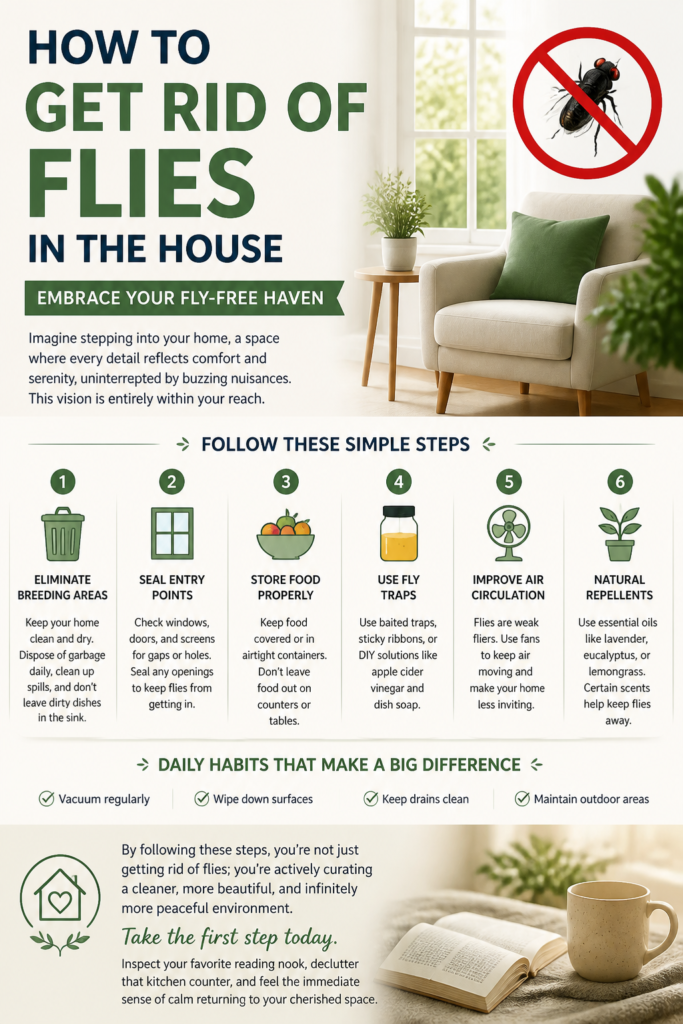
Imagine stepping into your home, a space where every detail reflects comfort and serenity, uninterrupted by buzzing nuisances. This vision is entirely within your reach.
By following these steps, you’re not just getting rid of flies; you’re actively curating a cleaner, more beautiful, and infinitely more peaceful environment.
Take the first step today. Inspect your favorite reading nook, declutter that kitchen counter, and feel the immediate sense of calm returning to your cherished space.