🌿 How To Decorate A Side Table Living Room
A beautifully styled side table can transform your living room, adding both charm and function.
It’s more than just a place to set your coffee; it’s an opportunity to express your personal style and enhance your home’s cozy feel.
I’ve spent countless hours arranging and rearranging my own tables, learning what truly makes a space feel inviting and complete, and I’m excited to share those practical insights with you.
Quick Overview
This guide will walk you through creating a perfectly styled side table that complements your living room’s aesthetic.
You’ll learn how to combine practicality with beauty, making your space feel more polished and personal.
- Time needed: 30-60 minutes (initial setup), 5-10 minutes (refinement)
- Difficulty: Beginner
- What you’ll need: A side table, a lamp or tall object, books/trays, a plant/vase, small decorative items, personal mementos.
Step-by-Step Instructions
Step 1: Define Purpose and Placement
Before you place a single item, think about your side table’s main role in the room.
Is it primarily for holding a drink, showcasing art, or providing ambient light?
Its function will guide your decorating choices, ensuring it serves your needs effectively.
Consider its exact location within your living room layout.
Is it next to a sofa, an armchair, or perhaps in a quiet corner?
This placement impacts how you approach scale and visual balance.
Pro Tip: Stand in different spots in your living room to view the table from various angles. This helps ensure it looks good from everywhere.
Step 2: Choose Your Side Table Wisely
The table itself is your canvas, so its size and style are fundamental.
Ensure its height is appropriate for the adjacent seating, usually aligning with the armrest of your sofa or chair.
A table that is too tall or too short can feel awkward and uncomfortable to use.
Think about the table’s material and finish.
Does it blend seamlessly with your existing furniture, or does it offer a pleasing contrast?
A wooden table might add warmth, while a metal or glass table can introduce a touch of modern elegance.
- Match the table’s scale to the room. A small table can get lost in a large space, and a large table can overwhelm a cozy nook.
- Consider the table’s shape. Round tables often feel softer and allow for easier movement around them, while square tables can offer more surface area.
Step 3: Anchor with a Lamp or Tall Element
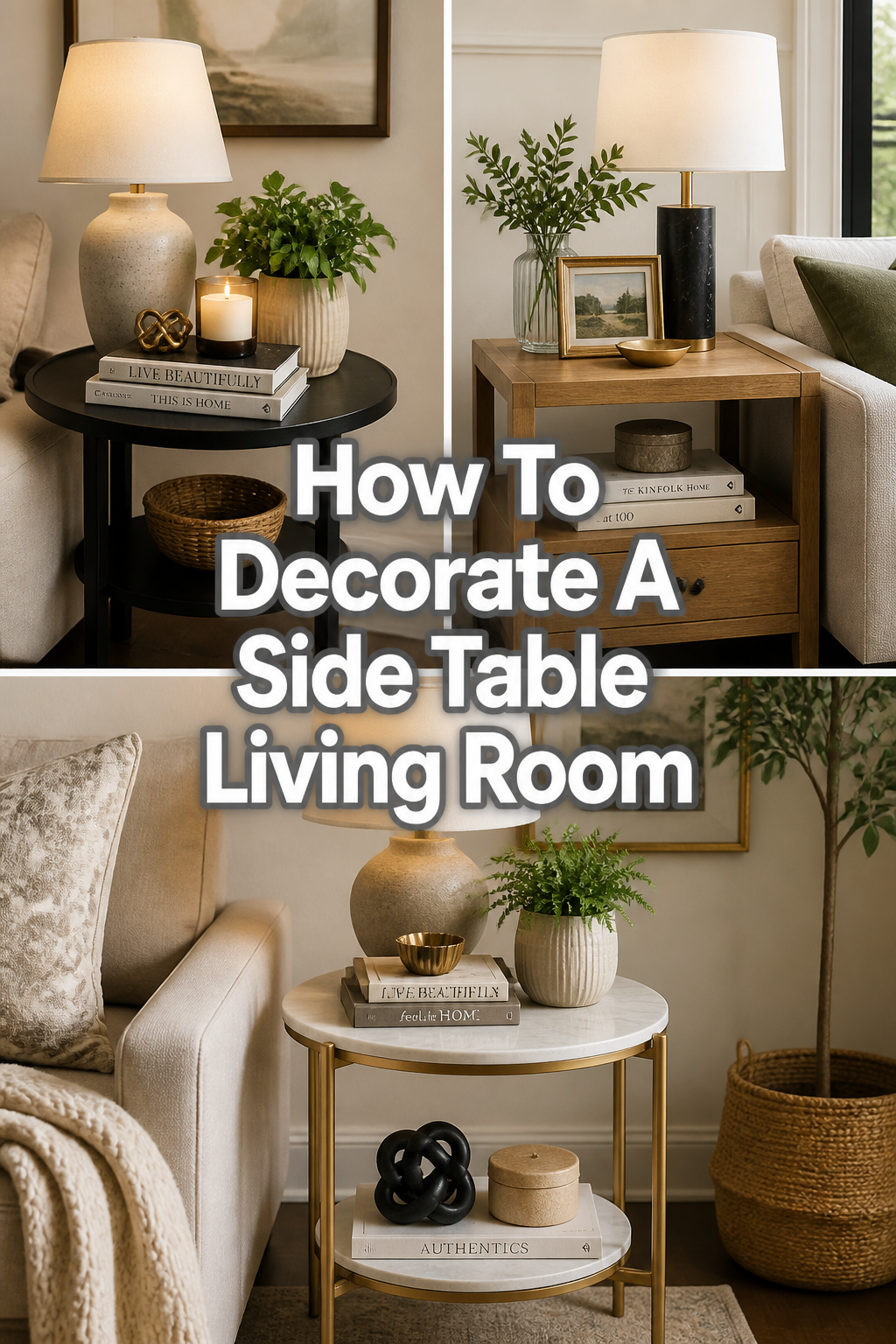
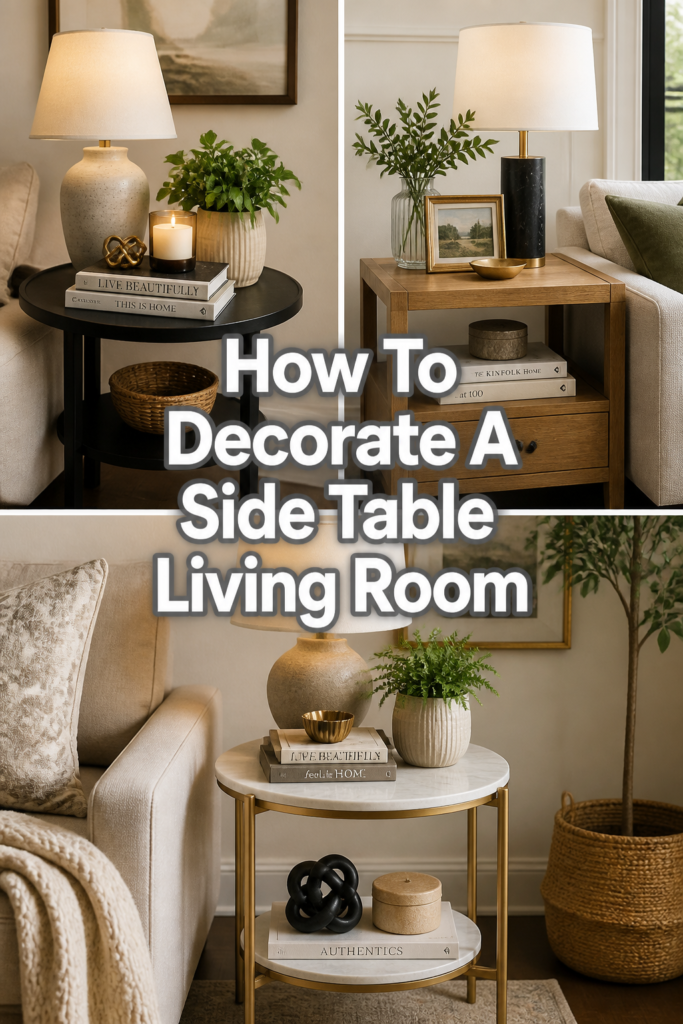
Every well-decorated side table needs a vertical anchor to draw the eye upwards and add height.
A lamp is a classic choice, providing both light and a significant visual element.
Choose a lamp that complements the table’s size and the room’s overall style.
If a lamp isn’t needed, a tall vase with fresh flowers or a sculptural object can serve a similar purpose.
This creates an essential layer of height, preventing the table from looking flat.
The anchor piece should occupy roughly one-third of the table’s surface area, leaving room for other items.
Pro Tip: When selecting a lamp, make sure its shade is at eye level when you’re seated, preventing harsh glare. A dimmer switch is always a welcome addition for setting the mood.
Step 4: Introduce Visual Interest with Books or Boxes
Now, build a foundation for smaller items using flat, substantial pieces.
A stack of two or three beautifully bound books adds intellectual charm and a bit of height.
Choose books with appealing covers or spines that tie into your room’s color scheme.
Alternatively, a decorative tray or a lidded box can serve a similar purpose.
These items create a designated “zone” for smaller accessories, keeping the table organized and visually cohesive.
They also protect the table’s surface from scratches or spills.
- Stack books horizontally to create a stable base.
- Use a tray to corral remote controls or coasters, making them easily accessible.
- Vary the textures by choosing a wooden box, a ceramic tray, or fabric-bound books.
Step 5: Add a Touch of Nature
Bringing natural elements into your decor instantly makes a space feel more alive and welcoming.
A small potted plant, like a succulent or a trailing ivy, introduces greenery and organic texture.
Choose a plant that is easy to care for and thrives in your living room’s light conditions.
If live plants aren’t your preference, a small vase with a single fresh flower or a few dried botanicals works beautifully.
Even a simple branch or a collection of interesting stones can connect your indoor space with the outdoors.
This element softens the overall look and adds a breath of fresh air.
Pro Tip: Opt for low-maintenance plants like ZZ plants or snake plants if you don’t have a green thumb. A small ceramic or terracotta pot can add an extra layer of style.
Step 6: Incorporate Personal Flair
This is where your side table truly becomes “yours.”
Add one or two small items that speak to your personality or tell a story.
This could be a framed photo of a loved one, a small souvenir from a memorable trip, or a unique figurine.
These personal touches make your living room feel lived-in and authentic.
They invite curiosity and create conversation starters, transforming a mere surface into a point of interest.
Avoid cluttering the table with too many personal items; one or two carefully chosen pieces are enough.
- Choose items that are meaningful to you.
- Ensure the scale of the personal items works with the other objects on the table.
- Consider a small dish for keys or loose change, combining function with personal style.
Step 7: Balance with Negative Space
Just as important as what you place on the table is the space you leave empty.
Negative space, or white space, allows each item to breathe and prevents the table from looking cluttered.
It gives the eye a place to rest and appreciate each decorative element.
Aim for a balanced arrangement, but don’t feel every side needs to be filled.
Sometimes, leaving one corner open creates a more dynamic and inviting look.
Think of your table as a small still life, where each component contributes to the overall composition.
Pro Tip: Imagine drawing an invisible triangle or pyramid with your items. The tallest item forms the peak, and other items fill out the base, leaving open areas around them.
Step 8: Step Back and Refine
Once you’ve arranged your items, take a few steps back and observe the table from across the room.
Does it feel balanced? Is anything overwhelming or underwhelming?
Sometimes, simply shifting an item an inch or two can make a significant difference.
Don’t be afraid to experiment with different arrangements.
Try swapping items, adjusting heights, or removing something if it feels like too much.
The goal is a cohesive and aesthetically pleasing display that feels right for your space.
Remember, decorating is an ongoing process, and your tastes may evolve over time.
Common Mistakes to Avoid
Over-Cluttering the Surface
A common pitfall is placing too many items on the side table, making it look messy and losing its functionality.
When every inch is covered, the eye has nowhere to rest, and the table appears disorganized rather than styled.
Instead, embrace the power of negative space and curate a few key pieces that truly shine.
Ignoring Scale and Proportion
Using items that are either too large or too small for the table or the room can throw off the entire aesthetic.
A tiny lamp on a large table looks lost, while an oversized plant can dominate a small surface.
Always consider how each item relates to the table’s size and the surrounding furniture.
Lack of Variation in Height and Texture
A table with all items at the same height or with similar textures can look flat and uninteresting.
This creates a monotonous display that lacks visual depth and appeal.
Introduce a mix of tall, medium, and short items, along with varied textures like smooth ceramics, rough wood, and soft fabrics, to create dynamic interest.
Forgetting Functionality
Sometimes, in the pursuit of beauty, we forget that a side table should also be practical.
If there’s no space for a drink, a book, or a remote control, it fails its primary purpose.
Always ensure your styled table still leaves room for everyday use, striking a balance between form and function.
Troubleshooting
“My table feels too empty or too full.”
If it feels too empty, consider adding another layer. Perhaps a small stack of coasters beneath your plant, or a decorative box to hold smaller items.
For a table that feels too full, begin by removing one item at a time. Often, simplifying is the key to clarity.
Look for items that are redundant or don’t contribute significantly to the overall aesthetic.
“The items don’t seem to ‘go together’.”
This often happens when items lack a common thread. Try to introduce a unifying element.
This could be a consistent color palette, a shared material like brass or ceramic, or a similar design style.
Sometimes, simply swapping out one item that feels out of place can bring everything into harmony.
“It looks good up close, but not from across the room.”
When viewing from a distance, scale and height variation become more important.
Ensure your tallest item is substantial enough to create a strong vertical anchor.
Check for visual balance; if one side feels too heavy, redistribute items or introduce a counterbalancing piece.
Key Takeaways
- Define your side table’s purpose to guide your decorating choices effectively.
- Anchor your display with a tall element like a lamp or a vase for visual height.
- Use books or trays to create a stable foundation and organize smaller items.
- Incorporate natural elements like plants or flowers to bring life to the space.
- Add one or two personal items to infuse your unique style and story.
- Prioritize negative space to prevent clutter and allow each item to stand out.
- Step back and refine your arrangement until it feels balanced and harmonious from all angles.
Frequently Asked Questions
How many items should I put on a side table?
A good rule of thumb is to use an odd number of items, typically 3 to 5, including your anchor piece. This creates a visually appealing and balanced arrangement without feeling cluttered.
What if my side table is very small?
For a small table, focus on fewer, more impactful items. One small lamp, a single plant, and a tiny dish for essentials might be all you need. Scale is even more crucial here.
Should all items on the table match my living room decor?
While cohesion is good, items don’t need to perfectly match. Aim for complementary pieces that share a similar style, color palette, or material, adding depth without clashing. A little contrast can be very inviting.
What’s the best way to clean and maintain a styled side table?
Regular dusting is key. For plants, ensure they have a drip tray to protect the table’s surface. Periodically, remove all items to give the table a thorough wipe-down and reassess your arrangement.
Our Top Recommended Finds
- Small, low-light tolerant plant: A ZZ plant or a Sansevieria (snake plant) in a stylish ceramic pot. They add natural beauty with minimal fuss.
- Decorative tray: A wooden or metal tray to gather remotes, coasters, or small personal items, keeping the surface tidy and intentional.
- Ambient table lamp: A lamp with a warm glow and a unique base, offering both functional light and a sculptural element.
Infuse Your Space with Personality Today
Your side table is a small stage in your living room, ready for its starring role.
By following these steps, you’re not just decorating; you’re crafting a little vignette that enhances your home’s comfort and beauty.
Take these ideas and make them your own, experimenting with textures, heights, and personal touches that truly reflect you.
Why not gather a few items around your home right now and begin styling your side table?
You might be surprised at the instant warmth and character it brings to your favorite space.