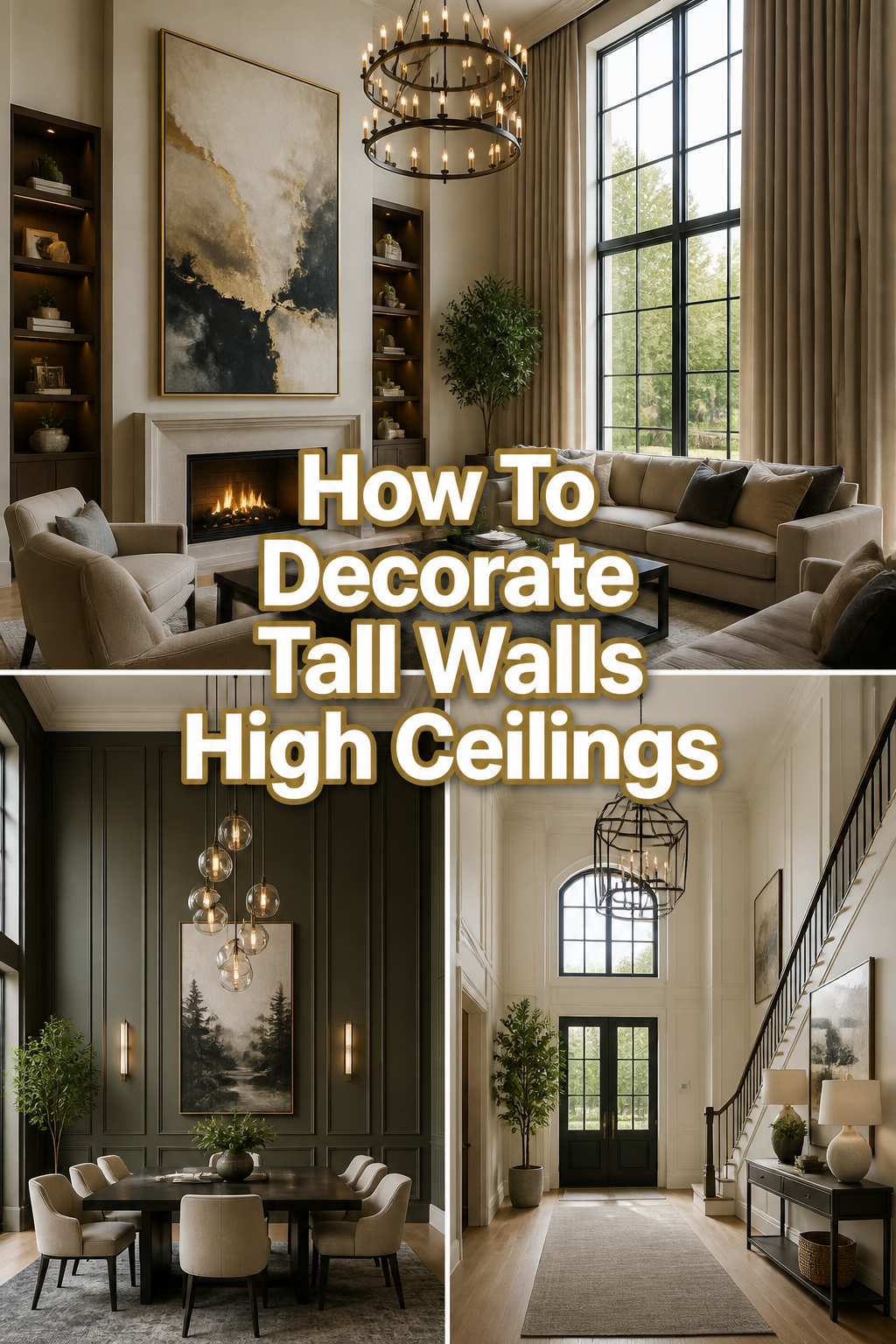
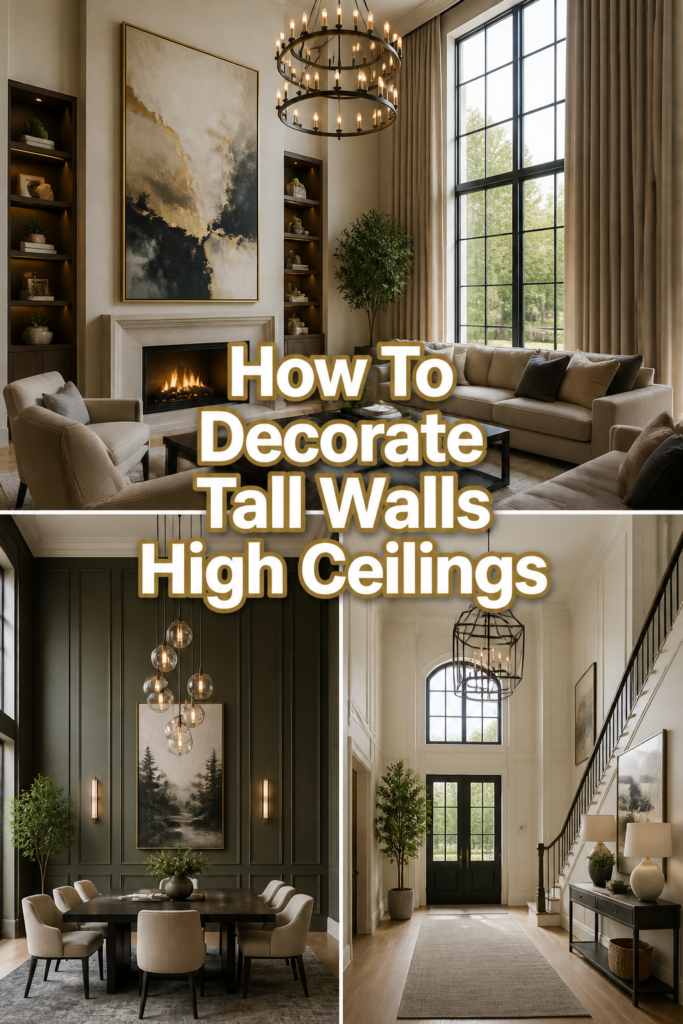
🏠 How To Decorate Tall Walls High Ceilings
Walking into a room with soaring ceilings for the first time feels like a breath of fresh air.
I remember standing in my first high-ceilinged living room, feeling completely overwhelmed by the sheer amount of empty white space staring back at me.
It took months of experimenting with scale and texture to realize that these walls aren’t a problem to solve, but a canvas to celebrate.
Quick Overview
This guide will help you transform those cavernous, echoing spaces into a warm and cozy home that feels intentional.
- Time needed: 2-5 days depending on the project scale
- Difficulty: Intermediate
- What you’ll need: A sturdy tall ladder, measuring tape, oversized decor, hanging hardware, and painter’s tape.
Step-by-Step Instructions
Step 1: Map Out Your Visual Zones
Divide your wall into thirds mentally to understand how the human eye perceives the space.
The bottom third is where your furniture sits, the middle third is your primary eye-level decorating zone, and the top third is the “bonus” space.
Use blue painter’s tape to mark out potential areas for large art or shelving to see how the proportions feel before you commit.
Pro Tip: Most people stop decorating at the 8-foot mark, which makes the room feel cut in half; aim to bring some elements up to at least 10 or 12 feet.
Step 2: Invest in Oversized Statement Art
Select one or two massive pieces of art rather than a dozen small ones that will look like postage stamps on a giant wall.
Large canvases or framed prints create a focal point that anchors the room and draws the eye upward without creating visual clutter.
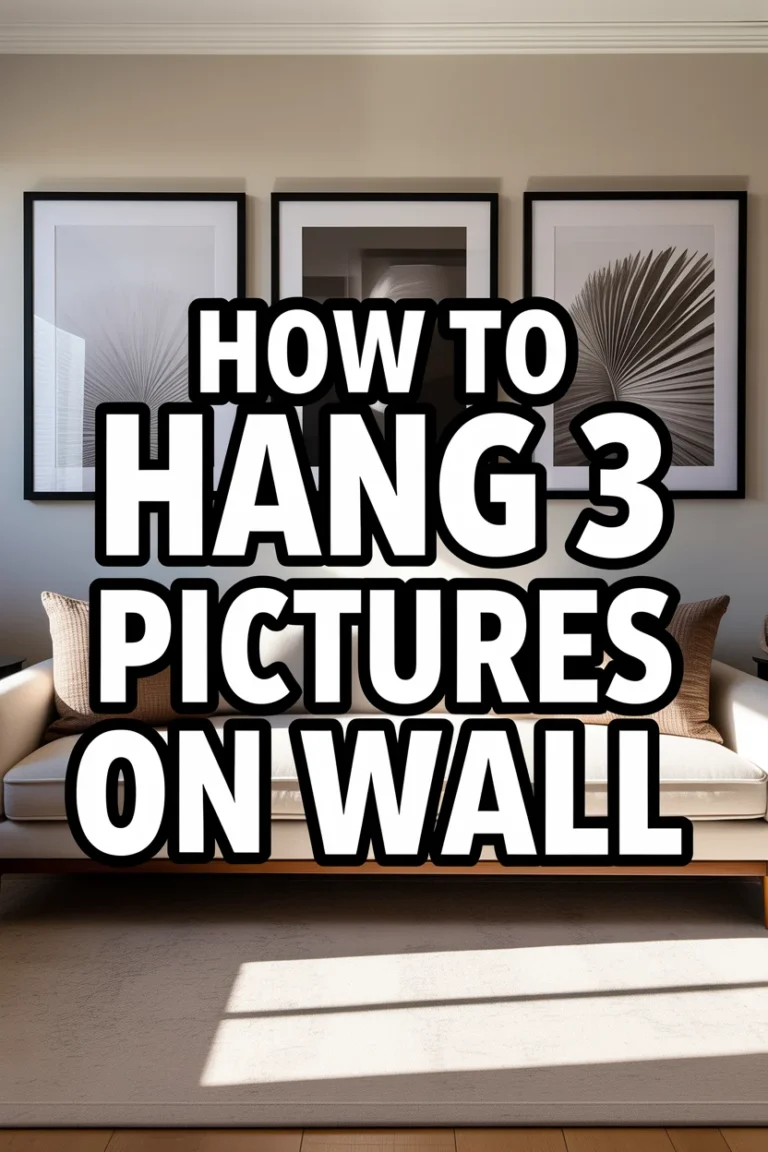
Consider a triptych—a single image split across three panels—to cover a wide horizontal and vertical span effectively.
Step 3: Layer Your Lighting at Different Heights
Install a large-scale chandelier or pendant light that hangs lower than you might expect to bridge the gap between the ceiling and the floor.
Add wall sconces at about 6 feet high to provide a warm glow that fills the middle section of the wall.
Use floor lamps with arched necks to bring light into the seating area, creating a “room within a room” feeling that feels intimate.
Pro Tip: Always use warm-toned bulbs (2700K to 3000K) to prevent a large, high-ceilinged room from feeling like a sterile gymnasium.
Step 4: Install Vertical Architectural Details
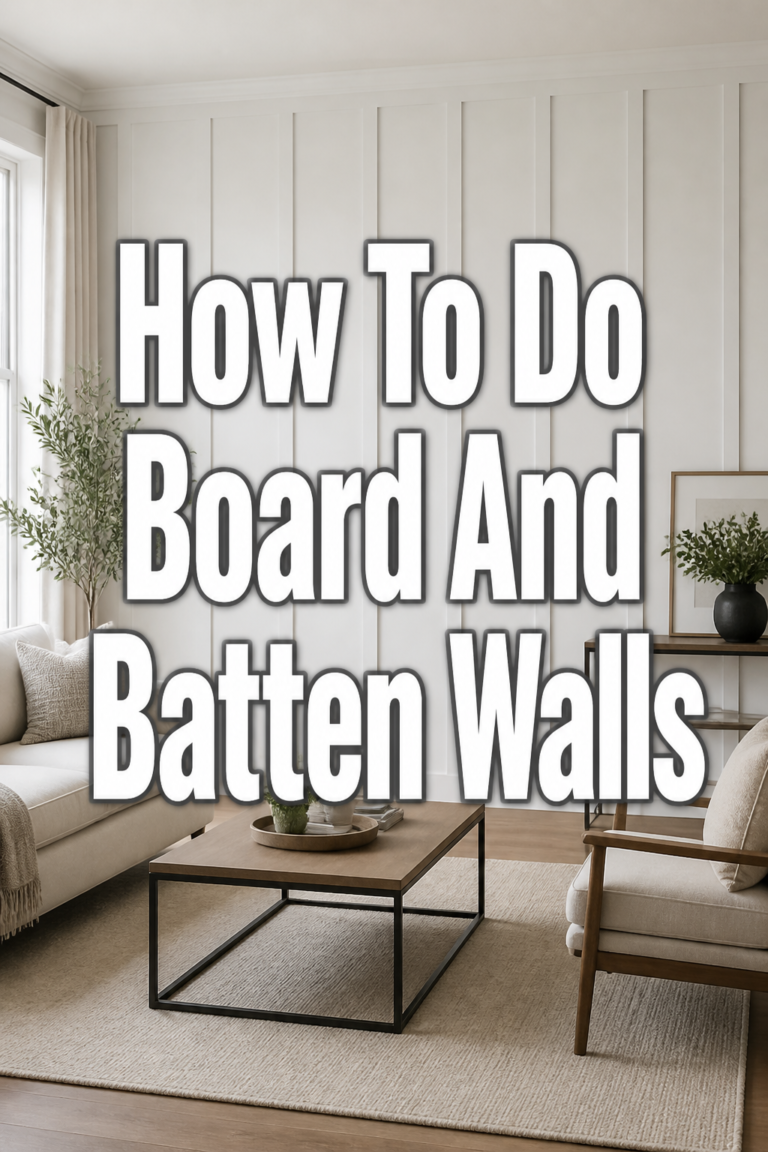
Apply board and batten or picture frame molding that extends two-thirds of the way up the wall to add physical depth.
Think about adding reclaimed wood beams to the ceiling to “lower” the visual height and add a rustic, cozy texture.
Try a vertical shiplap installation to draw the eye up in a clean, modern way that doesn’t feel too busy.
Step 5: Hang Curtains High and Wide
Mount your curtain rods just a few inches below the ceiling line rather than right above the window frame.
Choose extra-long drapes that kiss the floor, creating long vertical lines that celebrate the height while adding soft fabric to dampen echoes.
Ensure the fabric is heavy enough, like velvet or thick linen, so it doesn’t look flimsy against the large scale of the wall.
Step 6: Create a Structured Gallery Wall
Gather a collection of frames that share a common theme, such as all black frames or all vintage gold, to maintain a sense of order.
Arrange the frames in a tight grid pattern that extends higher than a standard gallery, filling that middle-to-upper transition zone.
Incorporate 3D objects like decorative baskets or wooden carvings to break up the flat surfaces of the frames.
Pro Tip: Leave about 2-3 inches between frames to keep the arrangement looking like one cohesive unit rather than scattered pieces.
Step 7: Bring in Mature Greenery
Place a tall indoor tree, like a Fiddle Leaf Fig or a Bird of Paradise, in a corner to fill vertical space with life and color.
Use elevated planters or plant stands to give smaller plants extra height and presence.
Hang trailing plants like Pothos from high shelves, allowing the vines to drape down and soften the sharp corners of the room.
Step 8: Use Color to Ground the Space
Paint the bottom half of the wall a darker, moodier color and keep the top half a lighter neutral to create a sense of security.
Consider painting the ceiling a soft, warm shade like terracotta or a deep navy to make the room feel like it’s giving you a hug.
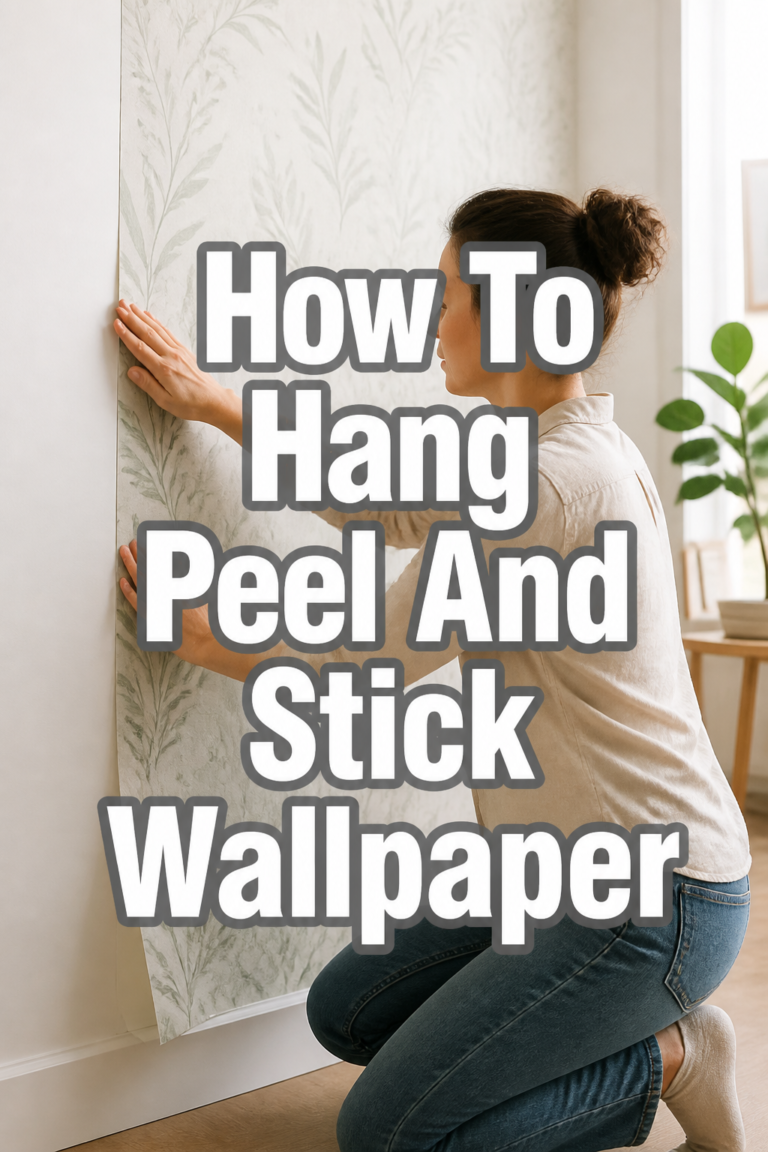
Apply a textured wallpaper or a subtle mural to one “accent” wall to provide a backdrop that doesn’t require as much hanging decor.
Common Mistakes to Avoid
Using Under-Scaled Furniture
Small chairs and tiny coffee tables look like dollhouse furniture in a room with 20-foot ceilings.
You need pieces with high backs and substantial footprints to balance the volume of the air above them.
Think about chunky sectionals and heavy wooden tables that can hold their own in the space.
The Floating Art Syndrome
Hanging a single, medium-sized picture in the middle of a giant wall makes it look like it’s drifting out to sea.
Art should always be anchored to something, like a sofa, a console table, or a fireplace mantle.
If you have a tall wall with no furniture against it, use a very large vertical piece that starts about 24 inches from the floor.
Ignoring the Sound Quality
High ceilings and bare walls are a recipe for a room that echoes every footstep and whisper.
Failing to include soft materials like rugs, drapes, and upholstered furniture will make the space feel cold and industrial.
Always balance the hard surfaces of the tall walls with plenty of textiles to absorb the sound.
Leaving the Top Third Completely Bare
While you don’t want to clutter the ceiling, leaving the top 8 feet of a 15-foot wall totally empty creates a “cutoff” line.
The eye stops at the highest piece of decor, making the rest of the wall feel like wasted space.
Use high-mounted shelving or tall window treatments to bridge that gap and keep the eye moving upward.
Troubleshooting
The Room Feels Too Cold and Empty
This usually happens when there is too much “white space” and not enough texture.
Try adding a large area rug that defines the seating zone and brings the focus back down to human level.
You can also add wood elements, like a tall bookshelf or a wood-paneled accent wall, to introduce natural warmth.
The Lighting Creates Harsh Shadows
If you only have one bright light source high up on the ceiling, it will create long, unflattering shadows.
The solution is to add “mid-level” lighting like sconces or tall table lamps.
This fills in the dark gaps and ensures that the light is distributed evenly across the vertical plane.
The Walls Look Cluttered and Busy
If you’ve hung many small items, the wall can start to look messy rather than decorated.
Try grouping those small items into one tight gallery wall or replacing them with a few larger, more impactful pieces.
Give each decorative element “room to breathe” by leaving some empty space around the larger focal points.
Key Takeaways
- Think Big: Always choose larger decor items than you think you need to match the scale of the room.
- Layer Textures: Use a mix of wood, fabric, and greenery to soften the large vertical surfaces.
- Bridge the Gap: Use lighting and window treatments to connect the floor to the ceiling visually.
- Anchor Your Decor: Ensure all wall art relates to the furniture below it to avoid a “floating” look.
- Focus on Comfort: Use warm colors and sound-absorbing materials to make the large space feel cozy.
Frequently Asked Questions
How high should I hang art on a tall wall?
Even with high ceilings, the center of your primary artwork should still be roughly at eye level, which is about 57 to 60 inches from the floor. However, you can then “stack” additional pieces above that primary piece to utilize the extra height. This keeps the room feeling grounded while still celebrating the vertical space.
Can I use dark colors on high walls?
Yes, dark colors can actually make a large, tall room feel much more intimate and sophisticated. A deep charcoal or forest green on a tall wall can make the boundaries of the room feel less stark. Just ensure you have plenty of layered lighting so the space doesn’t feel like a cave at night.
What is the cheapest way to decorate a tall wall?
The most budget-friendly way to fill a large wall is using fabric or DIY molding. You can hang a large, beautiful tapestry or even a decorative rug, which covers a huge area for a fraction of the cost of framed art. Alternatively, simple wooden slats or “trim” from a hardware store can create a high-end architectural look for very little money.
Do I have to decorate all the way to the ceiling?
You don’t need to fill every inch, but you should aim to have at least one element reach toward the top third of the wall. This could be a very tall potted tree, long curtains, or a high-mounted light fixture. Leaving the top completely empty often makes the room feel unfinished or out of proportion.
Our Top Recommended Finds
- Oversized Minimalist Frames: These allow you to turn affordable posters or personal photos into high-impact art that fits the scale of your walls.
- Telescoping Painting and Cleaning Poles: Essential for reaching those high corners for maintenance or for hanging decor without a massive ladder.
- Heavyweight Velvet Curtains: These are excellent for both visual scale and sound dampening in rooms that tend to echo.
Your New Vertical View
Decorating a room with high ceilings is all about embracing the volume while keeping the human experience in mind.
Once you start thinking in terms of scale and layers, that intimidating empty space becomes your favorite feature of the home.
Pick one wall this weekend and try taping out a new, larger layout to see how much more “homey” your space can feel.
You might also enjoy exploring how to choose the right area rug to ground your new vertical designs.