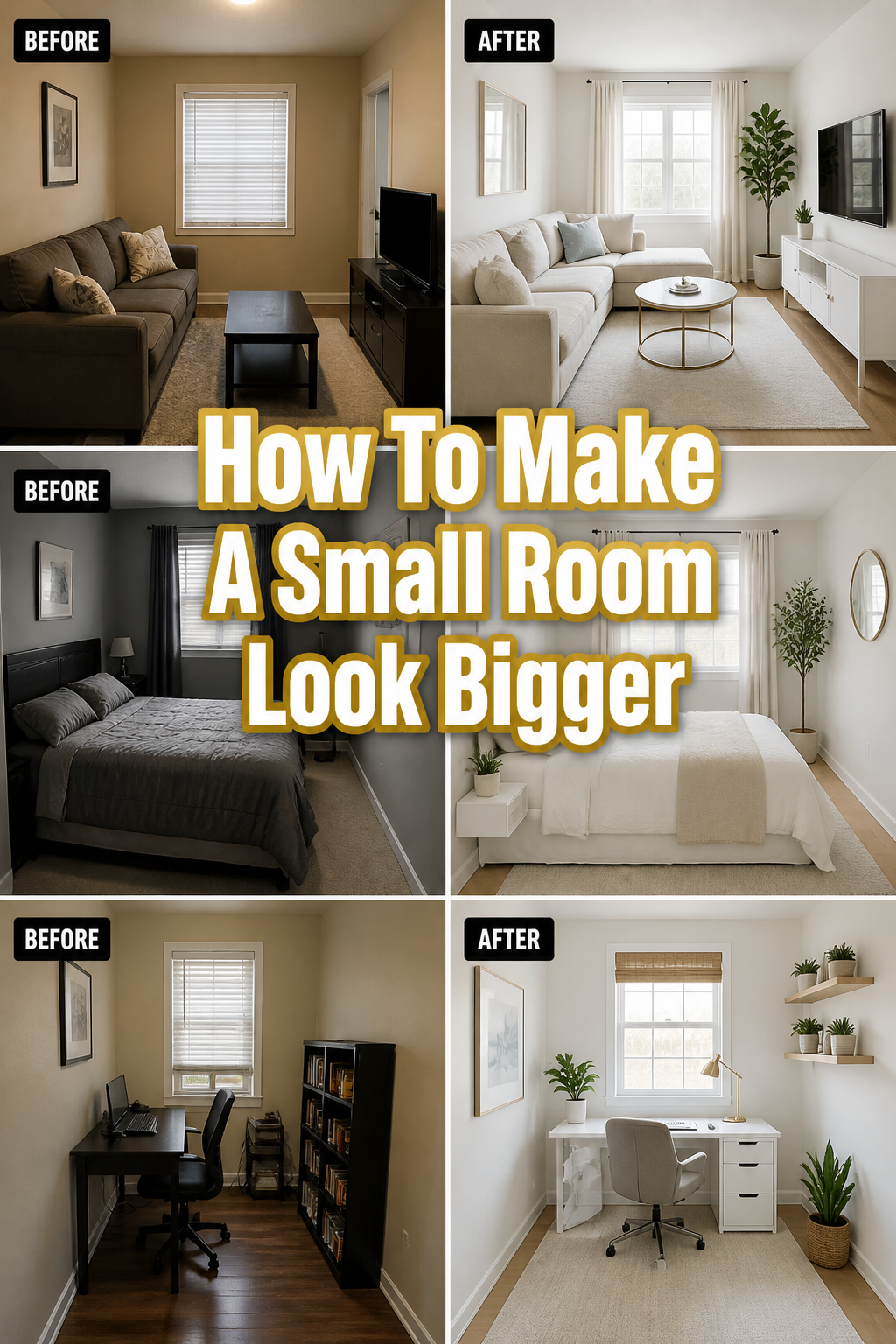
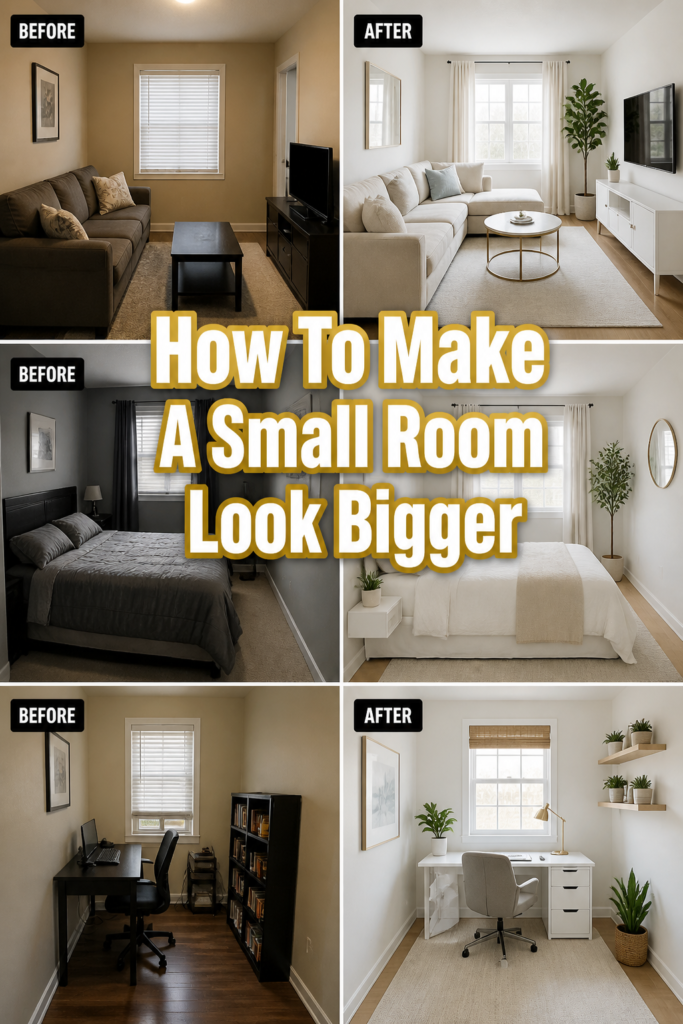
✨ How To Make A Small Room Look Bigger
Living in a small space can feel challenging, but it doesn’t have to be restrictive or cramped.
With a few clever design choices and a touch of creativity, you can transform even the coziest room into an inviting sanctuary that feels wonderfully open and airy.
I’ve personally applied these strategies to my own compact city apartment and helped friends make their small rooms sing, so I know these tips truly work.
Quick Overview
This guide will walk you through practical steps to visually expand your small room, making it feel more spacious and comfortable. You’ll learn how to choose the right colors, arrange furniture strategically, and use lighting and decor to your advantage.
- Time needed: Varies, from a few hours for basic decluttering to a weekend for painting and furniture rearrangement.
- Difficulty: Beginner
- What you’ll need: Measuring tape, paint (optional), cleaning supplies, basic tools (screwdriver, level), a positive attitude.
Step-by-Step Instructions
Step 1: Embrace the Art of Letting Go
The first and most impactful step to making any small room feel larger is to declutter. A cluttered space instantly feels smaller and more chaotic.
Remove anything that doesn’t serve a purpose or bring you joy. Think of this as giving your room room to breathe.
Sort items into categories: keep, donate, toss, or relocate. Be honest with yourself about what you truly need and use.
Clear surfaces. Countertops, tabletops, and shelves should have minimal items. This creates a sense of order and visual expanse.
Pro Tip: Implement the “one in, one out” rule. When you buy something new, commit to removing an old item of the same type. This prevents clutter from accumulating again.
Step 2: Choose Your Color Palette Wisely
The colors you select for your walls and larger furnishings play a huge role in how spacious a room feels. Lighter colors reflect light, pushing walls outward visually.
Opt for light and neutral colors for walls. Shades like soft whites, pale grays, light blues, or gentle creams are excellent choices.
Consider painting the ceiling the same light color as the walls. This blurs the line between wall and ceiling, making the room feel taller.
Introduce pops of color through accessories like throw pillows, artwork, or small decorative items. This adds personality without overwhelming the space.
Step 3: Master Strategic Furniture Arrangement
How you place your furniture can dramatically alter the perceived size of a room. The goal is to create clear pathways and avoid blocking natural light.
Select appropriately sized furniture. Oversized pieces will swallow a small room. Look for furniture with slender legs or open bases, as these allow light to pass through, creating a lighter feel.
Arrange furniture away from the walls. Pulling pieces even a few inches off the wall can create a sense of depth and airiness.
Use multi-functional furniture. An ottoman with storage, a sofa bed, or nesting tables save space and serve multiple purposes.
Place larger pieces against the longest wall to maintain balance and avoid breaking up the room’s flow.
Step 4: Harness the Power of Light
Light is a magical tool for making a room feel bigger. Both natural and artificial light can open up a space.
Maximize natural light. Keep windows uncovered during the day or use sheer, light-colored curtains that allow light to filter through.
Avoid heavy, dark drapes that block light and make windows appear smaller. If privacy is a concern, consider top-down/bottom-up blinds.
Incorporate multiple light sources. Use a combination of ambient (ceiling fixture), task (desk lamp), and accent lighting (picture light) to brighten corners and eliminate dark spots.
Choose floor lamps or wall-mounted sconces over bulky table lamps to free up surface space.
Pro Tip: Use smart bulbs that allow you to adjust color temperature. Cooler, brighter light can make a room feel more expansive during the day, while warmer light creates coziness in the evening.
Step 5: Integrate Mirrors Strategically
Mirrors are a designer’s secret weapon for small spaces. They reflect light and create the illusion of depth, effectively doubling your room’s visual size.
Place a large mirror on a wall opposite a window. This will bounce natural light around the room, making it feel brighter and more open.
Lean a full-length mirror against a wall. This adds height and depth without needing to be mounted, offering flexibility.
Consider a gallery wall of smaller mirrors. This adds visual interest while still reflecting light and opening up the space.
Use mirrored furniture pieces, like a mirrored side table or dresser, to add sparkle and lightness to the room.
Step 6: Elevate Your Eye with Vertical Space
When floor space is limited, look up! Drawing the eye upwards can make a room feel taller and more grand.
Install shelves high on walls. This provides storage without taking up precious floor space and emphasizes height.
Choose tall, narrow bookcases instead of wide, short ones. These draw the eye up and utilize vertical real estate efficiently.
Hang curtains close to the ceiling, extending them all the way to the floor. This creates an illusion of taller windows and higher ceilings.
Incorporate tall decorative elements like a statement plant or a piece of vertical artwork to guide the eye upwards.
Step 7: Create Cohesion with Flooring
The flooring choice can significantly impact the perceived size and flow of a small room. Consistency is key.
Opt for continuous flooring throughout adjacent small spaces. This creates a seamless look, making areas flow into one another and feel larger.
Choose lighter-colored flooring. Like walls, light floors reflect light and contribute to an airy feel.
Consider large area rugs with subtle patterns. A rug that covers most of the floor can make the room appear wider, especially if it’s a light color.
Avoid small, busy rugs that break up the floor space and make the room feel disjointed.
Step 8: Embrace Translucent and Clear Materials
Furniture and decor made from clear or translucent materials can magically disappear into the room, reducing visual bulk.
Use acrylic or glass tables. A clear coffee table or side table allows your eye to see through it, making the room feel less crowded.
Choose open shelving units. Instead of solid cabinets, open shelves provide storage without feeling heavy or blocking light.
Select chairs with open backs or clear frames. These offer seating without imposing a heavy visual presence.
Common Mistakes to Avoid
Over-Furnishing the Space
A common pitfall is trying to fit too many pieces of furniture into a small room. This instantly makes the space feel cramped and difficult to navigate. Instead, choose fewer, well-selected pieces that serve multiple functions and are appropriately scaled for the room.
Blocking Natural Light Sources
Heavy drapes, tall furniture placed in front of windows, or too many plants on the windowsill can severely limit the amount of natural light entering a room. This makes the space feel darker and smaller. Always prioritize keeping windows as unobstructed as possible.
Using Too Many Dark Colors
While a dark accent wall can be dramatic, painting an entire small room in dark, rich colors will absorb light and make the walls feel like they’re closing in. Stick to light, reflective colors for the majority of your surfaces, saving darker hues for very small accents.
Cluttering Surfaces and Corners
Every visible surface in a small room becomes a focal point. Allowing clutter to accumulate on shelves, tables, or even the floor will negate all your efforts to make the room feel larger. Regularly declutter and ensure every item has a designated home.
Troubleshooting
My room still feels dark, even with light walls.
If your room feels perpetually dim, reassess your lighting strategy. You might be relying too heavily on a single overhead fixture. Add more layers of light: a floor lamp in a dark corner, a table lamp, or even some subtle LED strip lighting under shelves. Ensure your window treatments are truly light-filtering or sheer.
My furniture feels too big, but I can’t replace it.
If new furniture isn’t an option, focus on creating visual lightness. Consider slipcovers in a lighter, solid color for upholstered pieces. Rearrange the layout to create more open floor space, even if it means pushing one piece further into a corner. Remove any unnecessary accessories from the furniture itself to reduce visual weight.
I have too much stuff and nowhere to put it.
This is a common challenge. Revisit the decluttering step with an even more critical eye. For items you must keep, invest in smart storage solutions: under-bed storage, vertical shelving, storage ottomans, or wall-mounted cabinets. Utilize every inch of vertical space before considering more floor-based storage.
Key Takeaways
- Declutter Ruthlessly: Less truly is more in a small space; remove anything unnecessary to create breathing room.
- Embrace Light Colors: Light and neutral shades on walls and ceilings reflect light, making rooms feel more expansive.
- Arrange Furniture Smartly: Choose scaled pieces, keep pathways clear, and utilize multi-functional items.
- Maximize Light: Leverage natural light and incorporate multiple artificial light sources to brighten every corner.
- Use Mirrors for Depth: Strategically placed mirrors reflect light and create the illusion of a larger, deeper space.
- Go Vertical with Storage: Draw the eye upwards with high shelves and tall, narrow furniture to maximize space.
Frequently Asked Questions
Can I use dark colors at all in a small room?
Yes, you can use dark colors, but sparingly. A single dark accent wall can add depth and drama without overwhelming the room, especially if it’s the shortest wall. Dark accessories or small pieces of furniture can also add sophistication when balanced with lighter elements.
What about wallpaper? Can I use it in a small room?
Absolutely! Wallpaper can work wonders. Choose subtle patterns, vertical stripes to add height, or a wallpaper with a delicate, light-colored background. Avoid large, busy patterns that can make the walls feel closer. A single accent wall with a tasteful wallpaper can be very effective.
Should I use small-scale art in a small room?
Not necessarily. While many assume small art for small rooms, a single large piece of art can actually make a room feel grander and more intentional. It creates a focal point and prevents the space from looking cluttered with many tiny frames.
Our Top Recommended Finds
- Large Wall Mirror: A simple, frameless or thin-framed full-length mirror can instantly double the perceived size of a wall.
- Acrylic Coffee Table: This clear furniture piece provides functionality without adding visual weight to your living area.
- Slim Vertical Bookshelf: A tall, narrow unit offers ample storage for books and decor while drawing the eye upwards, maximizing vertical space.
Transform Your Cozy Corner Today
You now have a toolkit of practical, inspiring ideas to make your small room feel bigger, brighter, and more beautiful. Every step you take, from decluttering a shelf to rearranging a chair, contributes to a more open and inviting atmosphere.
Don’t wait to create the spacious sanctuary you deserve. Start with one small change today, and watch your room begin to expand before your eyes. Consider how these principles might apply to your kitchen or bathroom next!