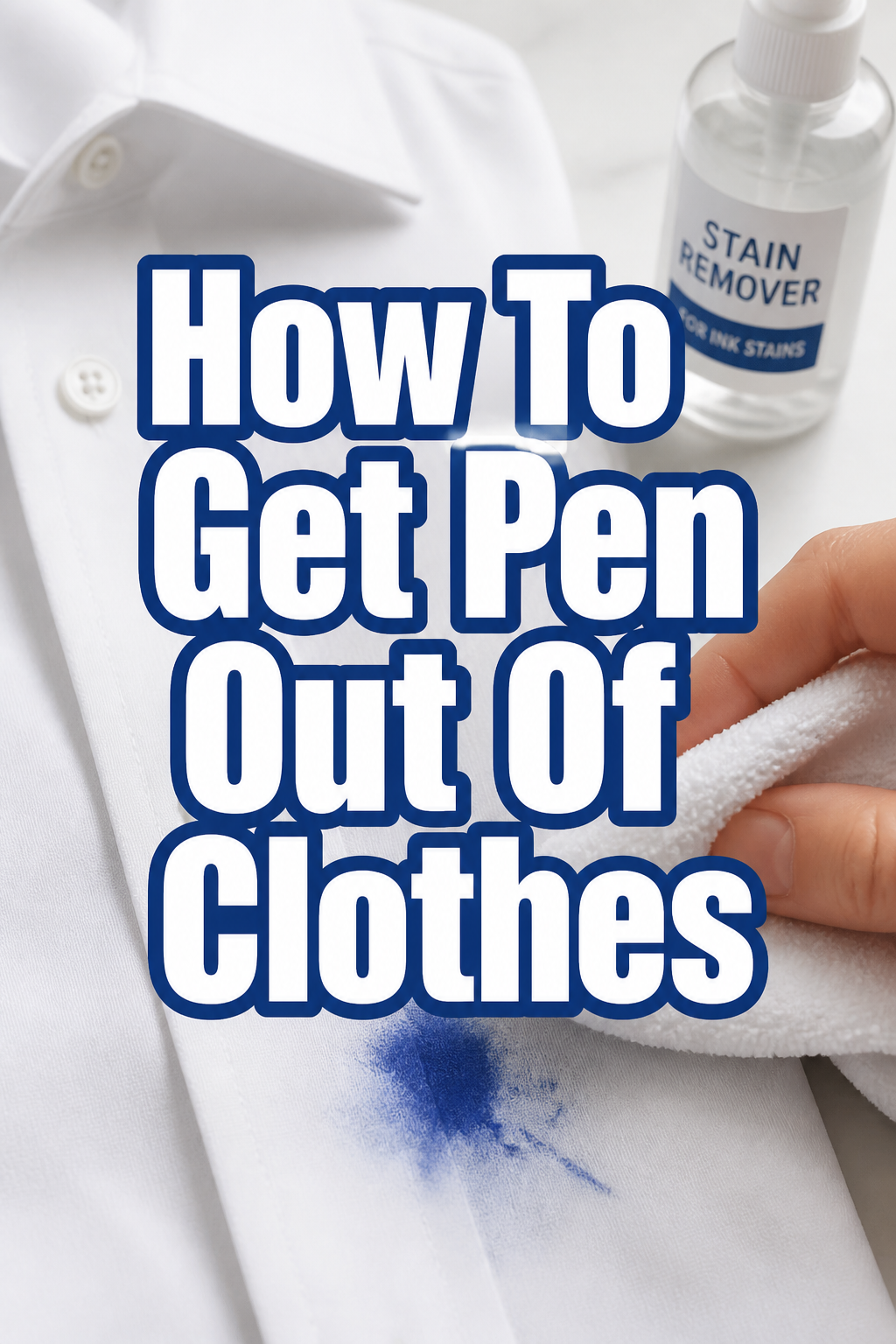
✨ How To Get Pen Out Of Clothes
Oh, the familiar heart-sink moment when you discover an unexpected ink mark on your favorite blouse or a treasured throw pillow.
It’s a tiny blot, yet it feels like a disruption to the serene calm of your carefully curated space.
I’ve been there, turning a perfectly peaceful afternoon into a frantic search for solutions, and through many trials, I’ve found what truly works to restore that sense of order and beauty.
Quick Overview
This guide will equip you with the gentle yet effective techniques needed to banish pen stains from your cherished fabrics.
You’ll learn how to approach different ink types and materials with confidence, preserving the life and beauty of your clothes.
- Time needed: 15-45 minutes (depending on stain size and fabric drying time)
- Difficulty: Beginner
- What you’ll need: Rubbing alcohol, clean white cloths, paper towels, dish soap, cotton swabs, water.
Step-by-Step Instructions
Step 1: Act Swiftly and Assess the Damage
The moment you spot that ink mark, pause and take a gentle breath.
Immediate action is your best friend when tackling any stain, especially ink.
Identify the type of ink if possible; ballpoint, gel, or permanent marker each respond slightly differently.
Note the fabric type of your garment. Delicate silks or wools require a more tender touch than sturdy cotton or denim.
Lay the stained item on a flat, protected surface, perhaps a clean countertop or a sturdy ironing board covered with a fresh towel.
Pro Tip: A quick mental note about the ink type can guide your choice of cleaning agent. Ballpoint ink is generally oil-based, while gel pens are water-based.
Step 2: Prepare Your Workspace and Gather Supplies
Create a calm, organized cleaning station, much like setting up a cozy crafting nook.
Gather all your necessary supplies before you begin, preventing any last-minute rushes.
You’ll want a supply of clean, white absorbent cloths or paper towels.
Rubbing alcohol (isopropyl alcohol) is often the star player for ink removal.
Keep a mild dish soap and a small bowl of cool water nearby.
Cotton swabs are excellent for precise application, especially on smaller stains.
Step 3: Protect the Underside of the Fabric
This crucial step prevents the ink from transferring to other parts of the garment or your work surface.
Place several layers of clean paper towels or a thick, absorbent white cloth directly beneath the stained area.
Ensure the layers are directly under the ink mark, ready to absorb the lifted pigment.
As you work, these layers will wick the ink away, keeping it from spreading.
Step 4: Test Your Chosen Solution
Before applying any cleaning agent directly to the stain, always perform a discreet patch test.
Dab a tiny amount of your chosen solution (like rubbing alcohol) onto an inconspicuous area of the garment.
An inside seam or a hidden hem is perfect for this test.
Observe for any adverse reactions, such as color fading, fabric damage, or discoloration, for a few minutes.
If the fabric remains unchanged, you can proceed with confidence.
Step 5: Apply the Stain Remover Gently
Now, it’s time for the focused work, treating the stain with gentle determination.
Moisten a clean white cloth or a cotton swab with your chosen ink remover, such as rubbing alcohol.
For ballpoint pen ink, rubbing alcohol is usually very effective.
If you don’t have rubbing alcohol, hand sanitizer or hairspray (the aerosol type) can also work due to their alcohol content.
Dab the solution onto the ink stain, working from the outside edges inwards.
This technique helps to prevent the stain from spreading further.
You will notice the ink beginning to transfer from the fabric to your applicator and the paper towels underneath.
Replace the paper towels underneath frequently as they become saturated with ink.
Switch to a fresh section of your cleaning cloth or a new cotton swab as it picks up ink.
Patience and persistence are key here; you are gently coaxing the ink out, not scrubbing it away.
Step 6: Rinse and Repeat if Necessary
Once you’ve lifted as much ink as possible, it’s time to rinse the area.
Rinse the treated area under cool running water, gently flushing the remaining ink and cleaning solution.
You might still see a faint shadow of the stain.
If so, gently repeat Step 5 and Step 6.
Sometimes, a stubborn stain needs a second or even third application to fully disappear.
Imagine you are slowly revealing the original beauty of your fabric underneath.
Step 7: Treat with Dish Soap and Wash
After the ink is gone, or nearly gone, it’s important to clean the entire garment to remove any residue.
Apply a small amount of mild liquid dish soap directly to the treated area.
Gently massage it into the fabric with your fingers, creating a light lather.
This helps to break down any remaining ink particles and remove the alcohol residue.
Wash the garment as usual according to its care label instructions.
Use your preferred gentle cycle and detergent, ensuring a thorough clean.
Step 8: Air Dry and Inspect
The final step is crucial for confirming your success.
Air dry the garment completely, preferably away from direct heat or sunlight.
Allowing it to air dry prevents any residual ink from setting permanently if it wasn’t entirely removed.
Once dry, inspect the area carefully in good light.
If any trace of the stain remains, do not put the item in the dryer, as the heat will set the stain.
Instead, return to Step 5 and repeat the process until the fabric is perfectly clean.
Common Mistakes to Avoid
Rubbing the Stain Vigorously
It’s a natural instinct to scrub at a stain, but with ink, this is counterproductive. Rubbing can push the ink deeper into the fabric fibers, making it much harder to remove. It can also spread the stain to a larger area, creating a bigger problem. Instead, always use a gentle dabbing or blotting motion to lift the ink out.
Using the Wrong Cleaning Agent
Not all stain removers are created equal, especially for different types of ink. Using bleach on colored fabrics can lead to irreparable damage, while water can sometimes spread oil-based inks. Always identify the ink type and fabric, and choose a suitable, tested solution like rubbing alcohol for most pen inks. A quick test on an inconspicuous spot is always wise.
Applying Heat Before Stain Removal
Heat is the enemy of an unset stain. Putting an ink-stained item into the dryer or ironing over it before the ink is completely removed will cause the stain to set permanently. Once set by heat, ink stains become incredibly difficult, if not impossible, to remove. Always air dry until you are certain the stain is gone.
Ignoring the Fabric Care Label
Each garment has specific care instructions designed to protect its fibers and dyes. Disregarding these labels can lead to shrinking, fading, or damage to the fabric, especially with delicate materials like silk or rayon. Always check the care label before applying any cleaning solution or washing the item to ensure you’re using appropriate methods.
Troubleshooting
The Stain Isn’t Budging
If the ink stain seems stubborn, it might be an older stain or a permanent marker. Try a different approach by soaking the affected area in a mixture of one part white vinegar and two parts water for about 30 minutes before repeating the alcohol treatment. For very tough stains, a paste made of baking soda and a few drops of water, gently rubbed into the stain and left for an hour, can sometimes help lift it before a final wash.
Fabric Discoloration After Treatment
If you notice any slight discoloration or lightening of the fabric after treatment, it might be due to the cleaning agent. Immediately rinse the area thoroughly with cool water to dilute any remaining solution. For delicate fabrics, consider a professional cleaner. In the future, always perform a patch test in an inconspicuous area before applying any solution to the main stain.
The Stain Spread
If the ink stain has spread during treatment, it usually means you’ve rubbed too vigorously or didn’t use enough absorbent material underneath. Don’t panic. Place fresh, thick layers of paper towels underneath the new, larger stained area. Continue to dab gently from the outer edges inward with your chosen solution, changing cloths and paper towels very frequently. Patience is key to reining in a spreading stain.
Key Takeaways
- Act quickly: Fresh ink stains are much easier to remove than old ones.
- Test first: Always perform a patch test on an inconspicuous area of the fabric.
- Blot, don’t rub: Gentle dabbing lifts ink; rubbing spreads it and sets it deeper.
- Protect the underside: Use absorbent layers beneath the stain to catch lifted ink.
- Avoid heat: Never put a stained item in the dryer or iron it until the stain is completely gone.
- Wash thoroughly: After stain removal, wash the entire garment according to its care label to remove any residues.
Frequently Asked Questions
Can I use hairspray to remove pen ink?
Yes, hairspray can be effective for removing ballpoint pen ink due to its alcohol content. Apply it directly to the stain, let it sit for a few minutes, then blot with a clean cloth. Be sure to use an aerosol hairspray and always test on an inconspicuous area first, as some hairsprays might contain oils or dyes that could leave a residue.
What if the pen ink is permanent marker?
Permanent marker ink is much tougher, but not impossible. Try rubbing alcohol, nail polish remover (acetone-based, but test carefully as it can damage some fabrics), or even a specialized permanent marker remover. Apply very small amounts, blot, and rinse repeatedly. For valuable items, professional cleaning might be the safest option.
Does milk help remove ink stains?
While not a primary solution, some people find success with milk, especially for older or delicate fabrics where harsh chemicals are a concern. Soak the stained area in a bowl of milk for several hours or overnight, then gently rub and wash. The proteins in the milk are thought to help break down the ink, though results can vary.
Is it safe to use nail polish remover on clothes?
Nail polish remover containing acetone can be very effective on certain inks, but it’s crucial to use it with extreme caution. Acetone can dissolve or damage synthetic fabrics like acetate, rayon, and triacetate. Always, always perform a patch test in an hidden area first, and use it sparingly on natural fibers like cotton or linen.
Our Top Recommended Finds
- Isopropyl Rubbing Alcohol: An essential for nearly any ink stain, readily available and highly effective.
- White Microfiber Cloths: Gentle on fabrics, highly absorbent, and reusable for countless cleaning tasks.
- Gentle Dish Soap (e.g., Dawn): Excellent for pretreating and washing away residues without harshness.
Embrace a Spotless Home, One Stain at a Time
Removing a pen stain from your clothes is more than just a chore; it’s an act of care for your cherished possessions.
It’s about restoring the beauty and harmony to your home environment, ensuring every item contributes to your sense of peace.
Take these steps with confidence, knowing you have the power to rescue your favorite pieces.
Imagine the satisfaction of seeing that ink mark vanish, leaving behind only the pristine fabric you love.
Now, go forth and tackle those stains, bringing a fresh wave of calm and order back into your cozy haven.