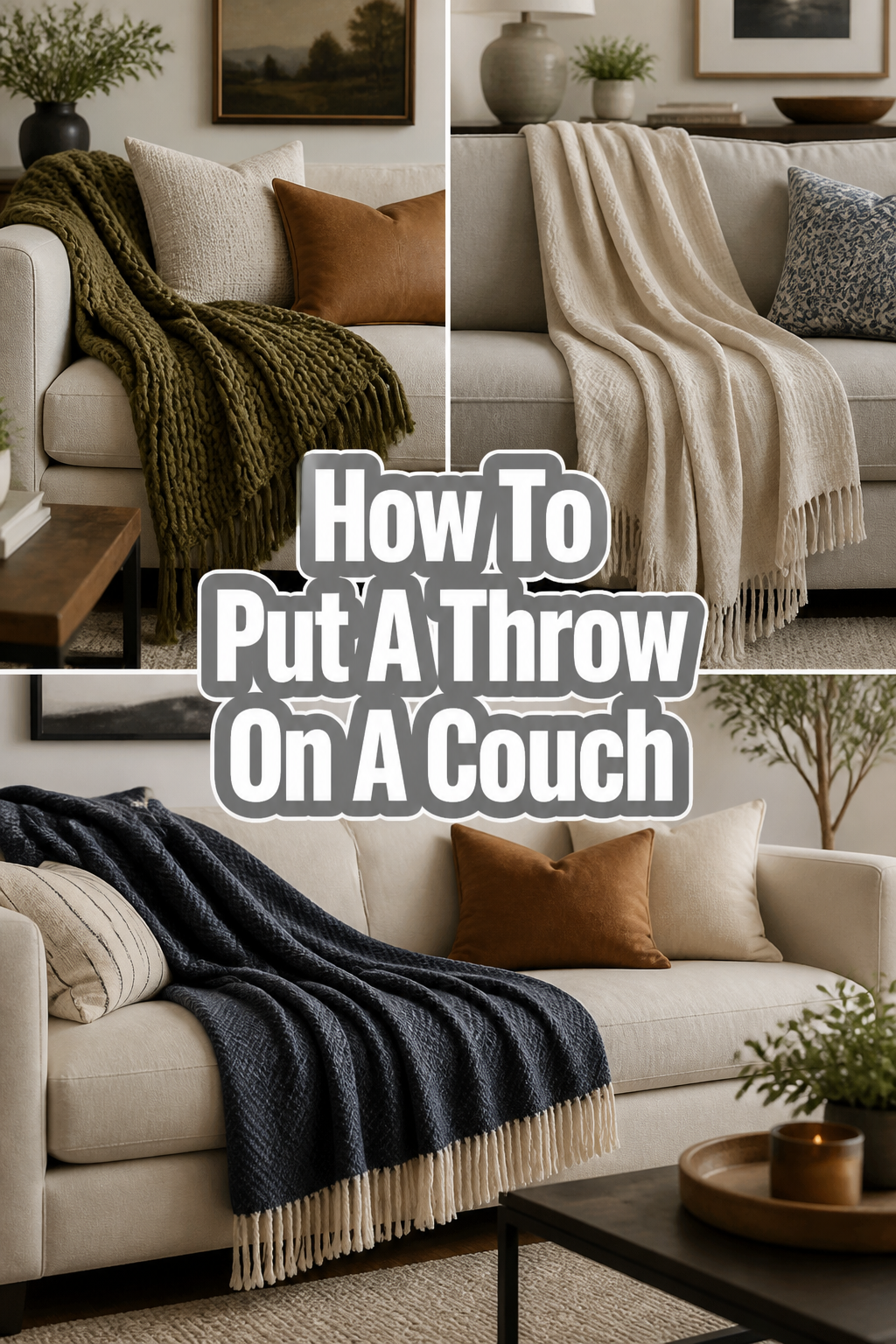
🛋️ How To Put A Throw On A Couch
There’s a special magic in a perfectly placed throw on a couch.
It’s more than just fabric; it’s an invitation to relax, a touch of personality, and a hug for your living space.
Having styled countless homes, I’ve learned the subtle art of making a throw look effortlessly chic, and I’m excited to share those secrets with you.
Quick Overview
This guide will transform the way you think about styling your couch with a throw, turning a simple accessory into a design statement.
You’ll learn how to choose the right throw, master various styling techniques, and troubleshoot common issues, making your living room feel truly inviting.
- Time needed: 15-30 minutes (initial setup and experimentation)
- Difficulty: Beginner
- What you’ll need: A throw blanket, your couch, and an open mind for creativity
Step-by-Step Instructions
Step 1: Choose Your Perfect Throw
Before you even think about placement, the throw itself sets the stage. Consider its material, size, and color as these elements dictate its drape and overall impact.
A chunky knit offers a different feel than a lightweight linen, and each has its unique charm.
- Consider the fabric: Think about how it feels and how it will fall. Wool, cashmere, and chunky knits offer warmth and texture, while cotton or linen provide a lighter, airy feel.
- Evaluate the size: A generous throw allows for more styling options, like draping over an entire section of the couch. Smaller throws are great for a neat fold or an accent over an armrest.
- Select a color and pattern: Choose something that complements your existing decor, either by matching tones or providing a pleasing contrast. Don’t be afraid to introduce a subtle pattern for visual interest.
Pro Tip: Don’t be afraid to mix textures. A silky throw on a linen couch, or a chunky knit on a leather sofa, creates a beautiful tactile contrast that elevates the whole look.
Step 2: Understand Your Couch’s Personality
Your couch isn’t just a piece of furniture; it has its own shape and style that influences how a throw will look. A structured sofa will present different opportunities than a plush, oversized sectional.
Observe its lines, cushions, and armrests to find the best spots for your throw.
- Note the couch’s style: Is it modern and sleek, traditional and tufted, or relaxed and bohemian? The throw should enhance, not fight, its inherent design.
- Identify key features: Does it have prominent arms, deep seats, or interesting back cushions? These can be focal points for your throw.
- Consider the couch’s material: A throw will interact differently with a smooth leather surface compared to a textured fabric. Some materials might be more prone to slipping.
Step 3: Assess the Room’s Overall Aesthetic
A throw doesn’t exist in isolation; it’s part of a larger story your room is telling. Take a moment to step back and observe the entire space before you begin.
Think about the existing color palette, the amount of natural light, and the general mood you want to create.
- Observe the existing color scheme: Ensure your throw either harmonizes with or thoughtfully contrasts with other elements like rugs, curtains, and artwork.
- Consider the desired mood: Are you aiming for a crisp, minimalist feel, or a warm, inviting haven? Your throw can reinforce this atmosphere.
- Think about balance: Avoid making one side of the couch or room feel too heavy or cluttered. The throw should contribute to a sense of visual equilibrium.
Step 4: Master the Simple Drape Method
This is perhaps the most classic and effortless way to place a throw, perfect for creating an inviting, relaxed look. It suggests comfort without being overly styled.
The key is to let the fabric fall naturally, embracing its inherent softness.
- Fold your throw lengthwise into thirds or quarters, depending on its width. This creates a more manageable bundle.
- Hold one end of the folded throw and gently toss it over the back of the couch, allowing it to cascade down over the seat and front.
- Adjust the folds and gathers until it looks natural and inviting. Aim for soft, organic lines rather than perfect symmetry.
- Ensure enough of the throw is visible to make an impact, but not so much that it overwhelms the couch.
Pro Tip: For an extra cozy feel, let a generous portion of the throw pool onto the floor. This adds a luxurious, lived-in quality to your space.
Step 5: Embrace the Neat Fold Method
When you want a more structured, tailored appearance, the neat fold is your go-to technique. This method works beautifully in more formal settings or when you want to highlight the throw’s texture or pattern.
It conveys a sense of order and intentional design.
- Fold your throw precisely into a rectangle or square. The number of folds will depend on your throw’s size and the desired final dimension.
- Place the folded throw neatly over one armrest, allowing it to slightly overhang the edge.
- Alternatively, place it centrally over one of the couch cushions, creating a clean block of color or texture.
- Smooth out any wrinkles or uneven edges to maintain a crisp, tidy look.
Step 6: Cultivate Coziness with the Bundle Method
The bundle method is all about creating an irresistible invitation to snuggle up. It’s less about precise placement and more about conveying warmth and softness.
This style works wonderfully in casual, comfort-focused living rooms.
- Gather the throw loosely in your hands, allowing it to crumple and fold naturally. There’s no need for perfect symmetry here.
- Tuck one end of the gathered throw into the corner of the couch, between the armrest and the back cushion, or between two seat cushions.
- Let the rest of the throw spill out onto the seat in a soft, organic pile. The goal is to make it look like someone just draped it there after a relaxing moment.
- Fluff and arrange the folds to create volume and depth, making it look incredibly soft and inviting.
Step 7: Accentuate with the Armrest Drape
Sometimes, a throw can serve as a simple yet impactful accent. Draping it over an armrest adds a layer of texture and color without overwhelming the couch or the room.
This is ideal for smaller throws or when you want a subtle touch of warmth.
- Fold the throw lengthwise into a narrower strip, perhaps in half or thirds.
- Lay it gently over one armrest, allowing it to drape down the front and back of the arm.
- Adjust the length so it falls evenly on both sides, or let one side be longer for a more asymmetrical, artistic look.
- Consider adding a decorative pillow to the seat next to the armrest for a layered, styled effect.
Step 8: The Art of the Final Adjustment
Once you’ve chosen your method, the real magic happens in the refinement. A few thoughtful tweaks can transform a good placement into a truly stunning one.
Step back, observe, and make those small, impactful changes.
- Step back and view your creation from different angles in the room. Does it feel balanced? Does it draw your eye?
- Fluff and reposition any folds or gathers. Aim for an “artfully undone” look rather than something too stiff or perfect.
- Check for symmetry or asymmetry, depending on your desired aesthetic. Sometimes a slight imbalance feels more natural and less forced.
- Consider adding a complementary decorative pillow next to the throw to enhance the layered look and add another element of comfort.
Common Mistakes to Avoid
Ignoring Scale and Proportion
A common pitfall is choosing a throw that’s either too small, looking like an afterthought, or too large, overwhelming the couch. A tiny throw on a grand sectional can get lost, while an oversized one on a small loveseat might swallow it whole. Always consider the dimensions of your couch and the throw to ensure they complement each other.
Aim for a throw that feels substantial enough to offer comfort but doesn’t completely hide the beauty of your sofa. It should enhance, not engulf, the furniture.
Clashing Colors or Textures
While contrast can be wonderful, a throw that clashes jarringly with your couch or room decor can disrupt the entire aesthetic. A bright, bold pattern might fight with an already busy rug, or a rough texture might feel out of place on a delicate velvet sofa. The goal is harmony or intentional, pleasing contrast.
Before buying, hold the throw up to your couch and consider how it interacts with nearby elements like pillows, curtains, and wall art. Trust your eye to spot any jarring combinations.
Over-Styling or Under-Styling
Some people try too hard to make their throw look “perfect,” resulting in a stiff, unnatural arrangement. Others simply toss it haphazardly without any thought, making the space look messy rather than inviting. The sweet spot is somewhere in the middle: an “artfully undone” look that suggests comfort and style.
Avoid making every fold symmetrical or every edge perfectly straight. Conversely, don’t just leave it in a crumpled heap. A little bit of thoughtful fluffing and strategic draping goes a long way.
Forgetting Functionality
While aesthetics are important, remember that a throw is also meant to be used for warmth and comfort. If it’s placed in a way that makes it difficult to grab or too precious to touch, it loses its primary purpose. It should invite you to curl up with it, not admire it from afar.
Ensure your throw is easily accessible for snuggling. If you’ve styled it beautifully, make sure it can still be easily pulled off and used, then re-styled with minimal effort.
Troubleshooting
Throw Keeps Slipping Off the Couch
If your throw is constantly migrating to the floor, it’s likely due to the fabric combination or placement. Smooth throws on smooth couches (like silk on leather) are particularly prone to this.
Try placing a non-slip rug pad or a piece of felt underneath the throw where it rests on the couch. You can also opt for throws with more texture, like a chunky knit, which naturally grip better. For armrest drapes, tuck a small portion of the throw under the armrest cushion to secure it.
The Throw Looks Messy, Not Cozy
This often happens when the throw is simply tossed without any intention, or when there are too many small, uneven wrinkles. The distinction between “artfully undone” and “just messy” is subtle but important.
Focus on creating larger, softer folds rather than many small crinkles. Give it a good shake before placing it to help the fabric fall naturally. If you’re going for the bundled look, ensure it has volume and looks plump, not flat and haphazard. Practice fluffing and arranging until it has that inviting, pillowy appearance.
Doesn’t Feel Right with the Room’s Vibe
Sometimes, despite your best efforts, the throw just doesn’t seem to integrate seamlessly into the overall room design. It might feel like an outlier or disrupt the flow.
Revisit your choice of color and texture. Does it complement the existing palette? Could a different material provide a better textural balance? Sometimes, a very subtle pattern or a solid color in a complementary tone can make all the difference. Also, consider the scale; a throw that’s too dominant can feel out of place.
Key Takeaways
- Choosing the right throw for your couch and room sets the foundation for beautiful styling.
- Experiment with different folding and draping methods to find what suits your aesthetic best.
- An “artfully undone” look often feels more inviting than a perfectly symmetrical arrangement.
- Pay attention to scale, color, and texture to ensure your throw enhances your space.
- Don’t be afraid to adjust and refine; small tweaks can make a big difference.
- Remember that a throw is both decorative and functional, inviting comfort and warmth.
Frequently Asked Questions
Can I use more than one throw on a couch?
Absolutely! Using multiple throws can add layers of texture and color, especially on larger sectionals or if you want to create distinct cozy zones. Just ensure they complement each other in color and texture to maintain a cohesive look. Try draping one over an armrest and bundling another in a corner.
How do I keep my throw from slipping on a leather couch?
Leather couches are notoriously slippery. To combat this, choose throws made from materials with more grip, like chunky knits, wool, or throws with a slightly textured underside. You can also place a non-slip furniture pad or a piece of rubber matting discreetly underneath the throw where it rests on the couch cushions.
Should the throw match my decorative pillows?
They don’t have to match exactly, but they should certainly complement each other. Think of them as part of a cohesive family rather than identical twins. You can pick up a color from your throw in one of your pillows, or choose a pillow with a contrasting texture that still feels harmonious with the throw.
What’s the best way to store throws when not in use?
If you’re not using them on the couch, throws can be stored in decorative baskets, ottomans with storage, or folded neatly on a shelf. A beautiful basket next to the couch can even become part of your decor, making throws easily accessible for those spontaneous cozy moments.
Our Top Recommended Finds
- Chunky Knit Throw: Perfect for adding incredible texture and warmth, creating an instant cozy vibe.
- Linen Blend Throw: Offers a lighter, more airy feel, ideal for warmer climates or a relaxed, natural aesthetic.
- Soft Fleece Throw: An affordable and wonderfully soft option that brings immediate comfort and a pop of color.
Transform Your Living Space Today
Now that you have these practical steps and creative insights, it’s time to bring that vision of a perfectly cozy living room to life.
Don’t just read about it; grab your favorite throw and start experimenting with the different techniques.
You might be surprised at how a simple throw can completely refresh the look and feel of your couch and your entire room.
Let your creativity flow, and enjoy the beautiful, inviting space you create.