👖 How To Fold Pants To Save Space
I used to spend my mornings digging through a mountain of denim just to find my favorite pair of dark-wash jeans.
After moving into a small apartment with tiny closets, I realized that my old “toss and hope” method was ruining my clothes and my mood.
This guide comes from years of testing different folding styles to find the perfect balance between a boutique aesthetic and real-world functionality.
Quick Overview
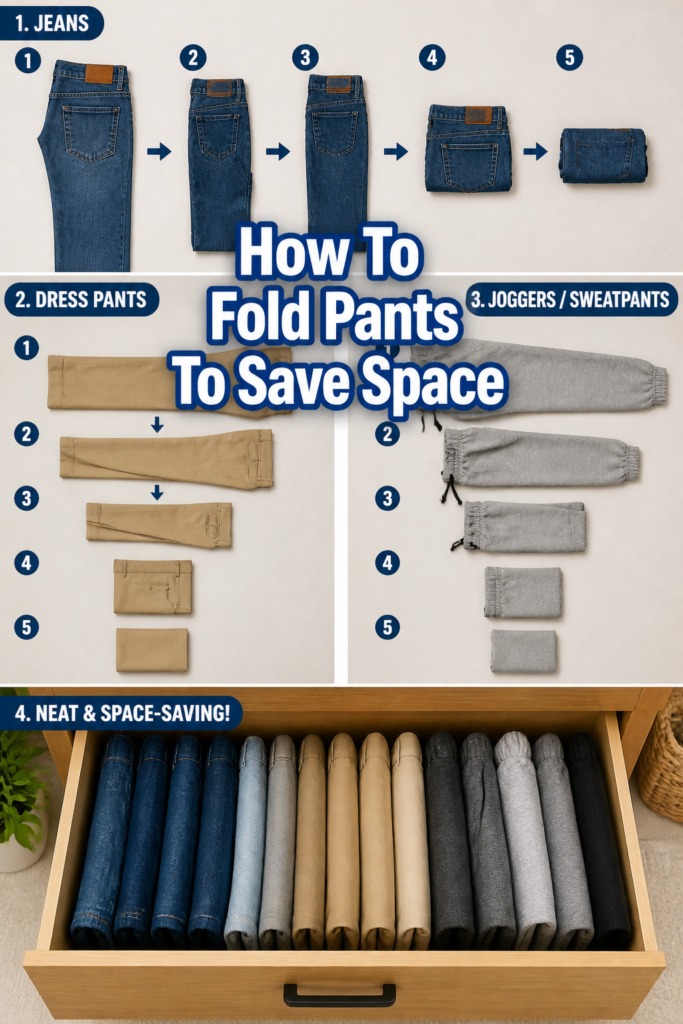
Transforming your dresser from a chaotic pile into a serene, organized sanctuary is easier than you think.
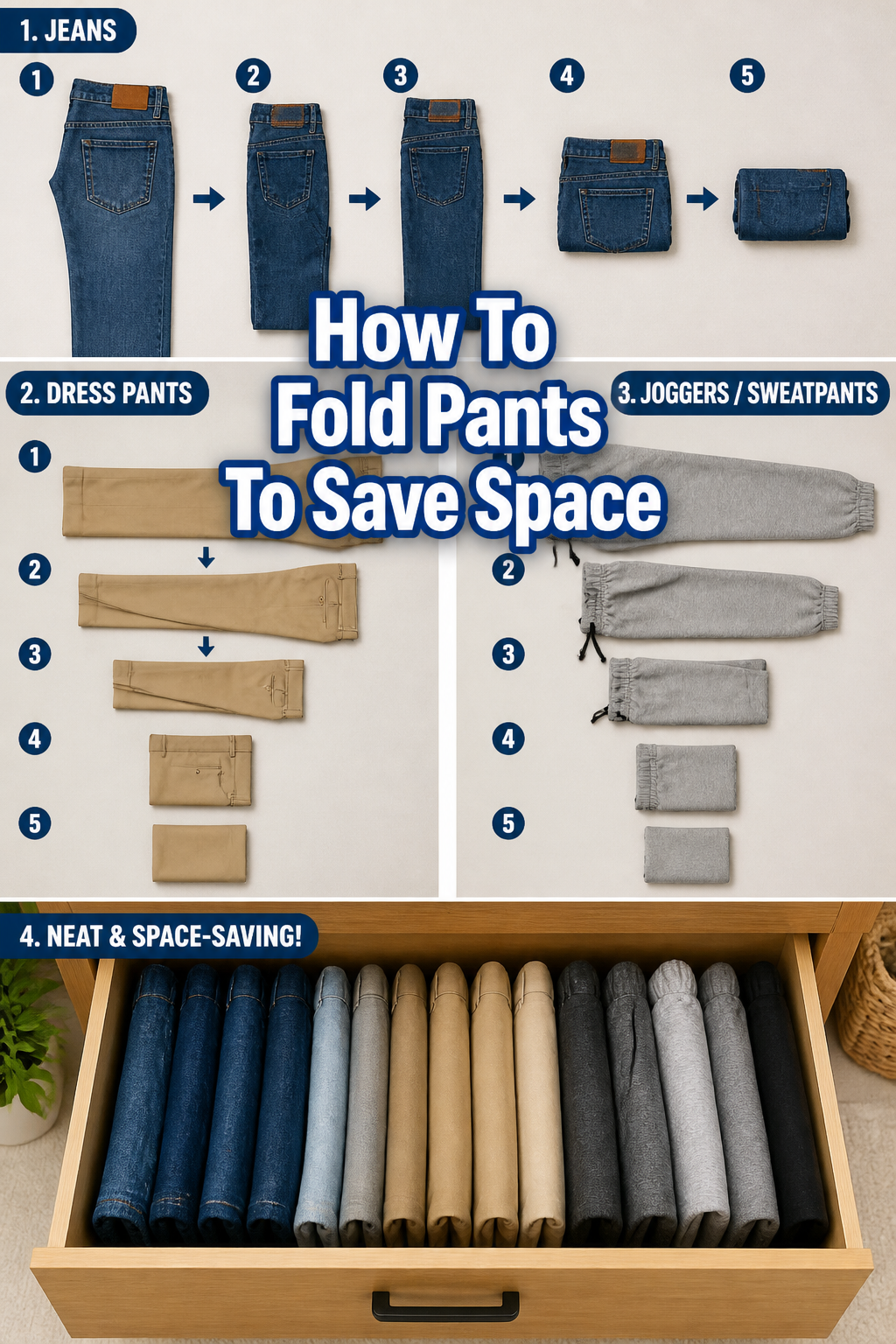
By mastering the file-folding technique, you can see every pair of pants at a glance and reclaim nearly 50% of your drawer space.
- Time needed: 15-20 minutes for a full drawer
- Difficulty: Beginner
- What you’ll need: A flat surface, your pants collection, and a bit of patience
Step-by-Step Instructions
Step 1: Clear and Prepare Your Surface
Clear a large, flat area like a freshly made bed or a clean dining table to give yourself plenty of room to move.
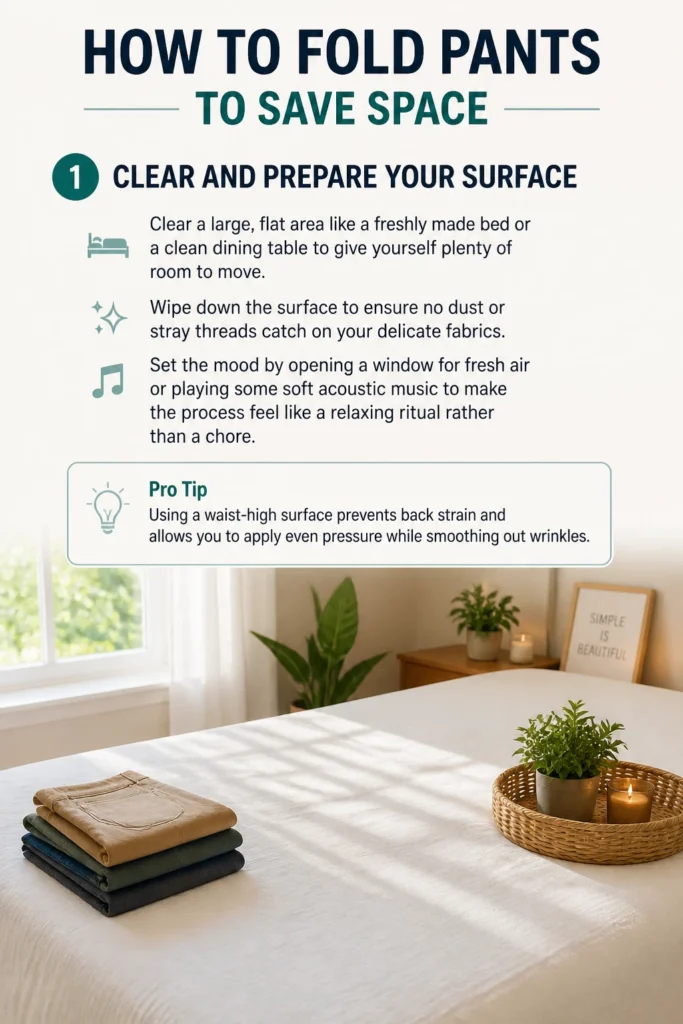
Wipe down the surface to ensure no dust or stray threads catch on your delicate fabrics.
Set the mood by opening a window for fresh air or playing some soft acoustic music to make the process feel like a relaxing ritual rather than a chore.
Pro Tip: Using a waist-high surface prevents back strain and allows you to apply even pressure while smoothing out wrinkles.
Step 2: Lay the Pants Flat and Smooth
Place your pants on the surface with the front facing up and the legs spread naturally.
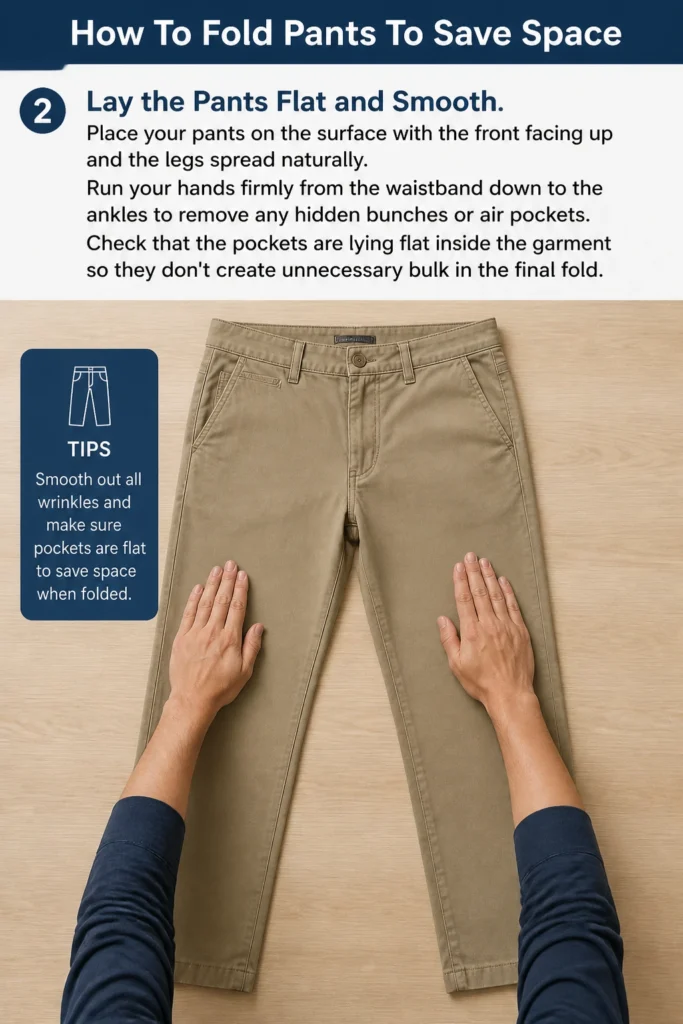
Run your hands firmly from the waistband down to the ankles to remove any hidden bunches or air pockets.
Check that the pockets are lying flat inside the garment so they don’t create unnecessary bulk in the final fold.
Step 3: Create the Vertical Fold
Fold one leg over the other, matching the seams along the inner and outer edges as closely as possible.
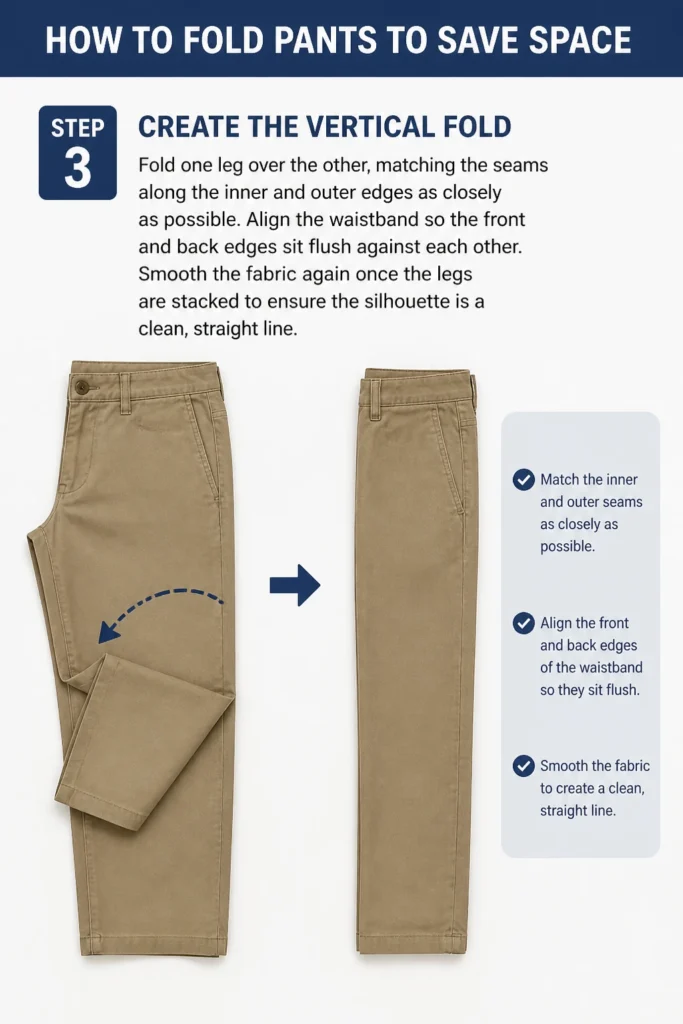
Align the waistband so the front and back edges sit flush against each other.
Smooth the fabric again once the legs are stacked to ensure the silhouette is a clean, straight line.
Step 4: Tuck the Crotch Point
Identify the small triangular piece of fabric at the crotch that sticks out past the line of the legs.
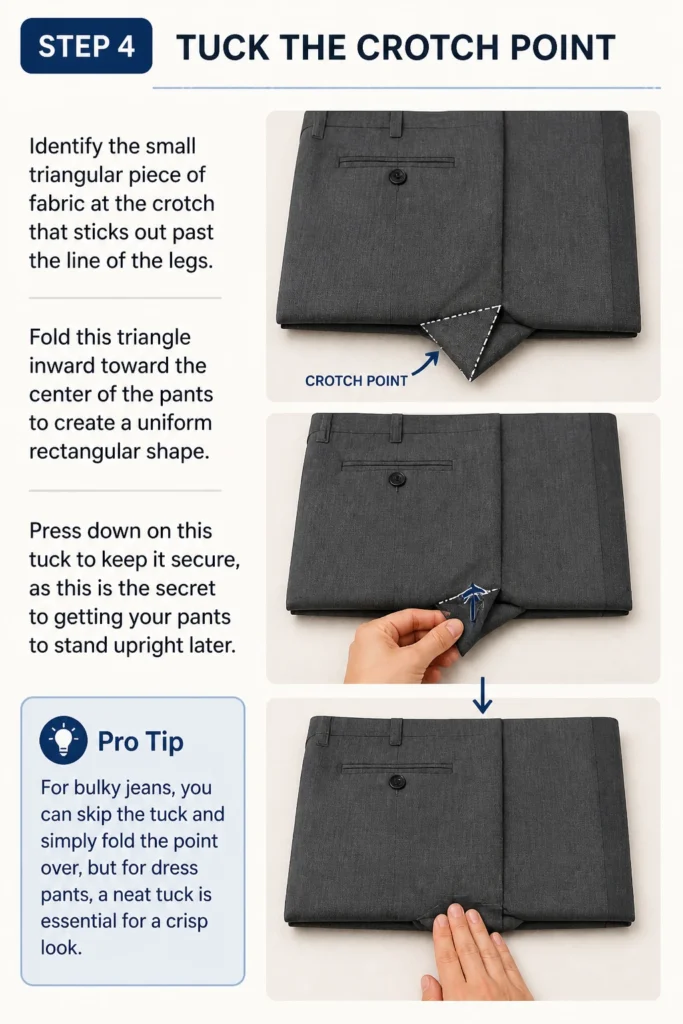
Fold this triangle inward toward the center of the pants to create a uniform rectangular shape.
Press down on this tuck to keep it secure, as this is the secret to getting your pants to stand upright later.
Pro Tip: For bulky jeans, you can skip the tuck and simply fold the point over, but for dress pants, a neat tuck is essential for a crisp look.
Step 5: Bring the Hem to the Waist
Grasp the bottom ankles of the pants and bring them up toward the waistband.
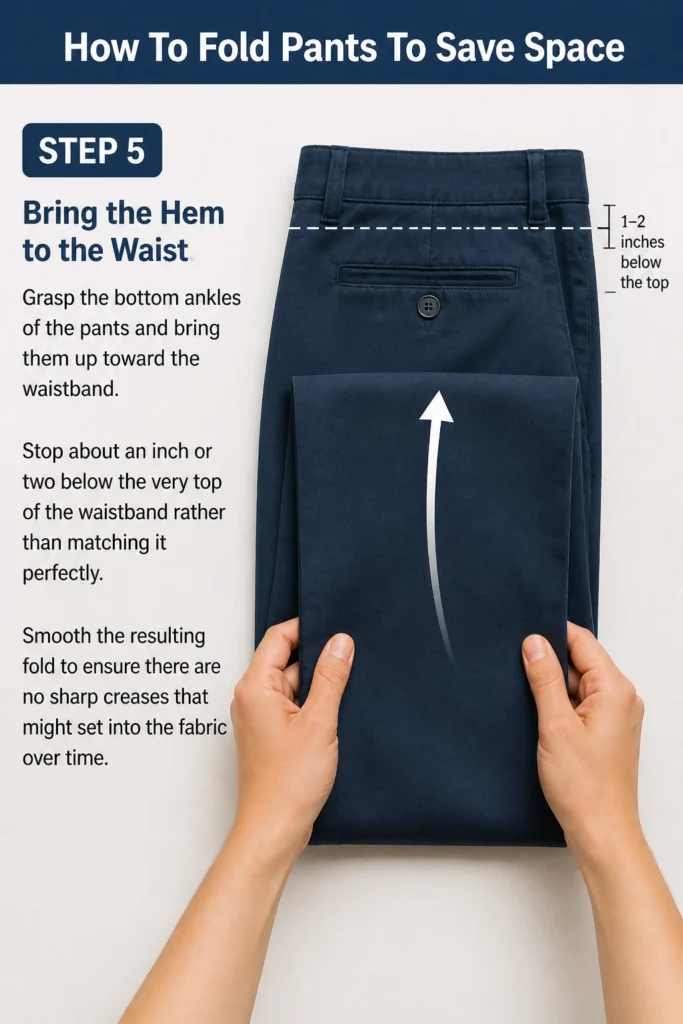
Stop about an inch or two below the very top of the waistband rather than matching it perfectly.
Smooth the resulting fold to ensure there are no sharp creases that might set into the fabric over time.
Step 6: Fold into Thirds
Divide the long rectangle you have created into three equal sections in your mind.
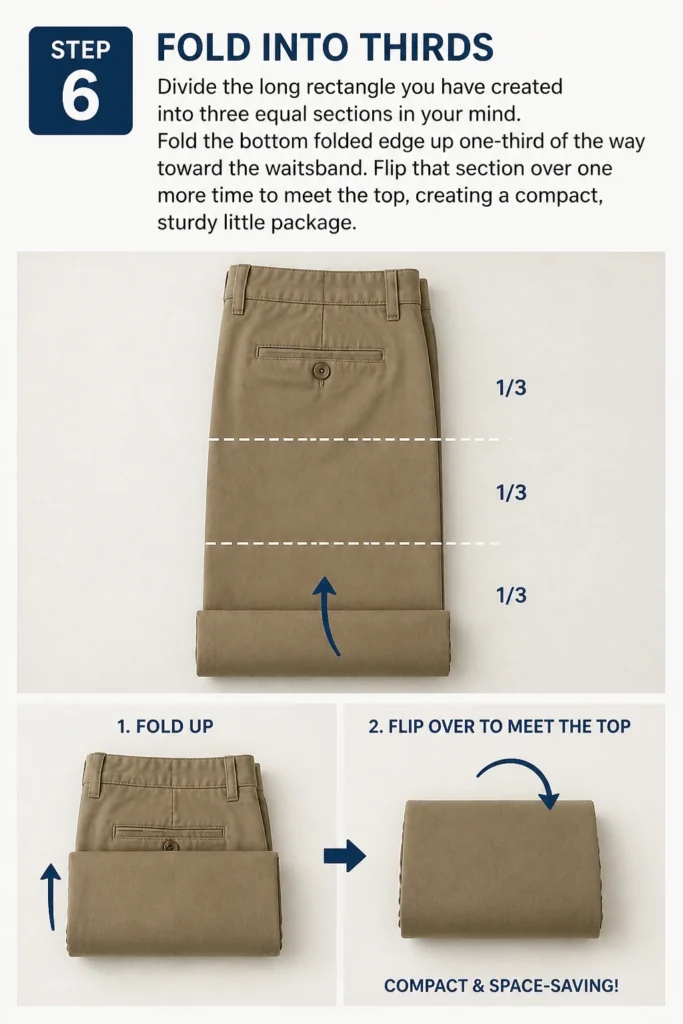
Fold the bottom folded edge up one-third of the way toward the waistband.
Flip that section over one more time to meet the top, creating a compact, sturdy little package.
Step 7: Perform the Stand Test
Set the folded pants on their edge on your flat surface to see if they can stay upright on their own.
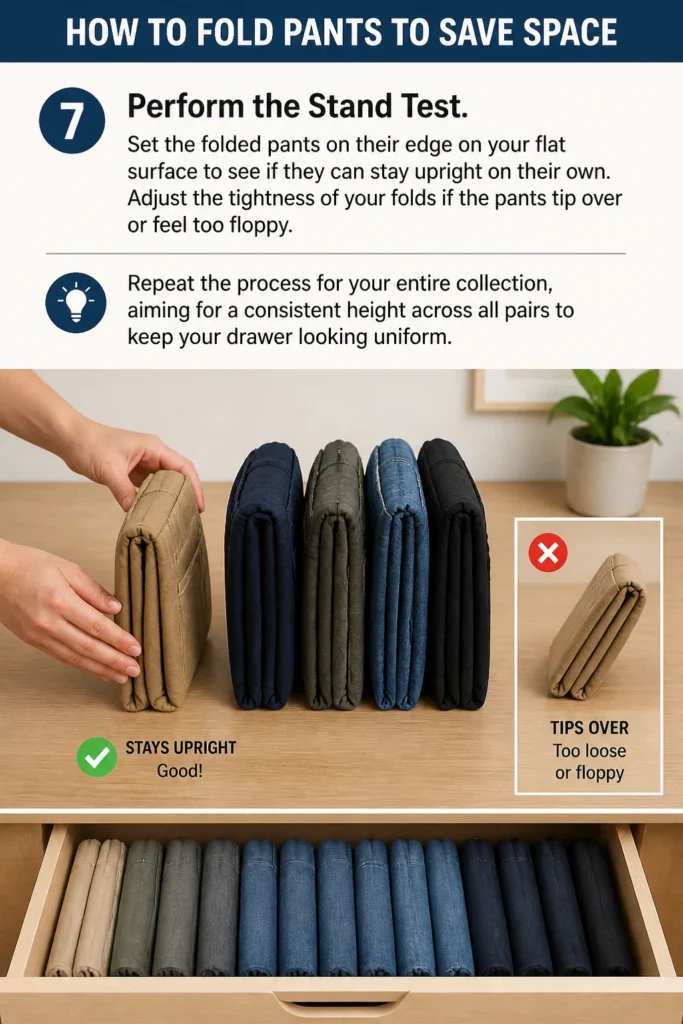
Adjust the tightness of your folds if the pants tip over or feel too floppy.
Repeat the process for your entire collection, aiming for a consistent height across all pairs to keep your drawer looking uniform.
Step 8: Arrange by Color and Weight
Group your pants by category, such as denim, chinos, and leggings, to make your morning selection faster.
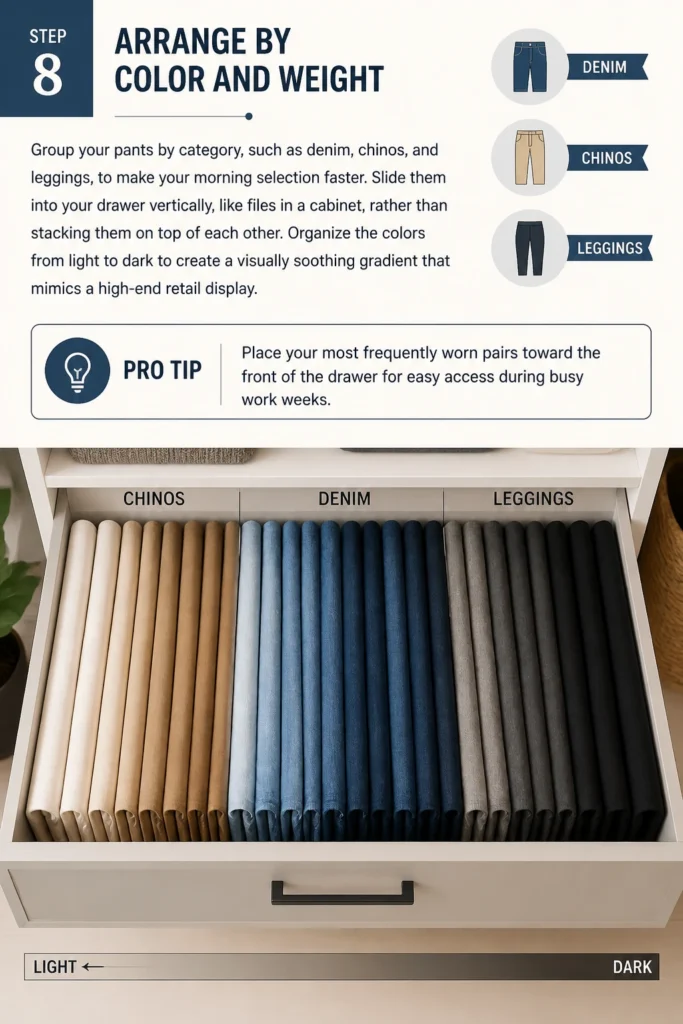
Slide them into your drawer vertically, like files in a cabinet, rather than stacking them on top of each other.
Organize the colors from light to dark to create a visually soothing gradient that mimics a high-end retail display.
Pro Tip: Place your most frequently worn pairs toward the front of the drawer for easy access during busy work weeks.
Common Mistakes to Avoid
Folding While Fabric is Damp
Putting pants away before they are 100% dry is a recipe for mildew and stubborn wrinkles.
Always ensure your laundry has finished its drying cycle or has spent enough time on the rack before you start the folding process.
The moisture trapped in tight folds can also damage the elasticity of materials like spandex or yoga pant blends.
Ignoring the Fabric Type
Trying to use the exact same folding tension for heavy winter wool and light summer linen will lead to messy drawers.
Heavier fabrics need slightly looser folds to prevent them from becoming too thick to manage.
Lighter fabrics require a bit more precision and tighter tucks to maintain their structure when standing vertically.
Overstuffing the Drawers
It is tempting to squeeze one last pair of jeans into a full drawer, but this creates friction that leads to wrinkles.
When you pull one pair out, the others should stay in place rather than being dragged along by the surrounding fabric.
Aim for about 10% empty space in each drawer to allow the fabric to breathe and to keep the organization sustainable.
Troubleshooting
Pants Falling Over in the Drawer
If your pants keep flopping over, it usually means the fold isn’t deep enough or the drawer isn’t full enough to provide support.
You can use adjustable drawer dividers to create smaller “channels” that hold the pants upright even when the drawer is half-empty.
Alternatively, try folding the pants into quarters instead of thirds to create a shorter, more stable base.
Bulky Jeans Taking Up Too Much Room
Denim is naturally thick, and a full drawer of jeans can quickly become unmanageable.
Try the “Ranger Roll” method for jeans if you are extremely short on space, which involves rolling them into tight burritos.
For a better aesthetic look, consider hanging heavy denim on sturdy S-hooks by the belt loops if drawer space is at a premium.
Wrinkles Forming at the Fold Lines
Visible lines are often caused by pressing down too hard on the creases or leaving the pants folded for months without wearing them.
To prevent this, give your pants a quick shake when you take them out of the drawer to relax the fibers.
For dressier trousers, consider using a piece of acid-free tissue paper inside the folds to cushion the fabric and prevent sharp lines.
Key Takeaways
- Always smooth the fabric with your hands between every single fold to prevent internal wrinkles.
- Tucking the crotch point is the most important step for creating a clean rectangular shape.
- Vertical storage allows you to see every item you own without disturbing the rest of the pile.
- Organizing by color gradient creates a sense of calm and makes your room feel professionally designed.
- Leave a little bit of breathing room in your drawers to protect the integrity of the fabric.
- The “Stand Test” ensures your folds are structurally sound and ready for the drawer.
Frequently Asked Questions
Is it better to fold or hang pants?
It depends on the fabric and your available storage. Jeans, leggings, and sturdy chinos thrive in drawers, while dress slacks and linen pants often prefer the support of a hanger to avoid deep creases.
How do I prevent my leggings from unrolling?
Since leggings are slippery, try the “tuck-in” method where you fold the waistband over the final roll to lock it in place. This creates a secure bundle that won’t come apart even if you drop it.
What if my drawers are too shallow for vertical folding?
If your drawers are short, you can adjust your folding style by folding the pants in half and then in half again. This creates a flatter profile that still allows for a staggered “shingled” look so you can see the edges of each pair.
Does this method work for kids’ clothes?
Absolutely! The technique is the same, but because the garments are smaller, you may only need to fold them in half once after the initial vertical fold. It is a great way to help children see their options and pick their own outfits.
Our Top Recommended Finds
- Adjustable Bamboo Drawer Dividers: These are perfect for creating custom-sized rows in your dresser. They keep your vertical folds from sliding around and add a warm, natural aesthetic to your closet.
- Cedar Blocks or Satchels: Tucking a few of these between your folded pants keeps everything smelling fresh and naturally repels moths. The scent of cedar adds a cozy, grounded feel to your dressing routine.
- Fabric Measuring Tape: While it seems simple, knowing the exact depth of your drawers helps you determine whether to fold your pants into thirds or quarters for the most efficient fit.
Create Your Personal Sanctuary
Organizing your clothes is about more than just saving a few square inches in a wooden chest. It is about creating a morning routine that feels effortless and starting your day with a sense of order and beauty.
Once you have mastered the art of folding your pants, you might find yourself looking at the rest of your home with fresh eyes. Consider applying these same principles of visibility and accessibility to your t-shirts or even your kitchen linens.
Take twenty minutes today to clear out one drawer and try this method. You will be surprised at how much lighter you feel when you open that drawer tomorrow morning and see your favorite clothes waiting for you in perfect harmony.